




The 15 Best Reverb Plugins in 2026 (Free and Paid)
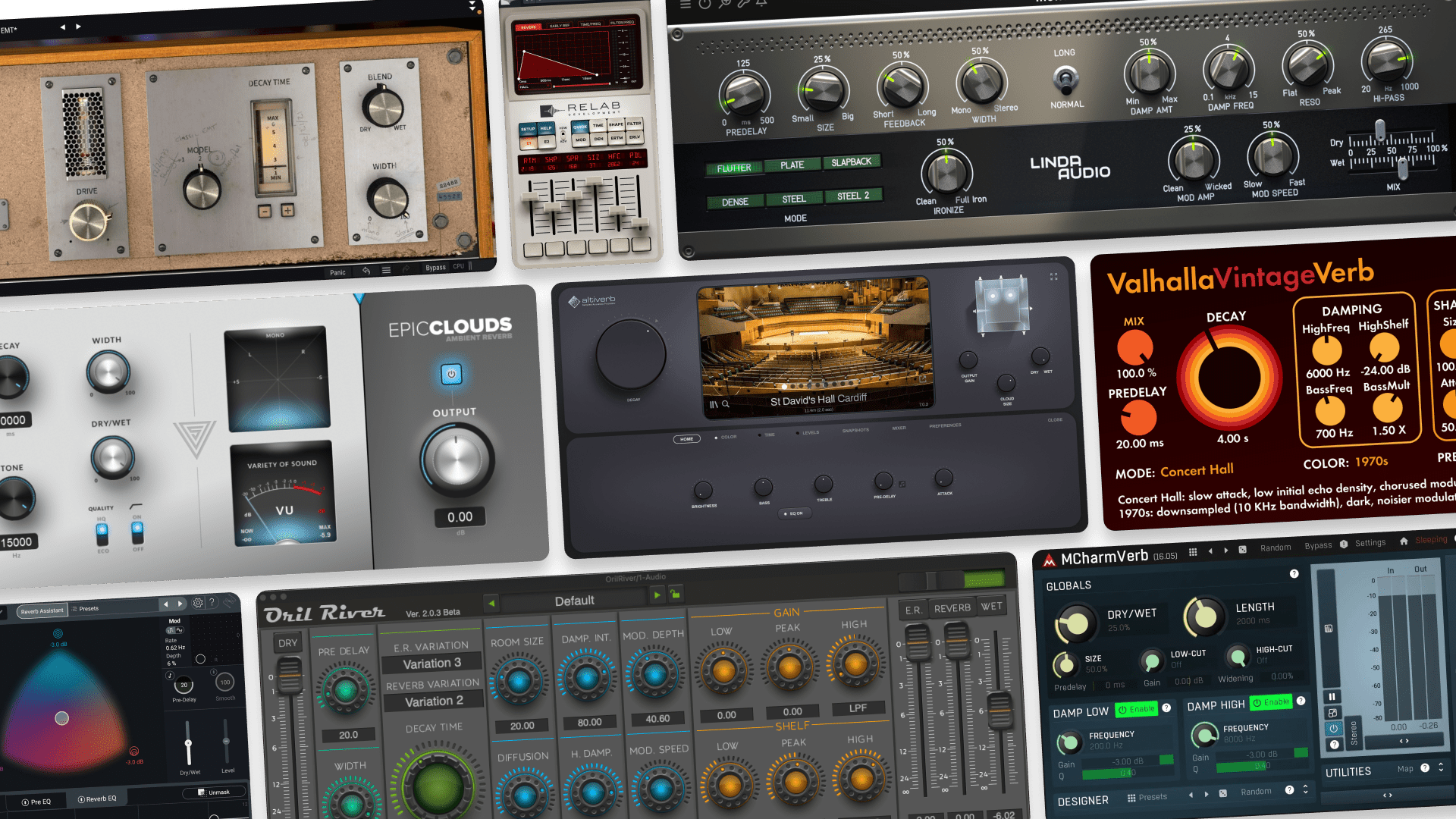
The best reverb plugins are the ones that help you express the right spaces and solve the right mixdown problems.
Of course, considering how many are out there these days, settling on the right reverb arsenal can be easier said than done.
So, below you’ll find a round-up of our favorite reverb plugins available today, with a mix of both free and paid options to fit any budget (or lack thereof).
Ready? Let’s ‘verb it up.
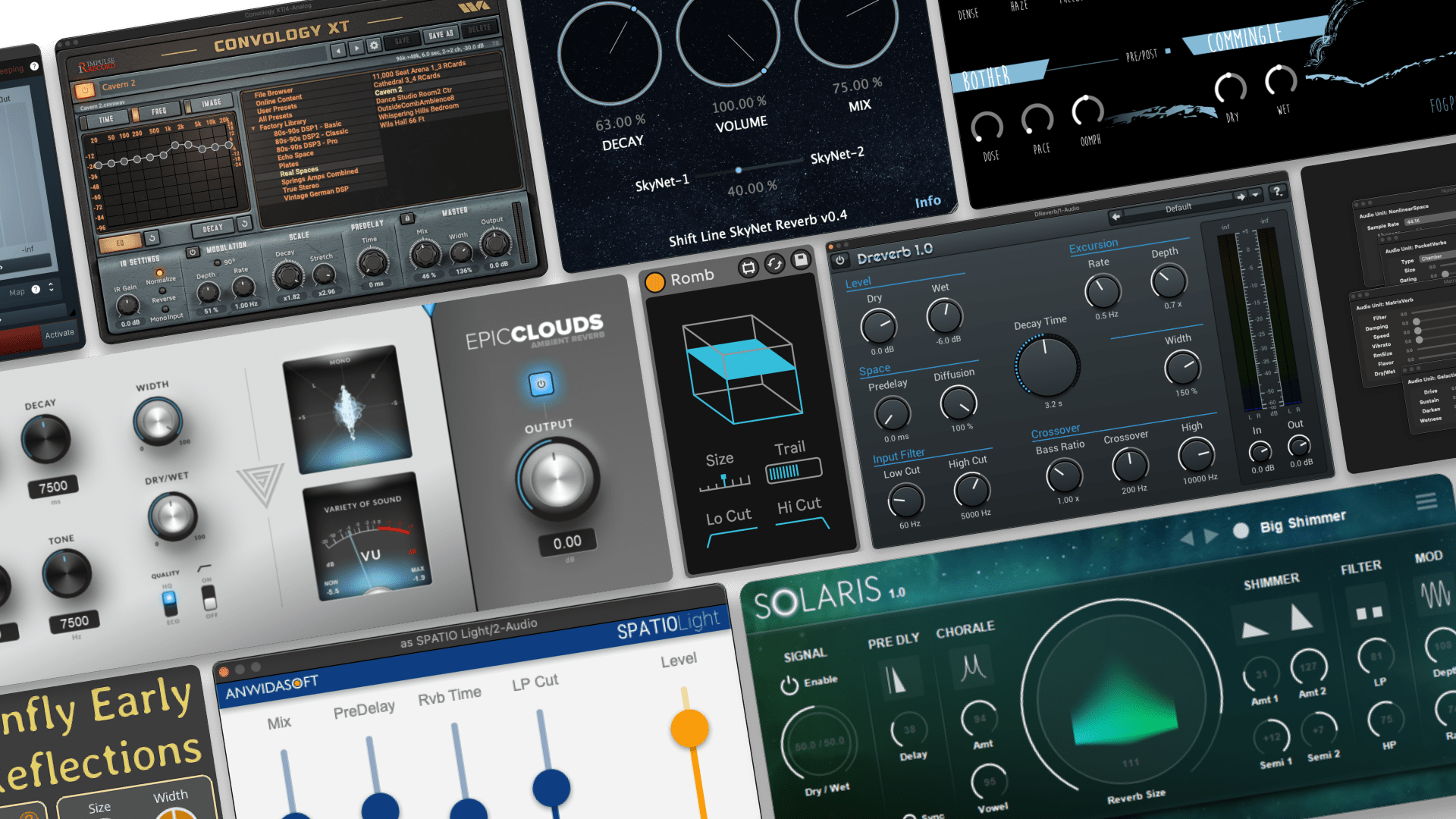
The 15 best reverb plugins
- Valhalla VintageVerb
- TAL-Reverb-4
- LiquidSonics Seventh Heaven
- Valhalla Supermassive
- Pulsar Primavera
- Melda Production reverbs
- Arturia Rev PLATE-140
- Voxengo OldSkoolVerb
- Audio Ease Altiverb 8
- Airwindows reverbs
- Relab LX480
- Denis Tihanov OrilRiver
- iZotope Neoverb
- Variety of Sound epic reverbs
- Audified Linda IronVerb
- Buyer’s guide
TL;DR – Our top picks
Best Reverb Plugins
| Best all-around reverb: | Valhalla VintageVerb |
| Best convolution reverb: | Audio Ease Altiverb 8 |
| Best unique reverb plugin: | Audified Linda IronVerb |
| Best free reverb plugin: | TAL-Reverb-4 |
| Best ambient reverb: | Valhalla Supermassive |
⭐ Best all-around reverb: Valhalla VintageVerb
If we had to recommend a single reverb plugin to cover the widest range of everyday mixing duties, VintageVerb would be it. It is affordable, easy to use, and packed with algorithms that sound great on vocals, drums, synths, and effects sends.
What really makes it stand out is how fast it is to work with. You can dial in anything from tight rooms to lush halls without losing clarity or getting stuck tweaking. For most producers, this is the kind of reverb that earns a permanent spot in every session.
⭐ Best convolution reverb: Audio Ease Altiverb 8
Altiverb is our top pick when realism is the priority. Its extensive library of impulse responses captures real spaces, studios, hardware units, and concert halls with a level of depth that is still hard to beat.
In our sessions, it excelled at placing sounds front to back in a mix, making it especially valuable for vocals, orchestral instruments, acoustic recordings, and post-production work. If you want the most convincing real-world spaces inside your DAW, Altiverb fully earns its reputation.
⭐ Best unique reverb plugin: Audified Linda IronVerb
Linda IronVerb is our pick when you want reverb to add character, not just space. Instead of aiming for realism or transparency, it leans into color, modulation, and personality in a way that stays musical and mixable.
In our experience, it adds a finished, slightly vintage sheen to vocals, guitars, and synth leads. The Ironize control is especially useful for subtle motion and texture, making the reverb feel like part of the sound rather than something sitting behind it.
⭐ Best free reverb plugin: TAL-Reverb-4
TAL-Reverb-4 proves that you do not need to spend money to get a lush, musical reverb. Its classic plate sound is instantly flattering, especially on vocals, synths, and pads.
It is simple, lightweight, and easy to dial in, making it a perfect free option whether you are just starting out or looking for a dependable retro-flavored plate.
⭐ Best creative / ambient reverb: Valhalla Supermassive
If your goal is atmosphere rather than realism, Supermassive is hard to beat, especially for a free plugin. Its huge, evolving tails blur the line between reverb and delay, making it ideal for ambient, electronic, and cinematic sound design.
We reach for it whenever we want reverb to feel like an active part of the sound instead of a subtle background effect.
1. Valhalla VintageVerb (Paid)
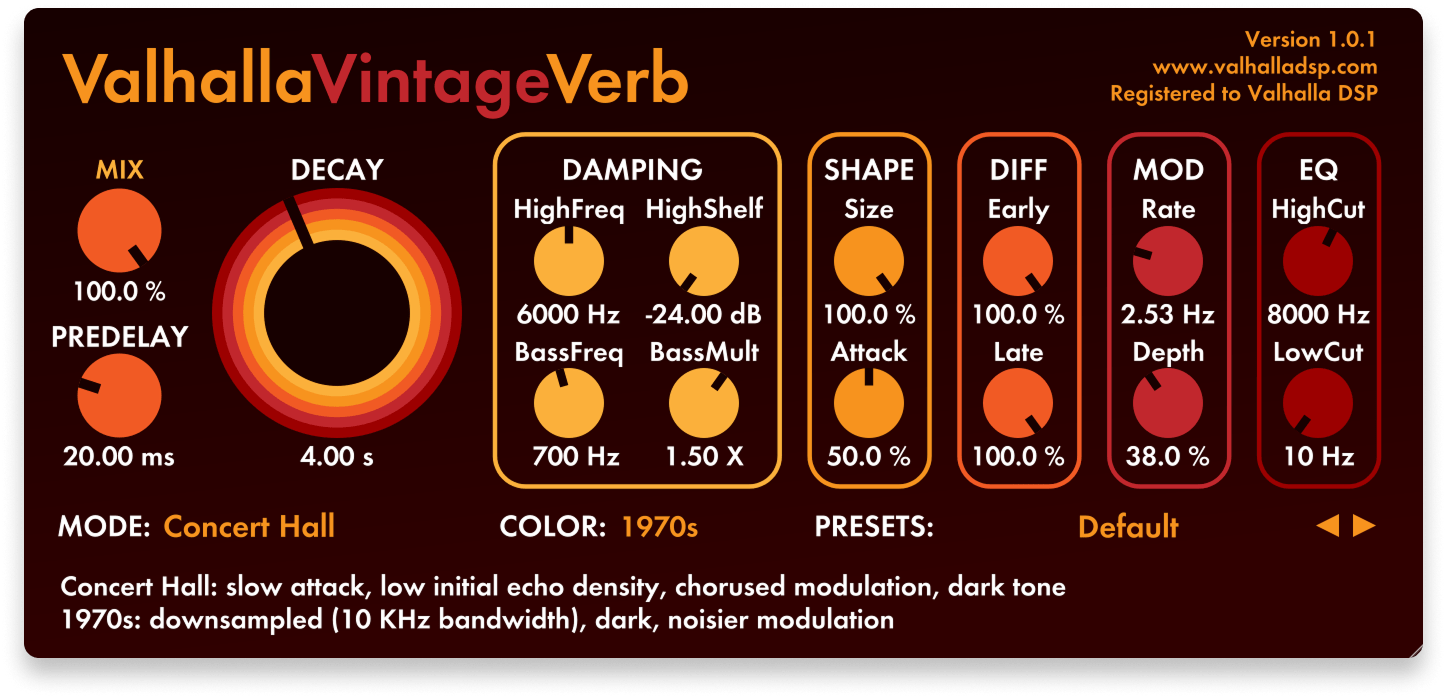
Overview of Valhalla VintageVerb
| Type: | Vintage algorithmic reverb |
| Operating System: | macOS, Windows |
| Format: | VST, VST3, AU, AAX |
| Price: | $50 |
Valhalla VintageVerb is one of the easiest paid reverbs to recommend if you want classic digital character without a steep learning curve.
In our experience, it covers a huge range of rooms, plates, and halls while still feeling fast and musical.
We’re particularly fond of how the modes and color options make it simple to go from clean and modern to gritty and vintage in a couple of clicks.
It also stays mix-friendly when you push longer decays, which makes it a great choice for vocals, synths, and drum ambience.
Pros:
- Lots of distinct algorithms with real vintage flavor
- Quick workflow that still rewards deeper tweaking
- Affordable and CPU friendly
Cons
- No convolution option
- Not focused on experimental textures
Get the plugin here.
Back to top ⬆️
2. TAL-Reverb-4 (Free)
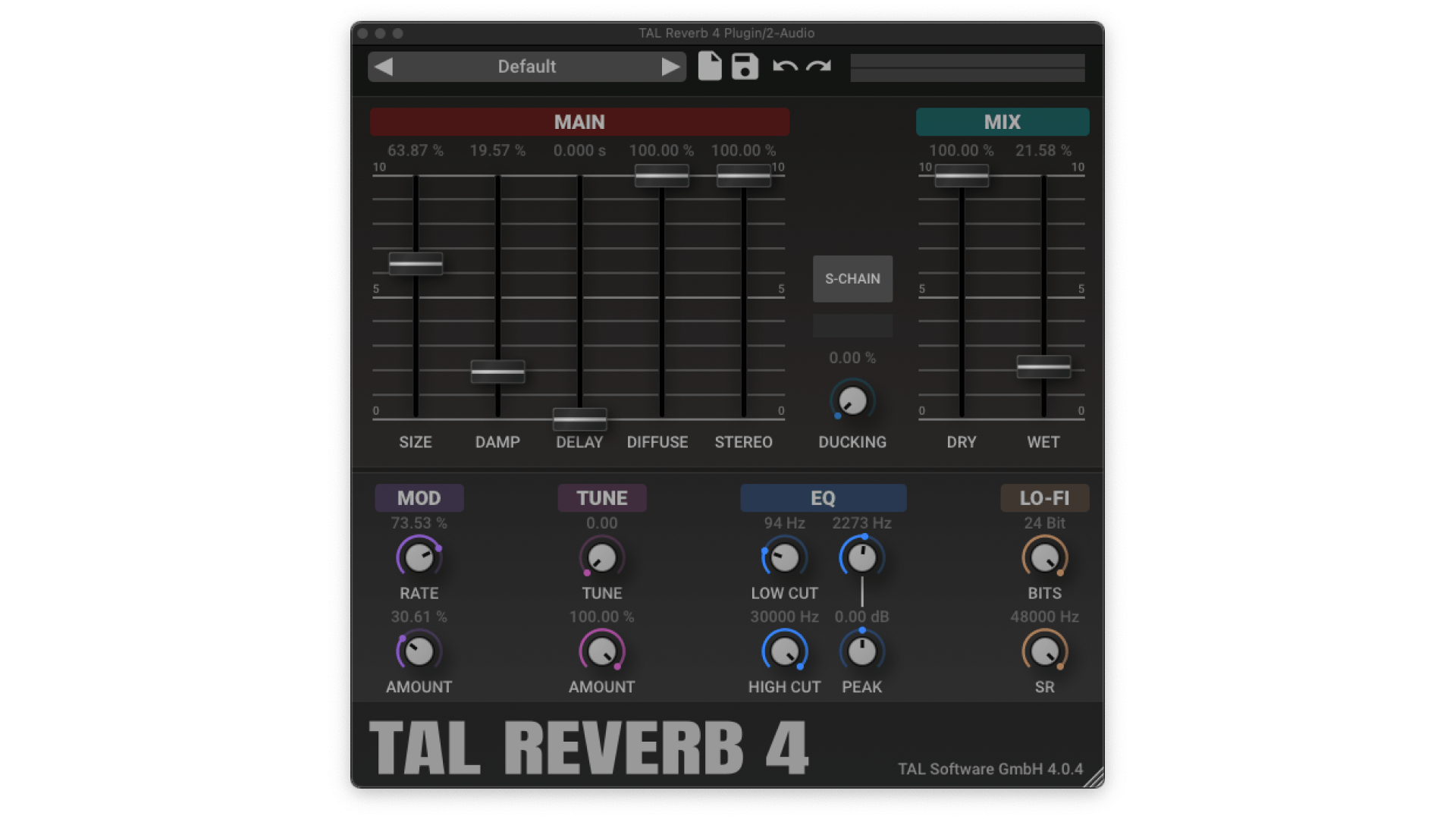
Overview of TAL-Reverb-4
| Type: | Vintage plate reverb |
| Operating System: | macOS, Windows, Linux |
| Format: | VST, VST3, AU, AAX, CLAP |
TAL-Reverb-4 is one of the best free ways to get that lush, modulated 80s plate sound.
In our testing sessions, it sounded wide and glossy on synths and vocals, and it built density quickly without turning grainy.
We really appreciate how simple it feels, since you can land on a great plate sound fast without a wall of parameters.
If you want an instant retro sheen that still works in modern mixes, this one belongs in your toolkit.
Pros:
- Classic modulated plate vibe that flatters lots of sources
- Fast to dial in and very light on CPU
- Free and cross-platform
Cons
- Stereo only, no mono input
- Mostly focused on plate-style spaces
Get the plugin here.
Back to top ⬆️
3. LiquidSonics Seventh Heaven (Paid)
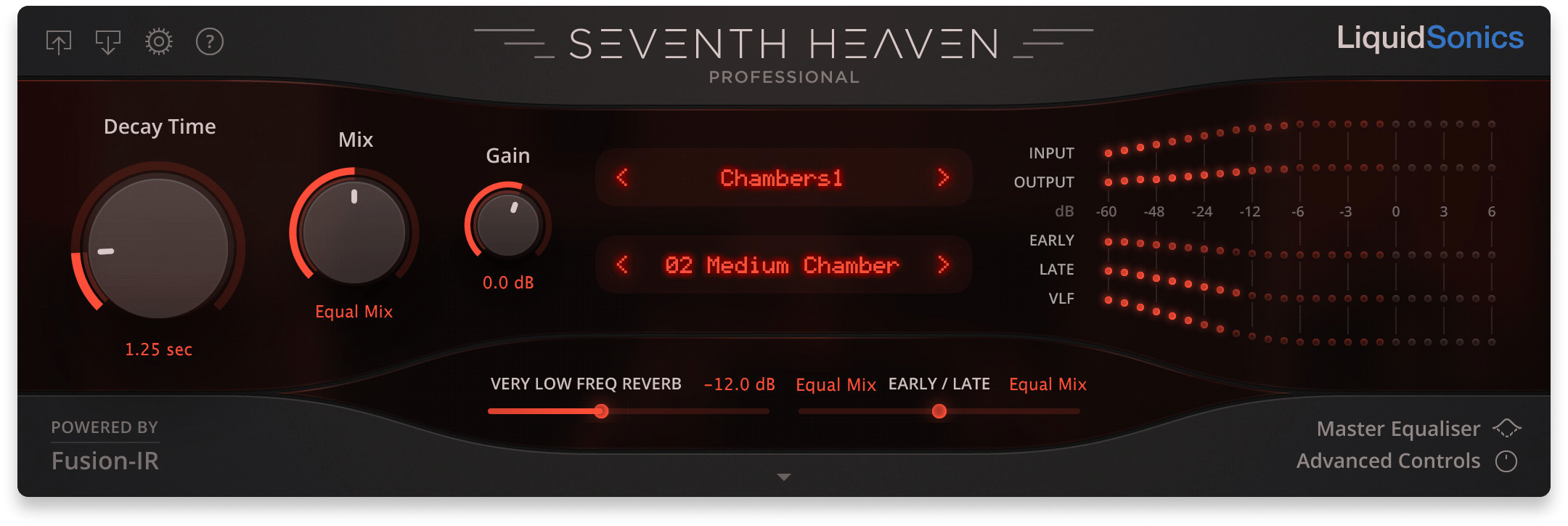
Overview of LiquidSonics Seventh Heaven
| Type: | Fusion-IR convolution reverb |
| Operating System: | macOS, Windows |
| Format: | VST, VST3, AU, AAX |
| Price: | $69 |
Seventh Heaven is one of the quickest ways to get believable, high-end room and hall reverbs in the box.
In our sessions, it delivered realistic depth on vocals and acoustic instruments, and the presets felt usable right away.
We were especially happy with how easy it was to fine-tune decay and tone without losing that natural sense of space.
If you want realism that does not slow you down, this is an easy pick.
Pros:
- Convincing, high-end “real space” sound
- Curated presets that are easy to tweak
- Great value for this level of realism
Cons
- More limited editing than the Pro version
- iLok activation required
Get the plugin here.
Back to top ⬆️
4. Valhalla Supermassive (Free)
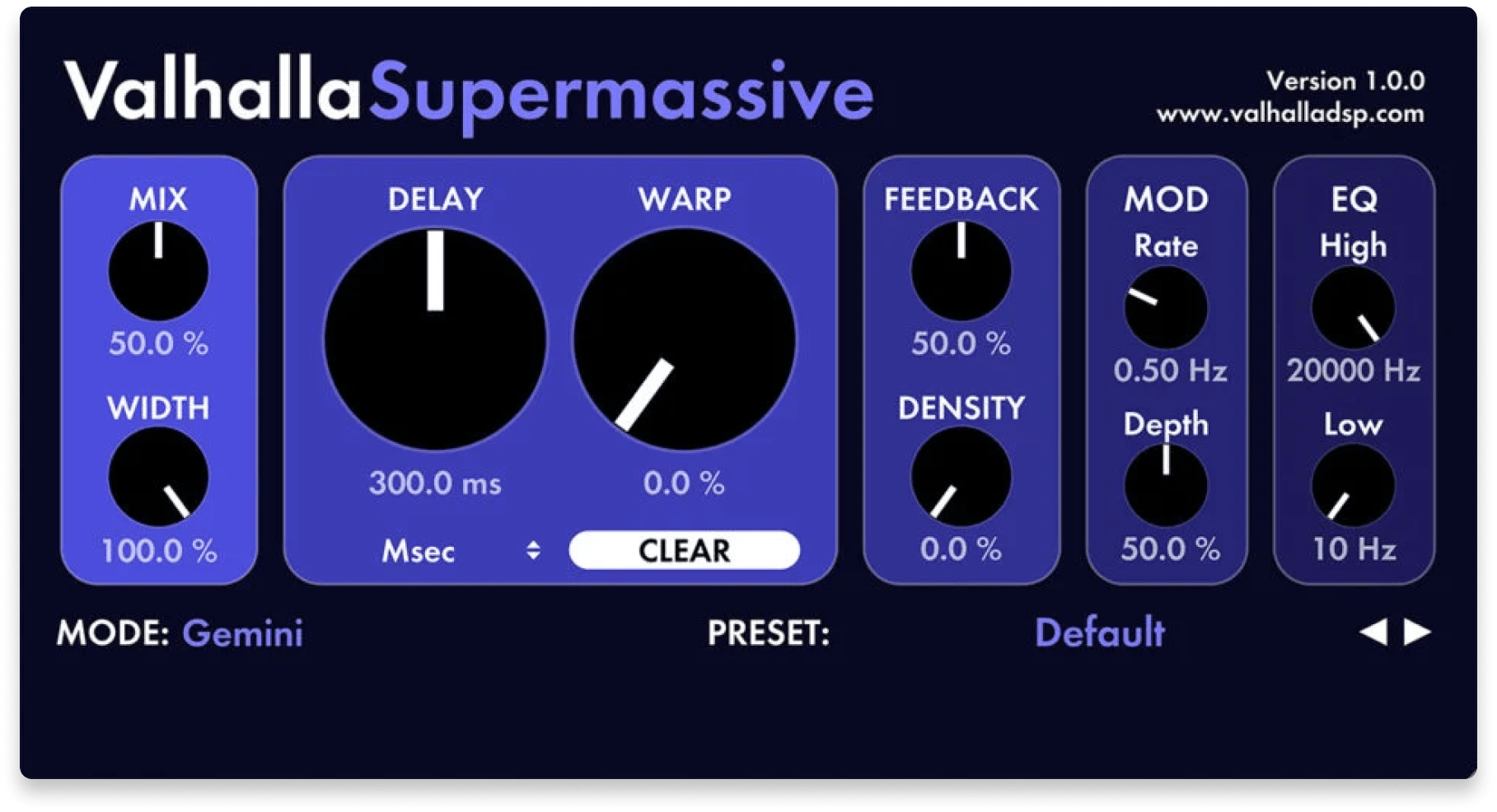
Overview of Supermassive
| Type: | Shimmer reverb/delay |
| Operating System: | macOS, Windows |
| Format: | VST, AU, AAX |
Supermassive is one of the most fun free reverbs we have used if you like effects that blur the line between delay and reverb.
In our testing, the modes created huge washes, rhythmic echoes, and evolving tails that felt more like sound design tools than “normal” rooms.
We’re particularly fond of the Warp control, since it made it easy to smear repeats into pads and drones without extra plugins.
If you make ambient, electronic, or cinematic music, you will probably end up using this a lot.
Pros:
- Massive, lush textures with lots of personality
- Great for ambient and experimental effects
- Free and lightweight
Cons
- Not the best choice for subtle realism
- Takes a little exploration to learn the modes
Get the plugin here.
Back to top ⬆️
5. Pulsar Primavera (Paid)
Overview of Pulsar Primavera
| Type: | Physical modeling spring reverb |
| Operating System: | macOS, Windows |
| Format: | VST, VST3, AU, AAX |
| Price: | $99 |
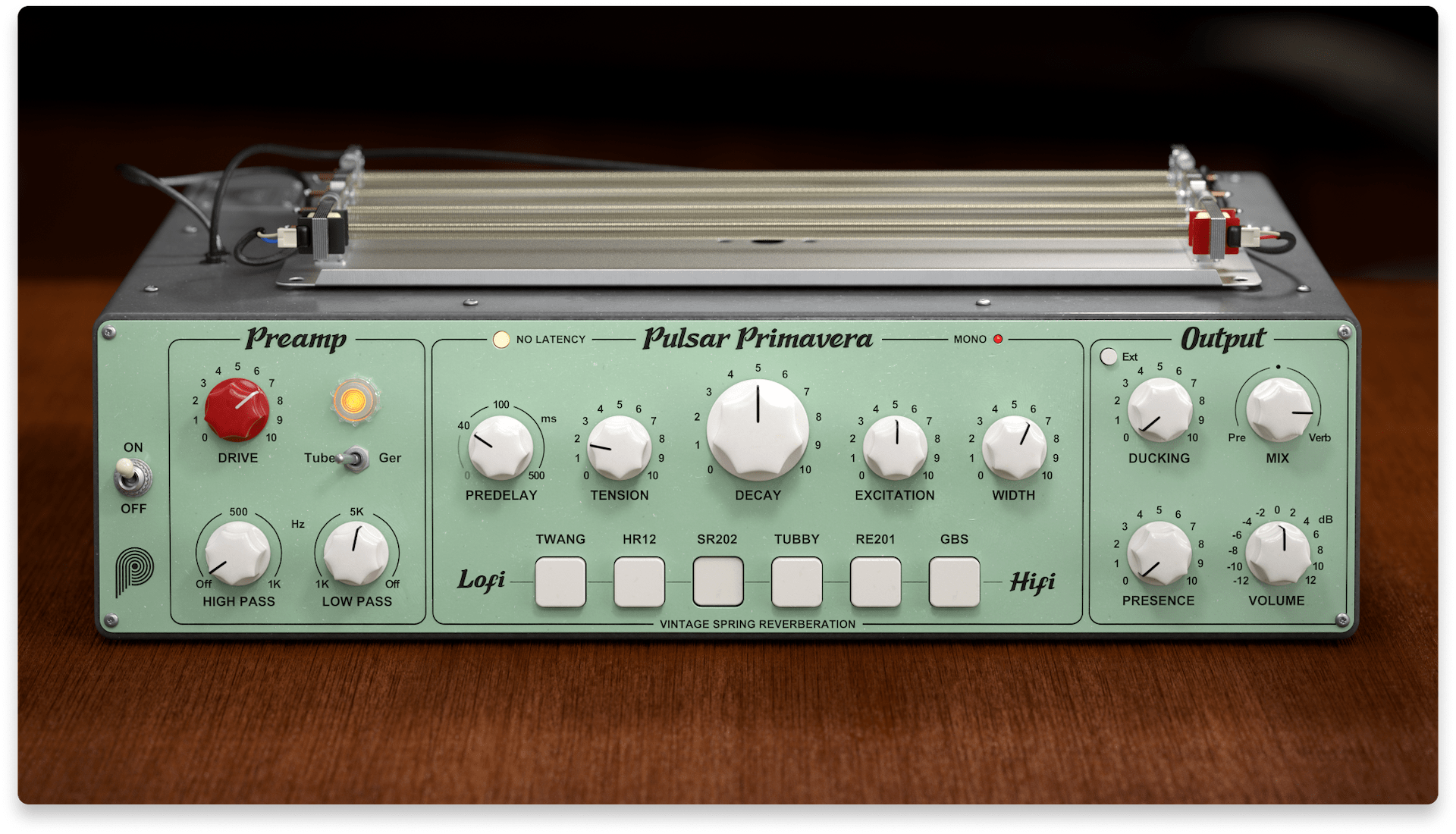
Pulsar Primavera is a richly characterful spring reverb that focuses on organic tone, movement, and vintage-inspired texture.
In our experience, it excels at adding depth that feels alive rather than static. The physical modeling approach gives the reverb tail a reactive quality that responds naturally to playing dynamics and transients.
We were especially impressed by how much control Primavera offers over the springs themselves. Tension and excitation shaping make it easy to move between softer, warmer ambiences and brighter, more energetic spring responses with a pronounced sense of character.
Beyond its spring core, Primavera functions as a complete reverb chain, with built-in saturation, tone shaping, stereo width, and ducking controls that help dense reverbs sit cleanly in a mix.
Pros:
- Organic spring reverb with realistic physical behavior
- Wide tonal range from subtle warmth to bold character
- Integrated controls for saturation, tone, width, and ducking
Cons
- Spring-only reverb, so specificity has to be worth the cost for you
- No built-in EQ for fine-tuning tone or resonance
Get the plugin here.
Back to top ⬆️
6. Melda Production reverbs (Free)
Overview of Melda Production Reverbs
| Type: | Algorithmic & convolution |
| Operating System: | macOS, Windows |
| Format: | VST, AAX, AU |
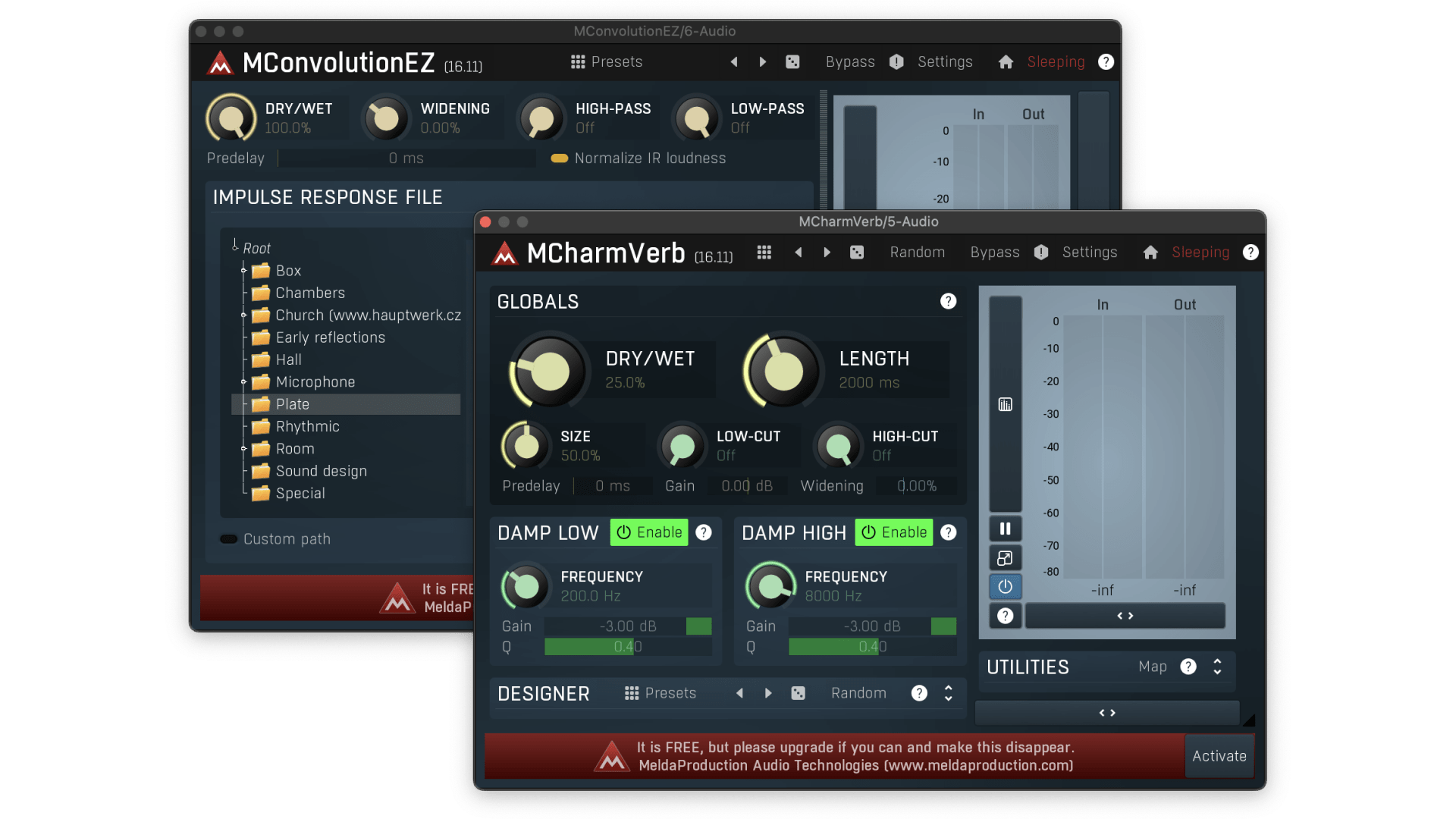
These Melda freebies are a great two-plugin reverb starter kit: MCharmVerb for lush algorithmic tails, and MConvolutionEZ for quick convolution spaces.
In our testing sessions, MCharmVerb added dense, smooth ambience to vocals and pads, and it stayed controlled even at longer times.
MConvolutionEZ was something we found especially useful when we wanted instant realism from its IR library without slowing down.
If you want a lot of capability for zero cost, this pair is hard to beat.
Pros:
- Two strong free options that cover algorithmic and convolution
- Flexible formats, routing, and features for the price
- Great overall sound quality
Cons
- Deeper feature set can feel a bit dense at first
- IR library options are limited unless you add third-party content
Get the plugins here.
Back to top ⬆️
7. Arturia Rev PLATE-140 (Included in LANDR Studio)
Overview of Arturia Rev PLATE-140
| Type: | Classic plate reverb |
| Operating System: | macOS, Windows |
| Format: | VST, VST3, AU, AAX |
| Price: | $199 (Outside LANDR Studio) |
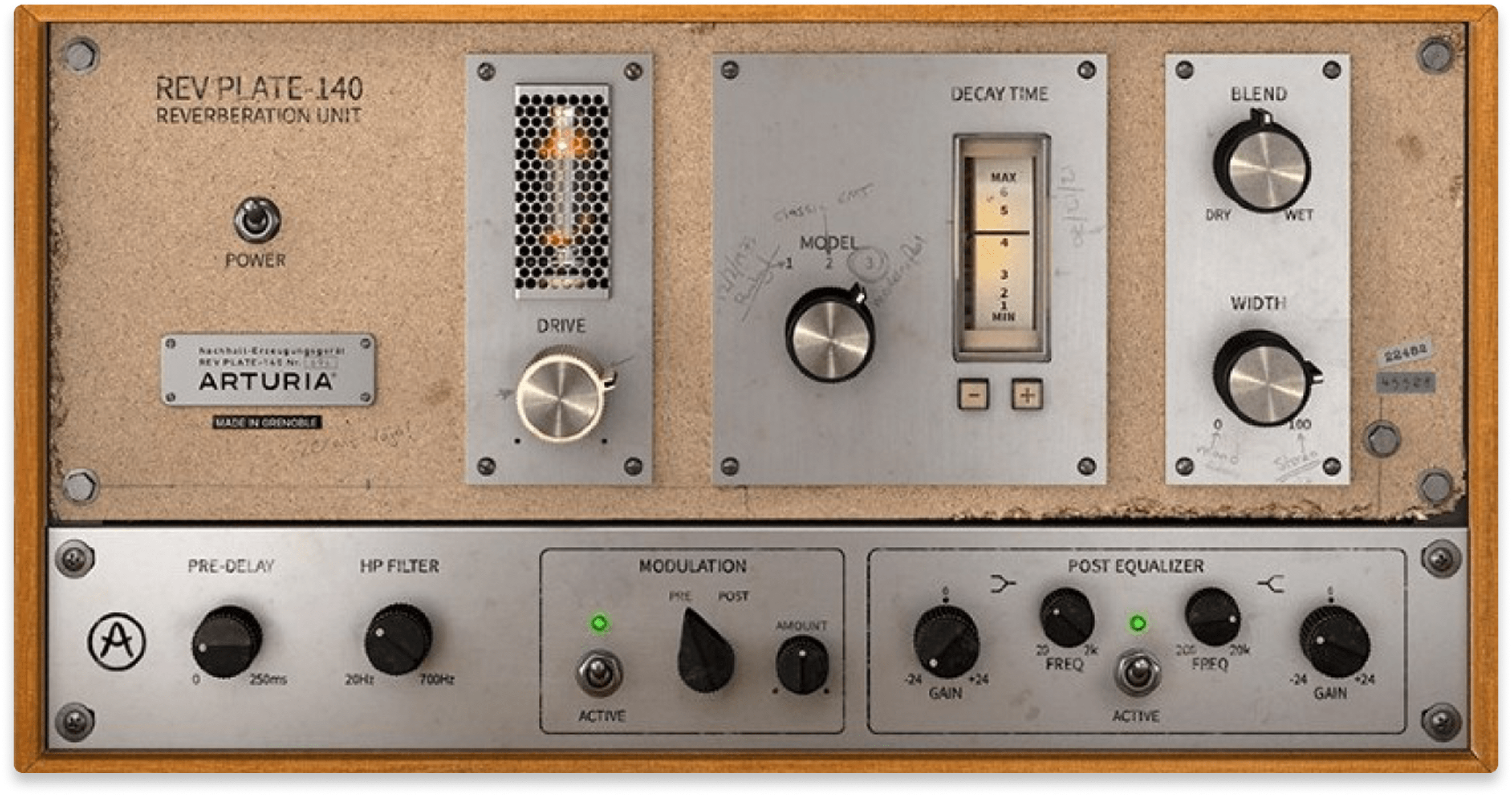
Rev PLATE-140 is a great pick if you want that classic plate glow that instantly flatters vocals, guitars, and snares.
In our sessions, it added a polished studio sheen quickly, especially when we used a bit of pre-delay for separation.
We’re particularly fond of the built-in tone shaping, since it made it easy to keep the plate bright without getting harsh.
If you want a character plate that still feels easy to mix, this one delivers.
Pros:
- Classic EMT-style plate tone with modern control
- Fast results on vocals and drums
- Included with LANDR Studio
Cons
- Focused on plate sounds, not a full reverb suite
- No surround or immersive formats
Get the plugin here.
Back to top ⬆️
8. Voxengo OldSkoolVerb (Free)
Overview of OldSkoolVerb
| Type: | Room & plate |
| Operating System: | macOS, Windows |
| Format: | VST, AU, AAX |
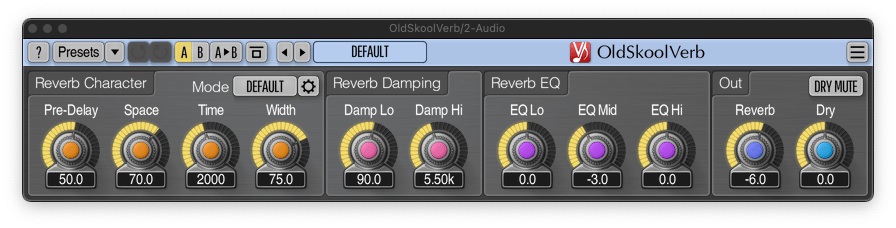
OldSkoolVerb is a classic free reverb that can do plates, rooms, and halls with a clean, old-school tail.
In our testing, it surprised us on vocals and melodic instruments, and it also worked well for that big 80s snare reverb when we pushed it.
We really appreciate how lightweight it felt, since it made it easy to stack instances without thinking about CPU.
If you want a simple free reverb that sounds better than it has any right to, this one is worth grabbing.
Pros:
- Classic reverb tones with low CPU
- Great for vocals, pads, and snares
- Very compatible across systems
Cons
- Less realism than newer high-end options
- Interface and controls are fairly basic
Get the plugin here.
Back to top ⬆️
9. Audio Ease Altiverb 8 (Paid)
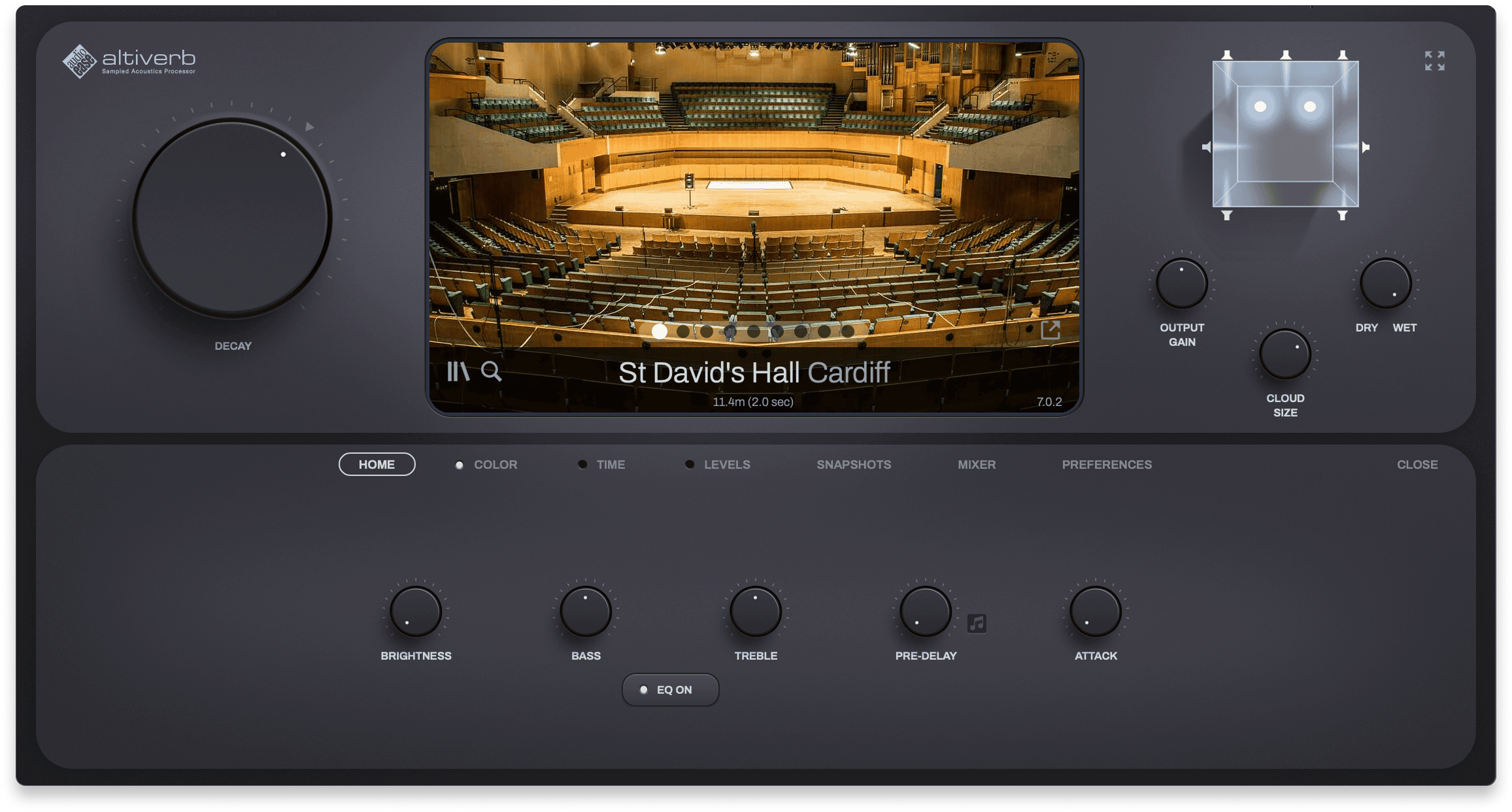
Overview of Audio Ease Altiverb 8
| Type: | Convolution reverb |
| Operating System: | macOS, Windows |
| Format: | VST3, AU, AAX |
| Price: | $520 |
Altiverb is one of the best choices if you want the sound of real spaces, from tight rooms to iconic halls and studios.
In our experience, it is hard to beat for placing sources front to back with believable depth.
We’re particularly fond of the IR browsing and space variety, since it feels like having a library of environments inside one plugin.
If realism is the goal, this is a premium option that earns its reputation.
Pros:
- Extremely realistic spaces and hardware captures
- Huge IR library with fast browsing
- Excellent for scoring, post, and acoustic mixes
Cons
- Premium pricing and large installs
- iLok required
Get the plugin here.
Back to top ⬆️
10. Airwindows reverbs (Free)
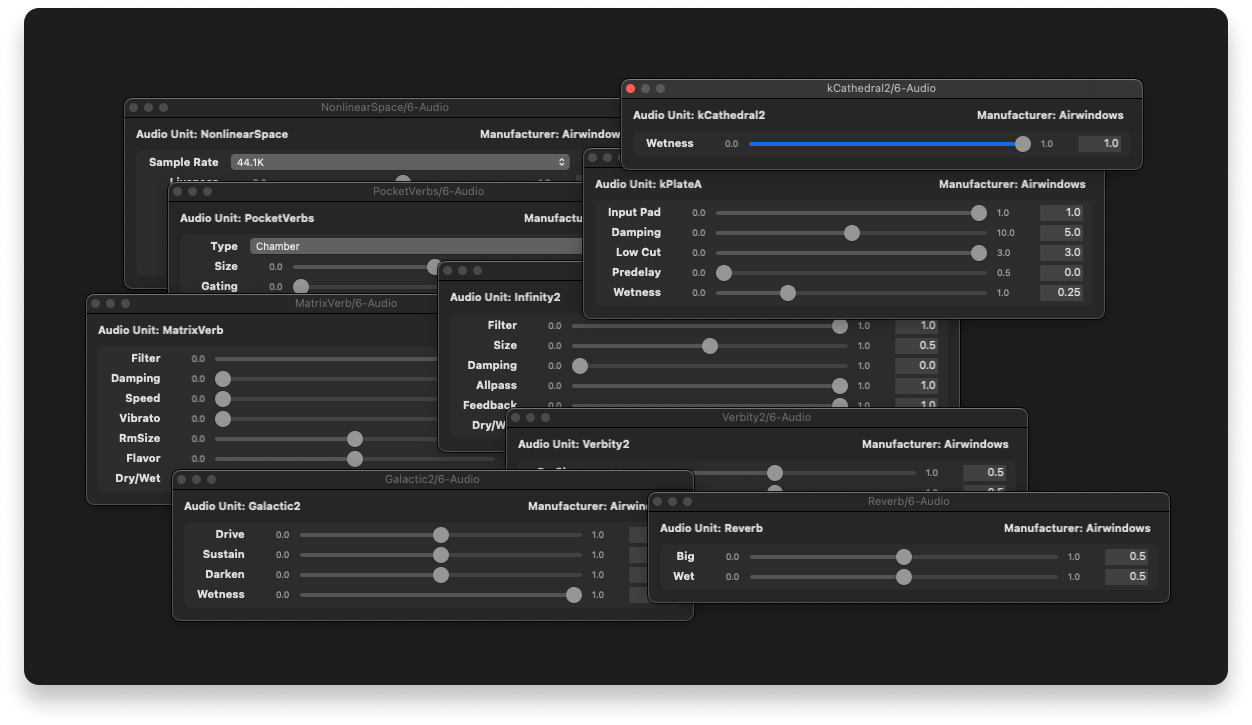
Overview of Airwindows Reverbs
| Type: | Various |
| Operating System: | macOS, Windows, Linux |
| Format: | VST, AU |
Airwindows is one of the most impressive collections of free audio effects we have come across, and the reverb lineup in particular deserves far more attention than it gets.
In our testing sessions, these reverbs ranged from clean and spacious to strange and experimental, and they fit everything from subtle ambience to sound design.
We really appreciate how lightweight and direct they felt, since the simple controls kept the focus on sound instead of menus.
Galactic2 gave us lush ambient tails, and MatrixVerb pushed us into more unconventional spaces.
Pros:
- Huge variety of reverb flavors, from realistic to experimental
- Lightweight plugins that ran efficiently
- Unique algorithms with plenty of character
Cons
- The catalog can feel overwhelming at first
- Minimal interfaces may take time to learn
Get the plugins here.
Back to top ⬆️
11. Relab LX480 (Paid)
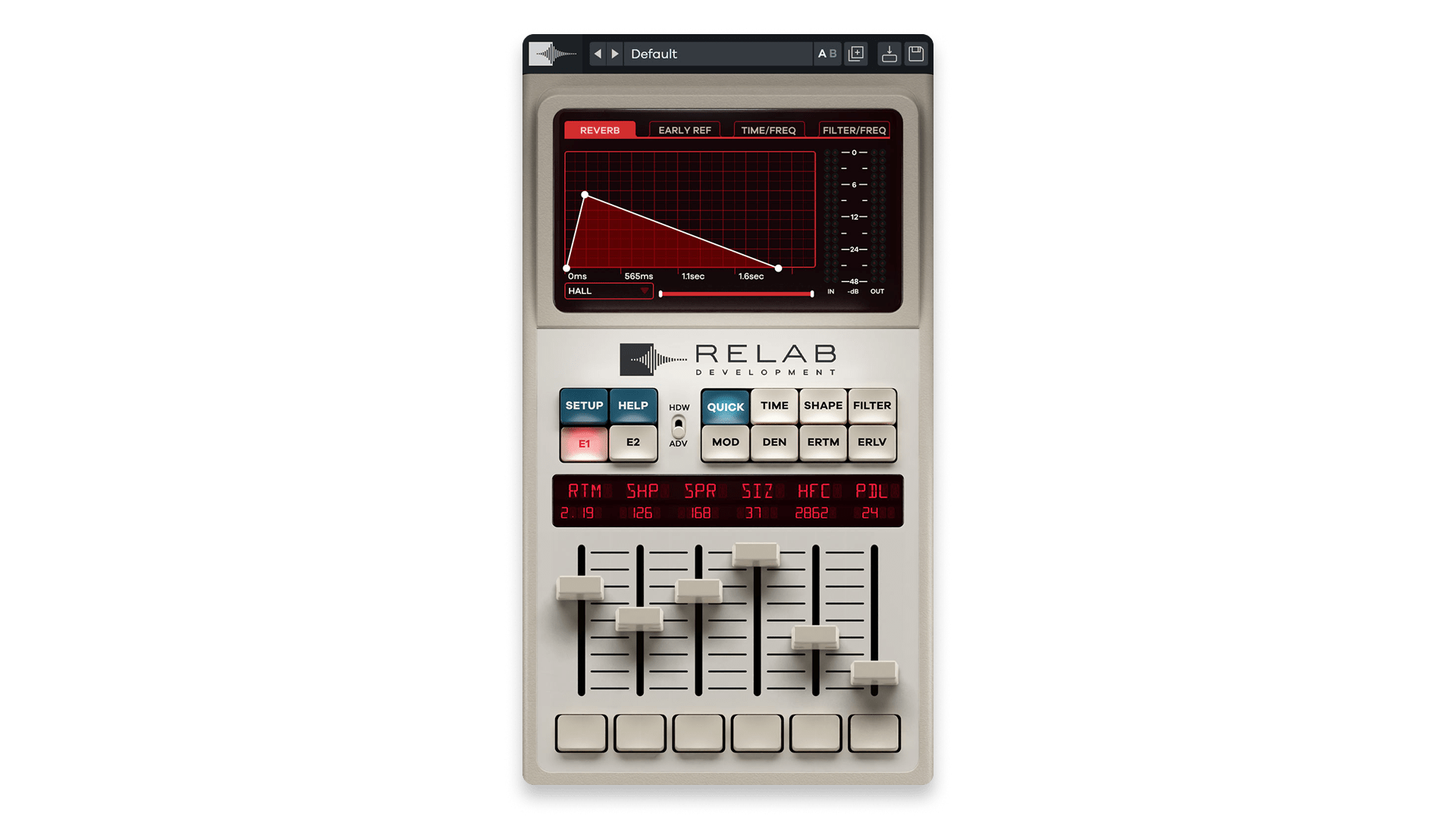
Overview of Relab LX480
| Type: | Vintage digital hall reverb |
| Operating System: | macOS, Windows |
| Format: | VST, VST3, AU, AAX |
| Price: | $349 |
Relab LX480 is a premium pick if you want that lush, larger-than-life Lexicon-style hall sound.
In our sessions, it gave us smooth, classic tails on vocals and synth leads, and it stayed musical even when we pushed size and decay.
The dual-engine options were something we found especially useful for bigger, layered spaces that still felt controlled.
If you want vintage digital grandeur with modern flexibility, this one delivers.
Pros:
- Iconic 480L-style tone with high fidelity
- Flexible routing and dual-engine options
- Excellent on vocals, snares, and synths
Cons
- Premium pricing
- Can take time to learn if you are new to the 480L workflow
Get the plugin here.
Back to top ⬆️
12. Denis Tihanov OrilRiver (Free)
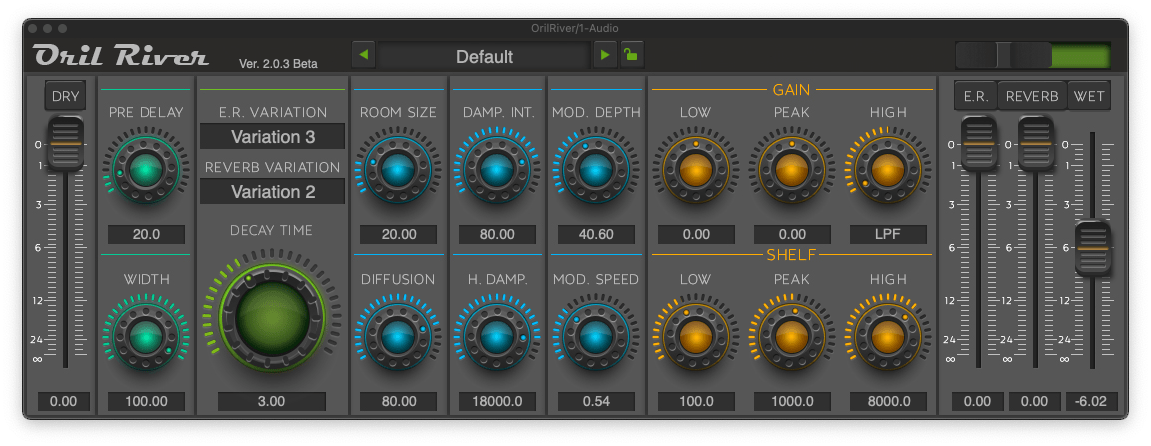
Overview of OrilRiver
| Type: | General-purpose algorithmic reverb |
| Operating System: | macOS, Windows |
| Format: | VST, AU |
OrilRiver has been a go-to free workhorse for years, and it still holds up if you want a flexible, good-sounding algorithmic reverb.
In our testing, it handled everything from smaller rooms to lush halls, and the early reflection options added extra nuance when we needed it.
We really appreciate how straightforward it felt, since you get useful controls like damping, EQ, and modulation without a complicated interface.
Even though development paused, it is still a great free option if you are building a toolkit on a budget.
Pros:
- Impressive sound quality for a free reverb
- Flexible controls with a simple interface
- Great on vocals, pads, and keys
Cons
- No longer actively updated
- macOS AU support can be unreliable in some setups
Get the plugin here.
Back to top ⬆️
13. iZotope Neoverb (Paid)
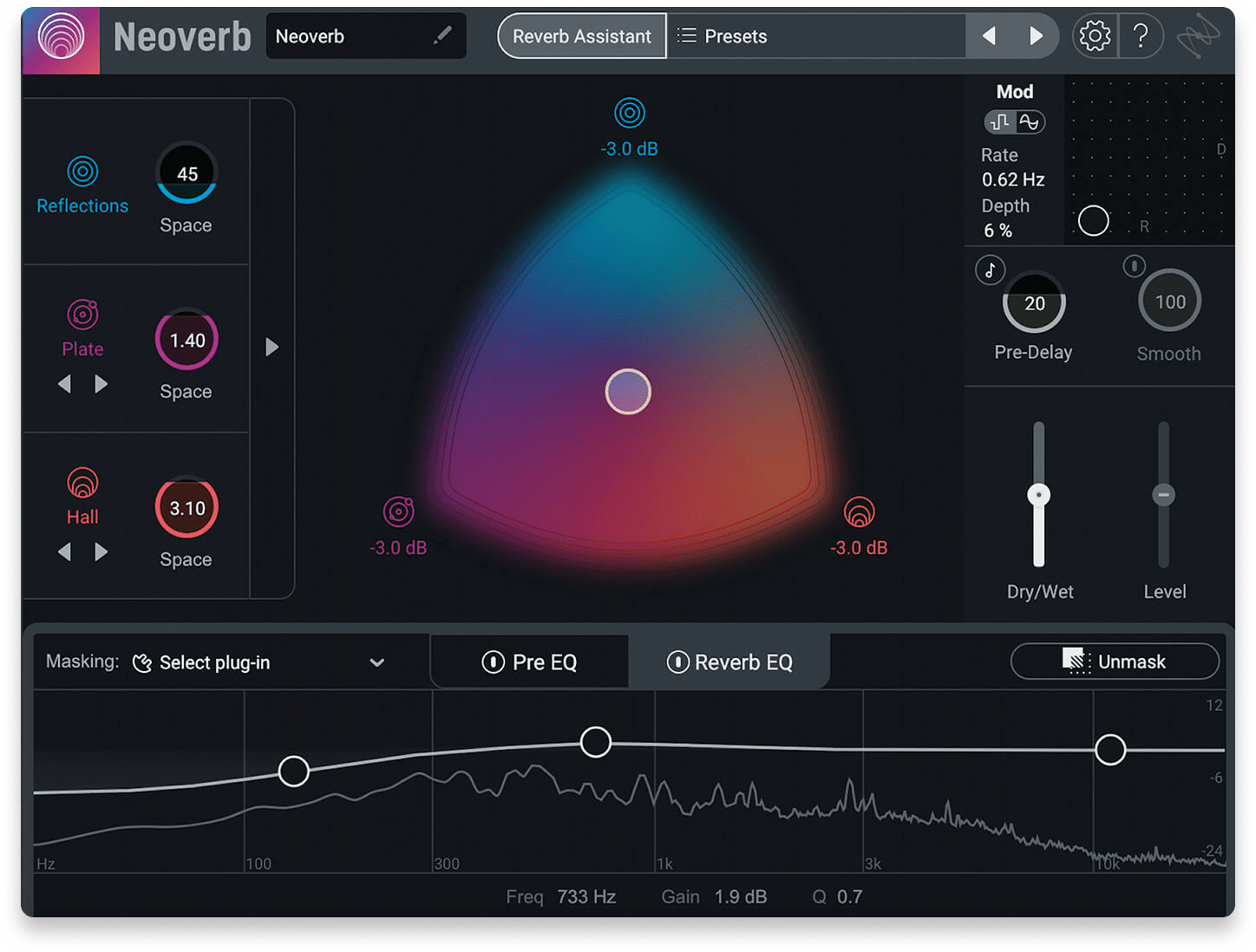
Overview of iZotope Neoverb
| Type: | Smart algorithmic reverb |
| Operating System: | macOS, Windows |
| Format: | VST, VST3, AU, AAX |
| Price: | $99 |
Neoverb is a smart reverb that helps you land on a polished space quickly, especially in busy mixes.
In our experience, it is a great fit when you want modern ambience that stays controlled and avoids muddiness.
We’re particularly fond of the guided workflow and EQ support, since it makes it easier to keep vocals and instruments clear while still adding depth.
If you like fast results with a little help along the way, Neoverb can be a real time saver.
Pros:
- Fast, guided workflow that gets you to a good sound quickly
- Modern tone that sits well in dense mixes
- Helpful EQ features to reduce masking
Cons
- Less focused on vintage character
- AI workflow may feel limiting if you prefer full manual control
Get the plugin here.
Back to top ⬆️
14. Variety of Sound epic reverbs (Free)
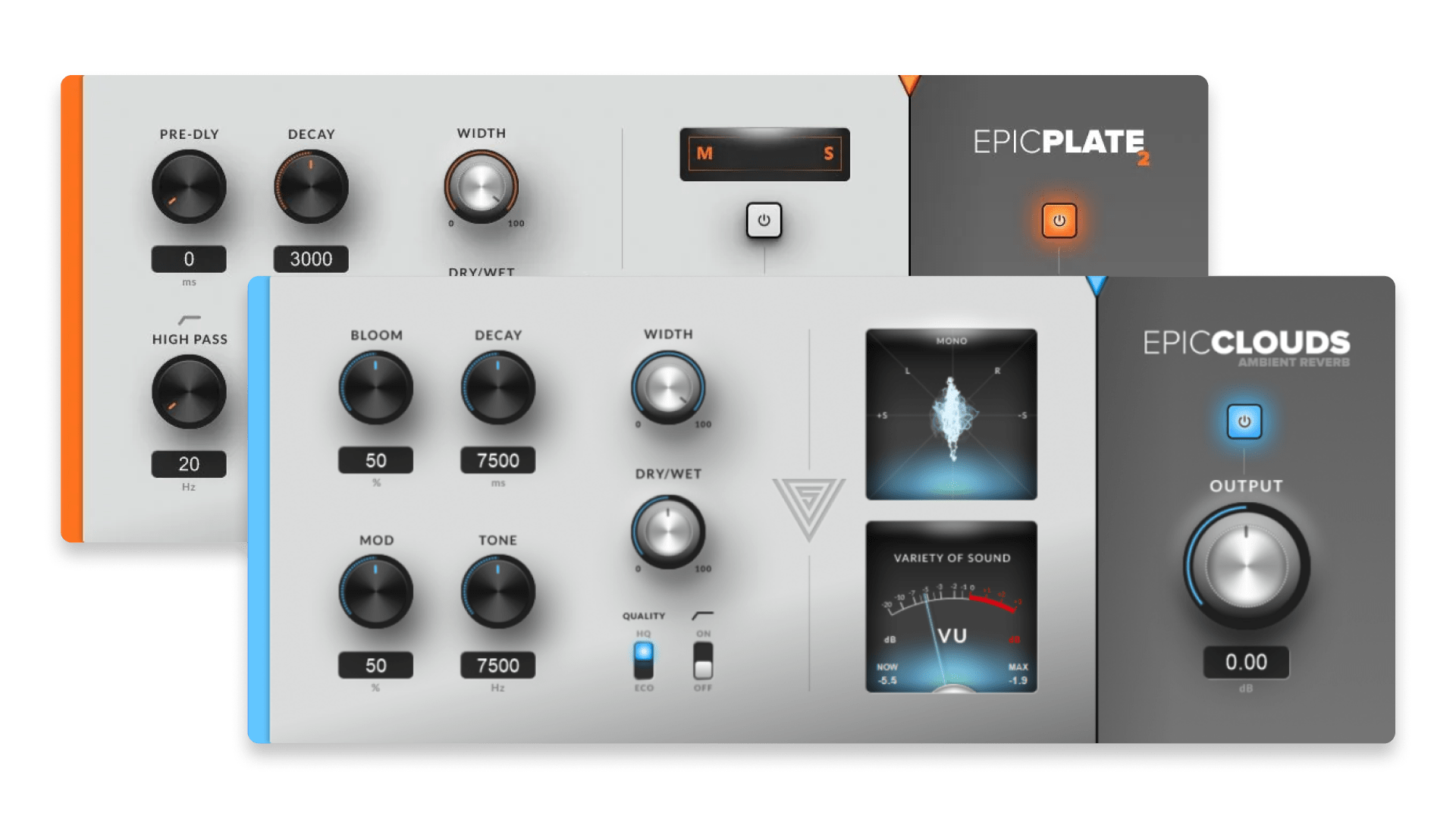
Overview of Variety of Sound Reverbs
| Type: | Ambient & plate |
| Operating System: | Windows |
| Format: | VST |
The Variety of Sound epic reverb family is a great reminder that some of the best character plugins are still free.
In our testing sessions, epicPLATE gave us a rich, classic plate vibe, and epicCLOUDS leaned into longer ambient tails that felt musical and smooth.
We really appreciate the focused approach, since each plugin aims at a specific space instead of trying to do everything.
If you are on Windows and want free reverbs with real personality, these are easy to recommend.
Pros:
- High-quality free reverbs with strong character
- Focused designs for plates and ambient tails
- Great option if you are building a Windows toolkit
Cons
- Windows only and VST only
- Interfaces can feel small on high-DPI displays
Get the plugins here.
Back to top ⬆️
15. Audified Linda IronVerb (Included in LANDR Studio)
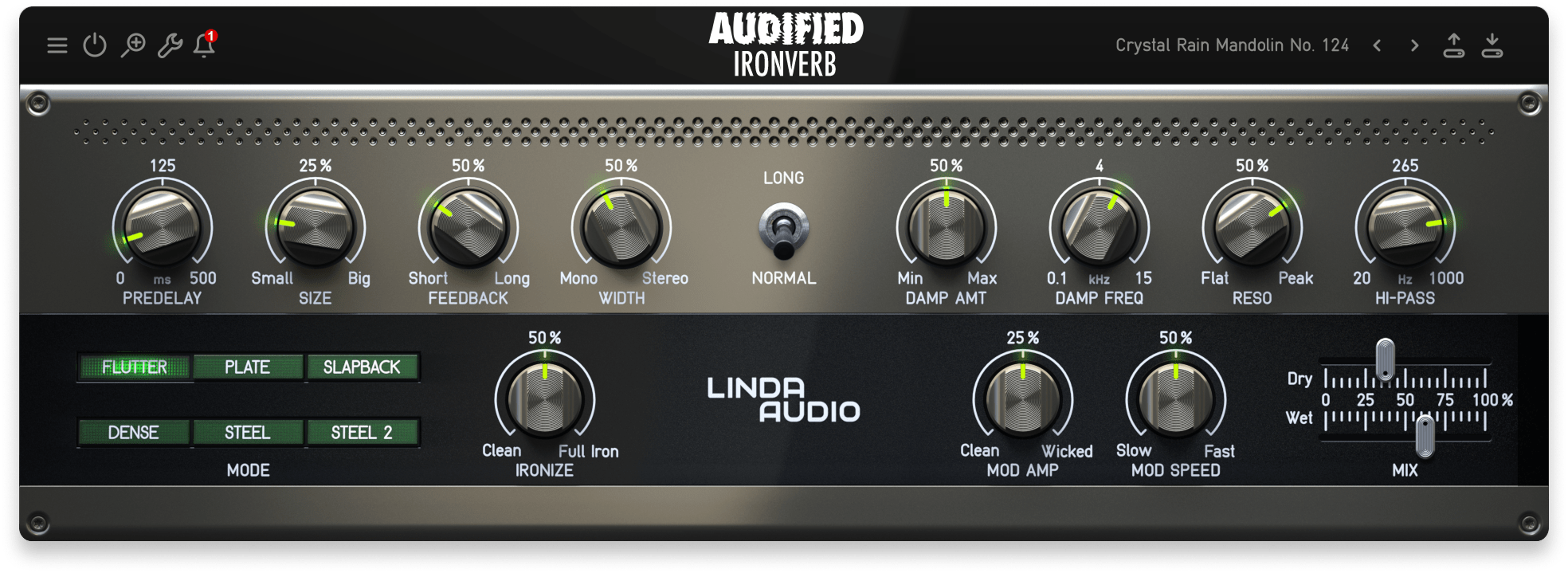
Overview of Audified Linda IronVerb
| Type: | Vintage-style character reverb |
| Operating System: | macOS, Windows |
| Format: | VST3, AU, AAX |
| Price (Separately): | $69 (Outside LANDR Studio) |
Linda IronVerb is a great choice when you want a reverb that adds character, not just space.
In our sessions, it felt especially good on vocals, guitars, and synth leads, and the tail added a finished vibe without needing much extra processing.
The Ironize modulation was something we found especially useful for adding motion and a slightly metallic sheen when we wanted the reverb to be part of the sound.
If you want a musical character reverb that is still easy to dial in, this one is worth keeping around.
Pros:
- Characterful tail that stays musical
- Ironize and modulation controls for extra movement
- Included in LANDR Studio
Cons
- Not aimed at ultra-realistic convolution spaces
- More of a color reverb than a do-everything suite
Get the plugin here.
Back to top ⬆️
Buyer’s guide: What to look for in a reverb plugin
What is a reverb plugin?
A reverb plugin simulates the sound of audio interacting with a physical or imagined space. Instead of sounding dry and upfront, reverb adds reflections, decay, and distance, helping sounds feel connected and three-dimensional in a mix.
Modern reverb plugins range from realistic room and hall simulations to highly stylized effects that create shimmer, motion, and atmosphere. Some are designed to stay subtle and transparent, while others are meant to be heard as part of the sound itself.
Whether you are mixing vocals, adding depth to drums, or creating cinematic textures, reverb is one of the most important tools in music production.
Algorithmic vs convolution reverb
Most reverb plugins fall into two main categories.
Algorithmic reverbs generate space using mathematical models. They are typically flexible, lightweight, and well suited to creative shaping and modulation. Plate reverbs, vintage digital halls, and ambient effects often fall into this category.
Convolution reverbs use impulse responses captured from real spaces or hardware units. They excel at realism and depth, making them ideal for acoustic instruments, orchestral material, and post-production work. They usually offer less extreme modulation but a more natural sense of space.
Some modern plugins combine elements of both approaches, offering realistic space with additional tone shaping and control.
What makes a good reverb plugin?
A good reverb plugin is not defined by how long or how large it can sound. It is defined by how well it works in real mixing situations.
Sound quality comes first. The reverb should feel musical and natural, with a tail that supports the source instead of masking it. Good reverbs maintain clarity even when used generously.
Workflow matters just as much. Clear controls, useful presets, and intuitive decay and tone shaping help you get to the right sound quickly, especially when working under time pressure.
Character versus transparency is another important decision. Some reverbs are designed to disappear into a mix, while others add color, modulation, and personality. Having at least one of each type gives you more creative flexibility.
Finally, performance and stability should not be overlooked. A reverb that sounds great but uses excessive CPU or behaves unpredictably will quickly become frustrating in larger sessions.
In the end, the best reverb plugin is the one that fits your workflow and musical goals. Spend time learning a few tools deeply, and you will get better results than relying on dozens of interchangeable options.

Michael Hahn is an engineer and producer at Autoland and member of the swirling indie rock trio Slight.
@Michael HahnGear guides, tips, tutorials, inspiration and more—delivered weekly.
Keep up with the LANDR Blog.