The 13 Best Guitar Plugins in 2026 (Free and Paid)
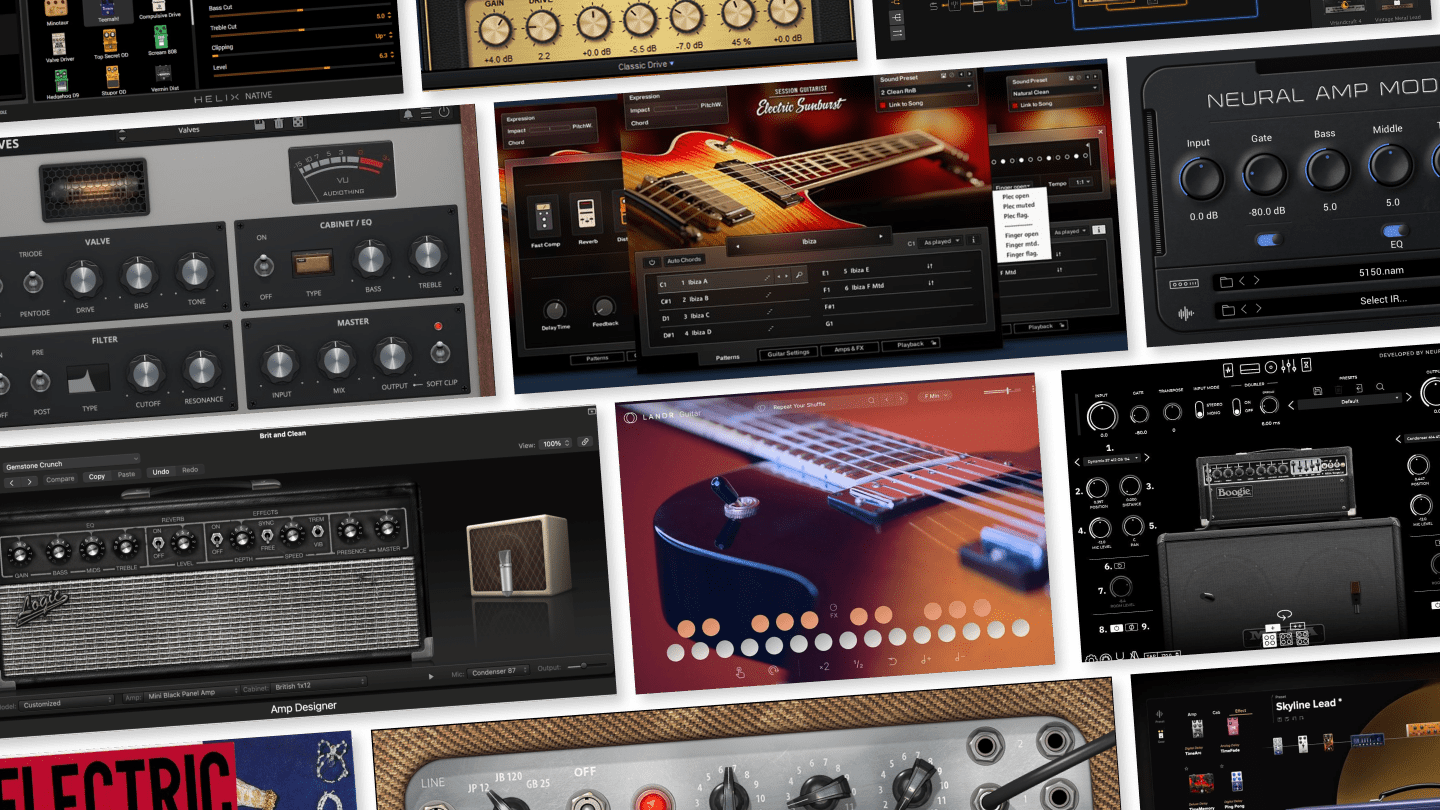
For guitarists who need great tone, using an amp simulator plugin or virtual guitar rig used to be hit or miss.
But today, there are amazing plugins that deliver world-class tone without requiring any traditional guitar gear.
Even so, knowing which guitar software to get isn’t easy. With so many quality options on the market, it’s hard to know which digital guitar rig will work for you.
That’s why we’re rounding up the best guitar plugins for great guitar tone in your DAW.
Let’s get started.
Best guitar plugins
- Neural DSP (paid, trial available)
- Native Instruments Session Guitarist (paid)
- Neural Amp Modeler (free)
- Positive Grid Bias X (paid)
- IK Multimedia AmpliTube CS (free)
- Audio Thing Valves (paid, subscription available)
- Line 6 Helix Native (paid)
- IK Multimedia MixBox SE (paid, subscription available)
- Your DAW’s built-in guitar plugins (free)
- UAD Tweed and Plexi (paid, trial available)
- LANDR Guitar (paid, subscription available)
- Blue Cat’s Free Amp (free)
- Spitfire LABS Electric Guitars (free)
TL;DR: Our top picks from each category
Our top picks for best guitar plugin
| Best guitar modeling plugin | Neural DSP |
| Best guitar instrument plugin | Native Instruments Session Guitarist |
| Best free guitar modeling plugin | Neural Amp Modeler |
| Best free guitar instrument plugin | Spitfire LABS Electric Guitars |
Best guitar modeling plugin: Neural DSP
Neural DSP is by far the best guitar amp modeler we’ve tried so far.
Its DSP algorithm-trained signal chains, expertly dialed in by legendary players, inspire confidence and produce truly excellent guitar tones.
Best guitar instrument plugin: Native Instruments Session Guitarist
Session Guitarist and its integration with Native Instruments Komplete Kontrol MIDI controller offered the most expression and inspiration in the guitar instrument category.
Pairing the controller with a meticulously recorded sample library creates an impressive guitar instrument plugin.
Best free guitar modeling plugin: Neural Amp Modeler
Despite its limitations, the community around Neural Amp Modeler and its ingenious DSP training algorithm make it an excellent choice for the DSP amp enthusiast.
The exciting new plugin is worth it for the interesting community around it that’s already captured and shared thousands of unique and free guitar tones that anyone can try.
Best free guitar instrument plugin: Spitfire LABS Electric Guitars
Spitfire LABS is behind many of the best free instrument plugins out there, so it’s no surprise to find it topping out the free guitar instruments on this list.
It’s got 10 unique guitar tones, all ready to play from your MIDI controller, making it a no-brainer addition to any plugin folder.
What to look for when shopping for a guitar plugin
When choosing a digital guitar rig, you’re chasing world-class tone without the hassle of traditional gear.
Here are three factors to consider as you shop.
Sound Quality and Realism
The best plugins use advanced modeling like DSP algorithm training (e.g., Neural DSP, Positive Grid Bias) or precise hardware emulation (e.g., UAD Tweed & Plexi) for authentic, responsive tone that behaves just like the real thing.
But even guitar plugins that use traditional circuit modeling without DSP algorithm training can sound very good and authentic, the key for these plugins is quality of their code and investment in development.
Price and Licensing
The paid plugins in this shopping guide represent the best bang you can get for your dollar. Investing in these tools is an investment in the best possible sound on the market.
Free plugins on this list were vetted for offering decent quality, even though they may be feature limited compared to paid option.
In the middle tier, we suggest looking at paid subscriptions that offer bundled plugins, including mid-tier guitar plugins. Subscriptions and bundles like these are designed round out your plugin folder and provide maximum value.
Hardware Integration
For the gigging musician, seamless cross-compatibility between the software and physical hardware can be important.
And for producers and professional artists, integration with specialized interfaces offering zero-latency and DSP support is a major pro.
Guitar plugin terminology to know
Guitar plugins use some specific audio modeling tools to produce convincing guitar effects.
Here’s a few terms to watch out for as you shop for guitar plugins.
IR (Impulse Response): This is a digital snapshot of the sonic character of a speaker cabinet or acoustic space. Amp modelers use IRs to accurately simulate the sound of different cabinets being miked up, fundamentally shaping the final tone.
DSP (Digital Signal Processing): The use of mathematical algorithms to model and process audio signals. Plugins using DSP-trained algorithms (like Neural DSP and Neural Amp Modeler) are praised for producing the most realistic and responsive amp simulations.
Latency: The delay between playing a note on your guitar and hearing the sound from the computer. For recording or live performance, zero latency is critical for a truly realistic and playable experience (e.g., UAD’s Apollo integration).
Amp (Amplifier Head): Provides the core tone and power—the clean, crunch, or lead character. DSP-trained algorithms train themselves using sweep recordings through various amp heads.
Cabinets (Speaker Cabinet): The enclosure that colors and projects the sound. In the digital realm, IRs model the cabinet and mic, letting you mix and match them for endless tonal possibilities.
Types of guitar plugins
Guitar plugins can be broken down into three categories: amp modeling plugins, sample-based guitar instruments and effects plugins.
Amp modeling Plugins simulate the entire guitar signal chain including amp head, speaker cabinet, and sometimes effects pedals. They are the backbone of digital guitar tone.
Examples include Neural DSP, Neural Amp Modeler, Line 6 Helix Native.
Sample-based Guitar Instrument VSTs are played with a MIDI controller, using meticulously pre-recorded audio samples to generate realistic, expressive guitar performances.
These are the best free instruments right now.
Examples include Native Instruments Session Guitarist and Spitfire LABS Electric Guitars.
Effects Plugins offer specialized tone modifications with a specific focus on the guitar. In this article, we looked at a couple of effects plugins, including a multi-effects rack in MixBox SE and a distortion plugin in Audio Thing Valves.
What we looked for to find the best guitar plugins
The best guitar plugins ultimately are the ones that deliver world-class tone without the need for any traditional gear.
While we tested products for this article we prioritized realism, sound quality, creative expression, value and innovations like hardware or AI integration.
Let’s dive into the top guitar plugins.
1. Neural DSP (paid, trial available)
The best guitar amp VST we’ve heard so far.
Neural DSP Specifications
| Type: | Impulse response amp modeler |
| Compatibility: | Mac, Windows |
| Features: | Artist-made presets, comprehensive effects, hardware integration |
| Presets: | 150+ |
| Price: | Starts at $105 USD |
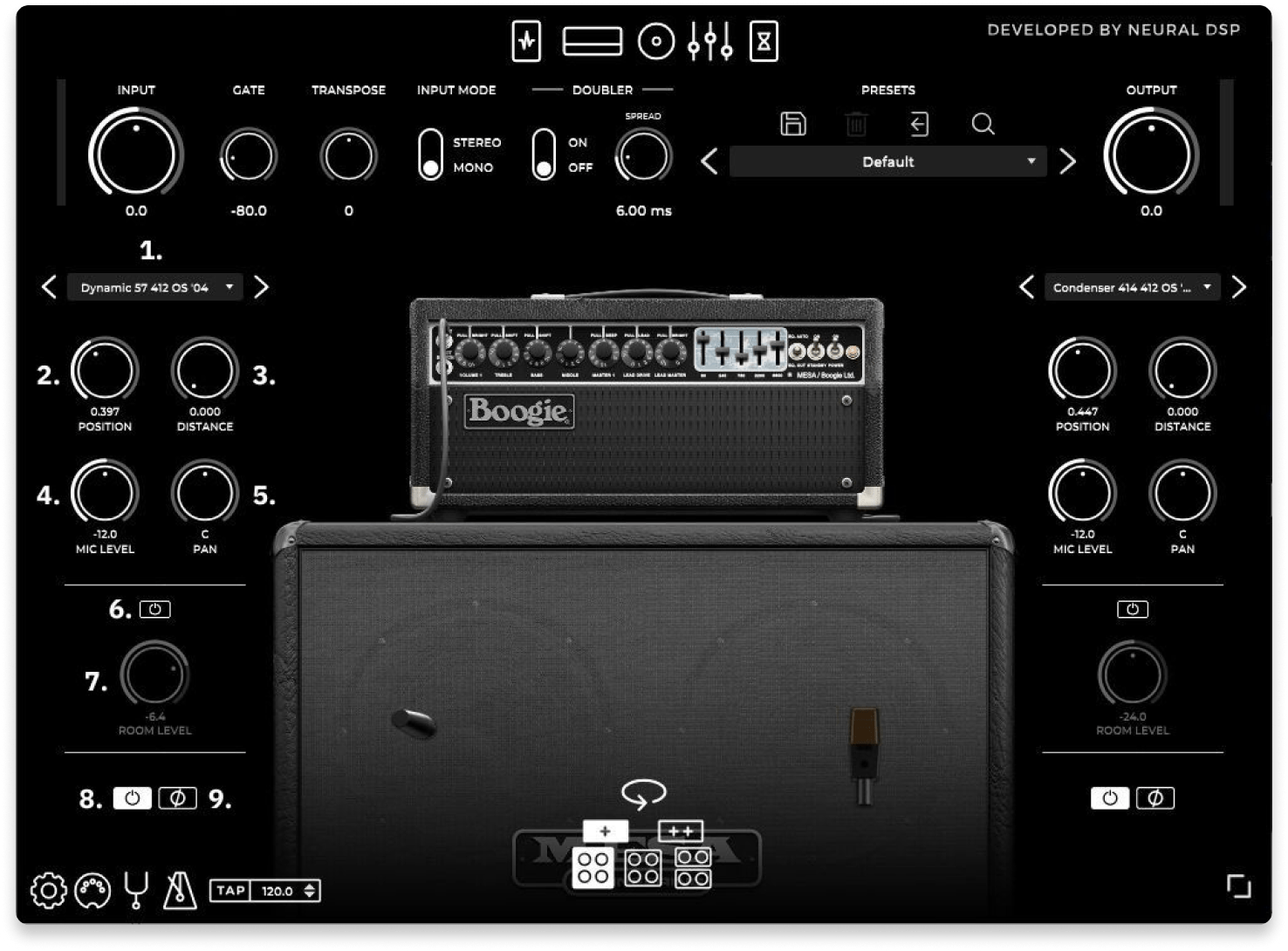
Neural DSP is a powerful force in the world of guitar plugins. Their unique approach highlights a single amp or artist and delivers some of the best sound amp simulations we’ve heard.
Neural DSP uses state-of-the-art IR and DSP modeling built with real amps, combined with a serious focus on producing incredibly realistic amp settings and controls.
Out of all the amps we tested, Neural DSP amps sounded and behaved like real guitar amps, offering the most realistic response to knob adjustments.
Rather than throwing endless options, effects and settings at the user, Neural DSP lets you interact with their amp plugins, just like any guitarist would play with the knobs and settings found on a real guitar amp.
That said, Neural DSP has also partnered with legendary guitarists like Tom Morello, Cory Wong, John Mayer and Tosin Abasi, offering preset collections dialed in to their tones.
It gives users the opportunity to use the sound of their favorite players as a solid starting point.
On top of all that, Neural DSP’s plugin integrate seamlessly with its powerhouse line of Quad Cortex pedals, making it easy to take any of its amps, settings and effects on stage and beyond.
If you’re looking to capture specific tones as accurately as possible, any of Neural DSP’s options should be on your list.
Pros:
- One of the most convincing amp simulators we’ve heard
- Authentic presets built by legendary guitarists
- Realistic-sounding amp controls
- Excellent-sounding effects modules
- Seamless integration with Quad Cortex pedals
Cons:
- Guitarist collections sold separately
- Quad Cortex pedals come at a higher price tag
2. Native Instruments Session Guitarist (paid)
The most realistic guitar instrument VSTs on the market.
Native Instruments Session Guitarist Specifications
| Type: | Sample-based guitar instrument |
| Compatibility: | Mac, Windows |
| Features: | 5.8GB+ sample library, 153 picking patterns, KOMPLETE MIDI controller integration |
| Presets: | 5 amp models, 3 distortion effects, 4 modulation effects |
| Price: | $99 USD |
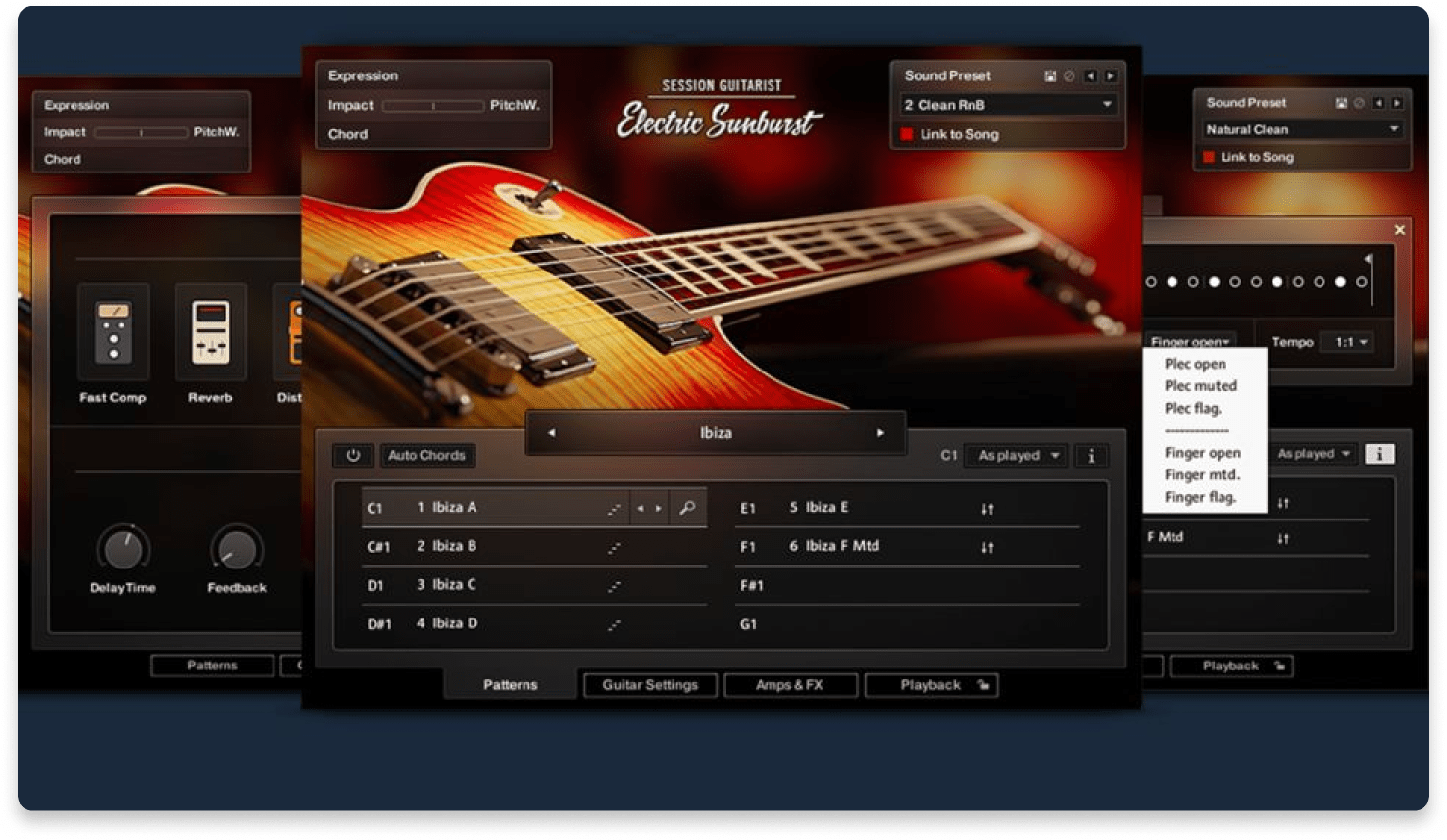
The Session Guitarist suite of guitar instrument VSTs from Native Instruments is the most realistic sample-based guitar plugin we’ve seen to date.
Recorded with meticulous detail, these plugins offer a ton of control over articulation, tone, picking, strumming and much more.
Session Guitarist’s Electric Ruby and Electric Sunburst editions in particular offer convincing re-creations of classic Gibson ES-335 and Les Paul guitars, respectively.
But you’ll also find sample-based Stratocaster, Telecaster, Acoustic and Jazz Bass versions to choose from.
Each sample-based guitar instrument is designed to integrate smoothly with Native Instruments’ Komplete Kontrol MIDI controller, which offers precise control over a variety of guitar articulations like bends, slides, picking and more.
If you’re looking for a serious MIDI-powered sample-based instrument to recreate legendary guitar tones in your DAW, there’s nothing better than Session Guitarist.
Pros:
- A convincing, meticulously recorded sample library
- Control every imaginable guitar articulation
- Good selection of amps
- Option to route DI signal into guitar amp plugins
Cons:
- Steep learning curve
- Requires piano keyboard skills
- Guitar sample libraries sold separately (not bundled)
3. Neural Amp Modeler (free)
The best free guitar amp VST.
Neural Amp Modeler Specifications
| Type: | Amp modeling plugin |
| Compatibility: | Mac, Windows |
| Features: | Open-source, large community offering loadable IRs for free |
| Presets: | Growing collection of community-made presets for download |
| Price: | Free |
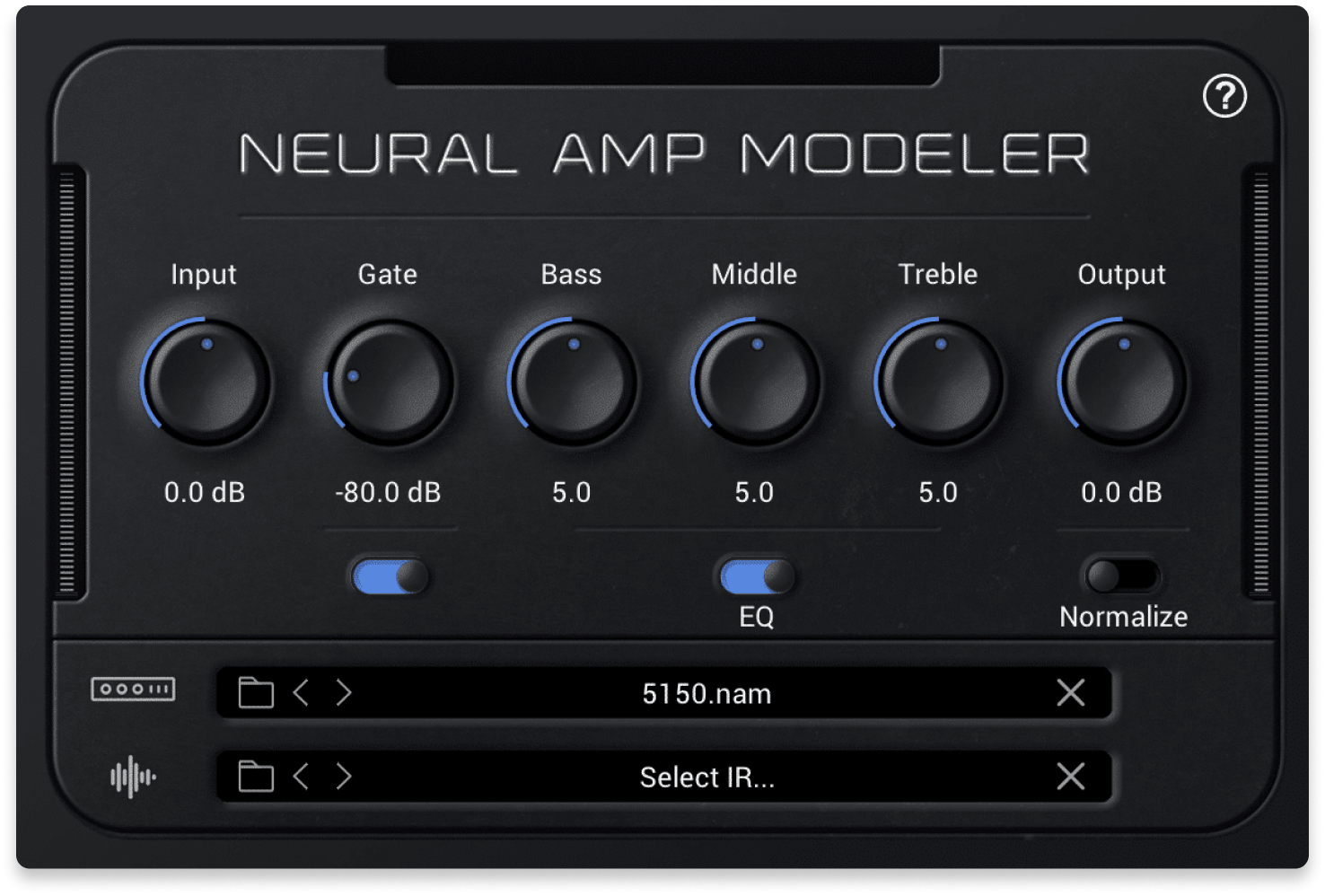
Neural Amp Modeler is an amazing, free, open-source amp modeling plugin every guitarist needs to check out.
Like Neural DSP, Neural Amp Modeler trains its machine learning algorithms on sweep recordings that give it the information needed to produce a digital version of any guitar amplifier.
It’s like a camera that stores a digital snapshot of an amp’s settings and tone, making it possible to load an amp sound into Neural Amp Modeler or share it online through Neural Amp Modeler’s community website, Tone3000.
It can even snapshot distortion effects and entire signal chains (although impulse response recordings are required to store time-based effects like reverb or delay).
The results are incredibly responsive and authentic re-creations of guitar amplifiers and their exact settings and microphone tones at the time of recording.
Of course, the main limitation is that these captures essentially freeze the amp settings when the modeling file is recorded, meaning that tone customizations are limited once shared on Tone3000.
But the community Neural Amp Modeler has built around its tone-sharing website, Tone3000, is substantial, allowing users to browse through tens of thousands of shared tones.
Pros:
- Free
- 1000s of tones to choose from
- Save your own guitar tones
Cons:
- Limited customization when downloading amp responses
4. Positive Grid Bias X (paid)
A close runner-up for the best guitar amp modeling VST.
Positive Grid Bias X Specifications
| Type: | Amp modeling plugin |
| Compatibility: | Mac, Windows |
| Features: | 33 amp models, 63 effects pedals, 25 cabinet models |
| Presets: | AI-powered text-to-preset feature |
| Price: | $149 USD |
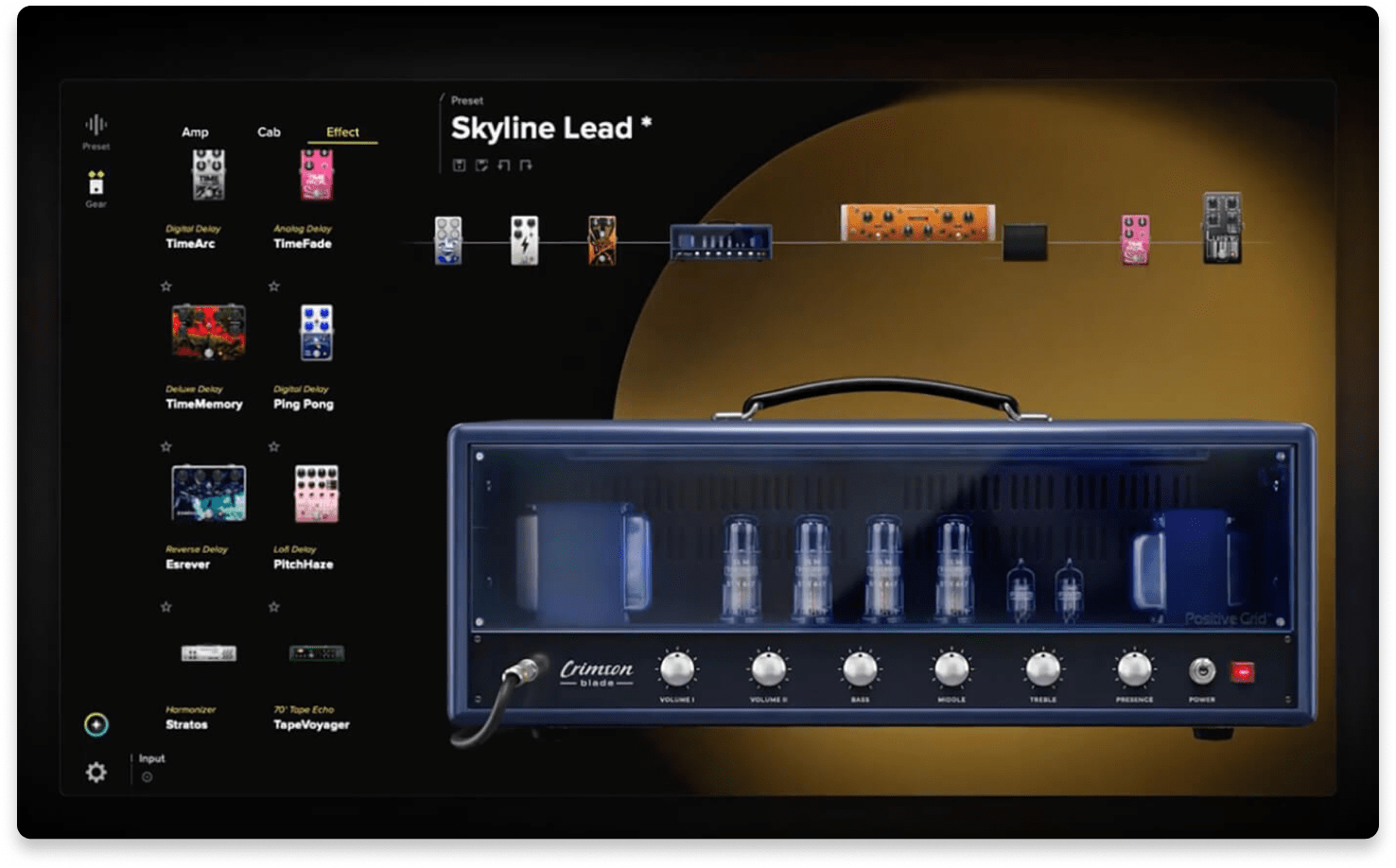
Positive Grid has long been a guitar plugin company with extreme commitment to accuracy, but its newest edition, Bias X, is taking guitar plugins into the future with the deepest integration with AI we’ve seen yet.
Their software takes a unique approach, accounting for every tiny detail in the circuitry of guitar gear by training its amp, pedal and cabinet models on machine learning DSP algorithms.
The result is a set of incredibly accurate and satisfying amp simulations, alongside a huge library of excellent pedals and effects.
But what takes Bias X into the future is its unique text-based AI prompting engine that turns prompts into presets.
The ChatGPT-like interface can take feedback, suggestions and even audio references and turn them into remarkably accurate and inspiring signal chains.
Ask it to make any guitar tone imaginable, from sludgy metal to bright, chorussy 80s tones and it’ll build an entire signal chain that accurately reflects your input.
It’s an interesting and inspiring way to dial in guitar tones while skipping endless preset banks and menu diving.
Pros:
- Impressive library of DSP-algorithm trained amps, pedals and cabs
- Remarkably useful AI-powered text-to-effect feature
- Fair price considering how much is included and quality
Cons:
- No signature presets from notable guitarists
- No brand-name amplifiers
5. IK Multimedia AmpliTube CS (free)
One of the most popular free guitar amp VSTs.
AmpliTube CS Specifications
| Type: | Amp modeling plugin |
| Compatibility: | Mac, Windows |
| Features: | Free edition includes 5 amps and 10 stompbox effects |
| Presets: | 42 models with base edition |
| Price: | Free |
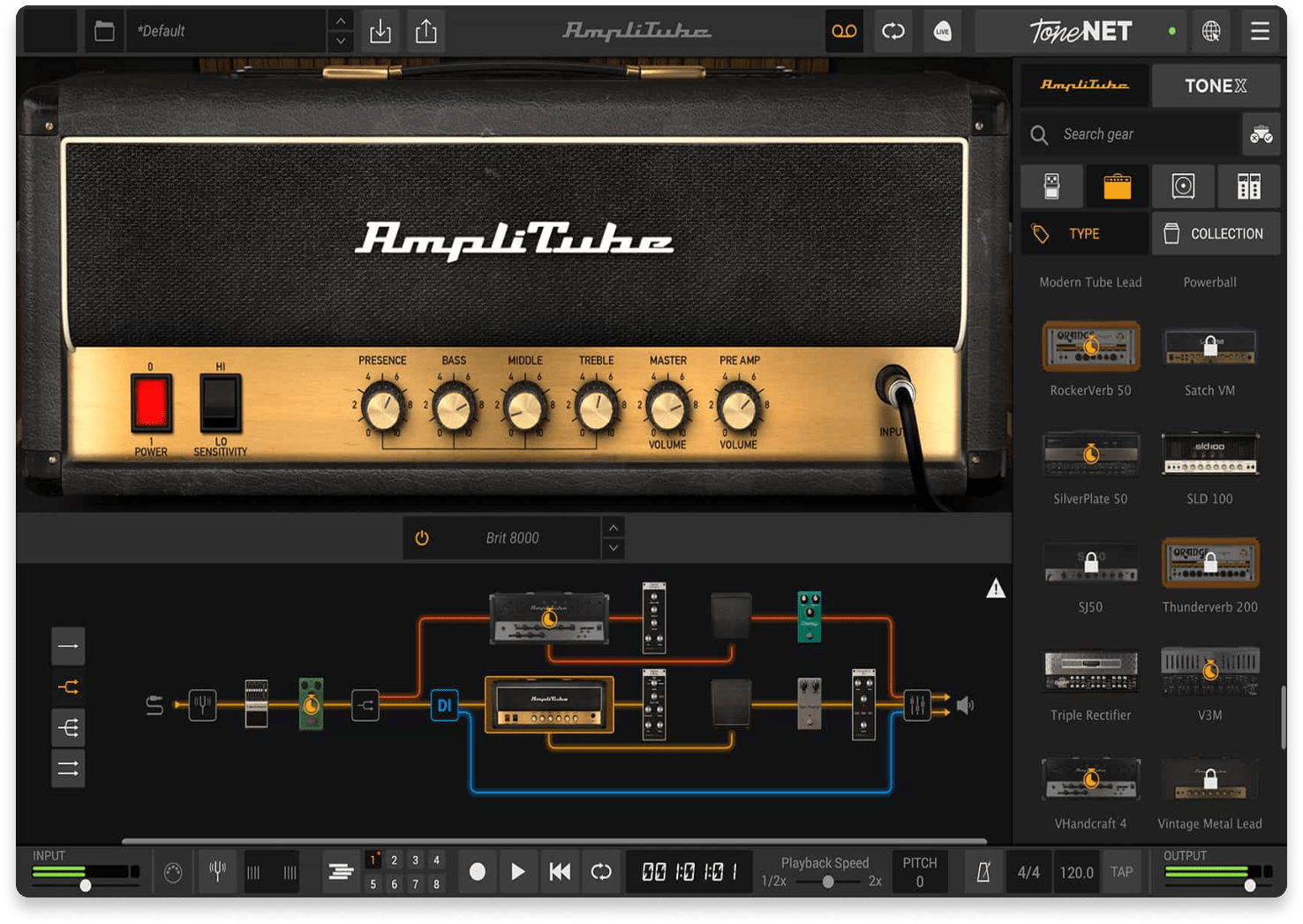
IK Multimedia AmpliTube was one of the first quality amp simulators on the scene, and it’s still an excellent option for guitar VSTs today.
Now in its fifth edition, AmpliTube features some officially licensed emulations of the amps, effects and artist rigs it models.
It may seem like a cosmetic detail, but legendary guitar heroes and brands giving their stamp of approval means that the emulations are good enough for the toughest critics.
AmpliTube also allows you to load in your own speaker IRs, allowing users to transform the sound of any amp simulator to their custom specifications.
AmpliTube comes in several different packages, including a free tier with AmpliTube 5 Custom Shop. You can start there and buy add-on models as you go to build your perfect custom amp sim arsenal.
Pros:
- Base CS edition is free
- Free edition includes 5 amp models
- Free trial of brand-name amps and signature player models
- Included IR loader
Cons:
- The free edition is limited to basic, non-branded models
- Limited stompbox effects with the free edition
6. Audio Thing Valves (paid, subscription available)
The best tube overdrive effects plugin for guitar
Audio Thing Valves Specifications
| Type: | Distortion plugin |
| Compatibility: | Mac, Windows |
| Features: | 8 guitar cabinet models, 16x oversampling, filter controls |
| Presets: | 35 |
| Price: | $59 USD, included with LANDR Studio subscriptions |
When you’re recording guitar in the DAW, you’re often looking for the warmth, distortion and saturation that hardware tube amps are loved for.
That’s why tube distortion VSTs like Valves from Audio Thing are incredibly valuable for creating good guitar tone in a digital environment.
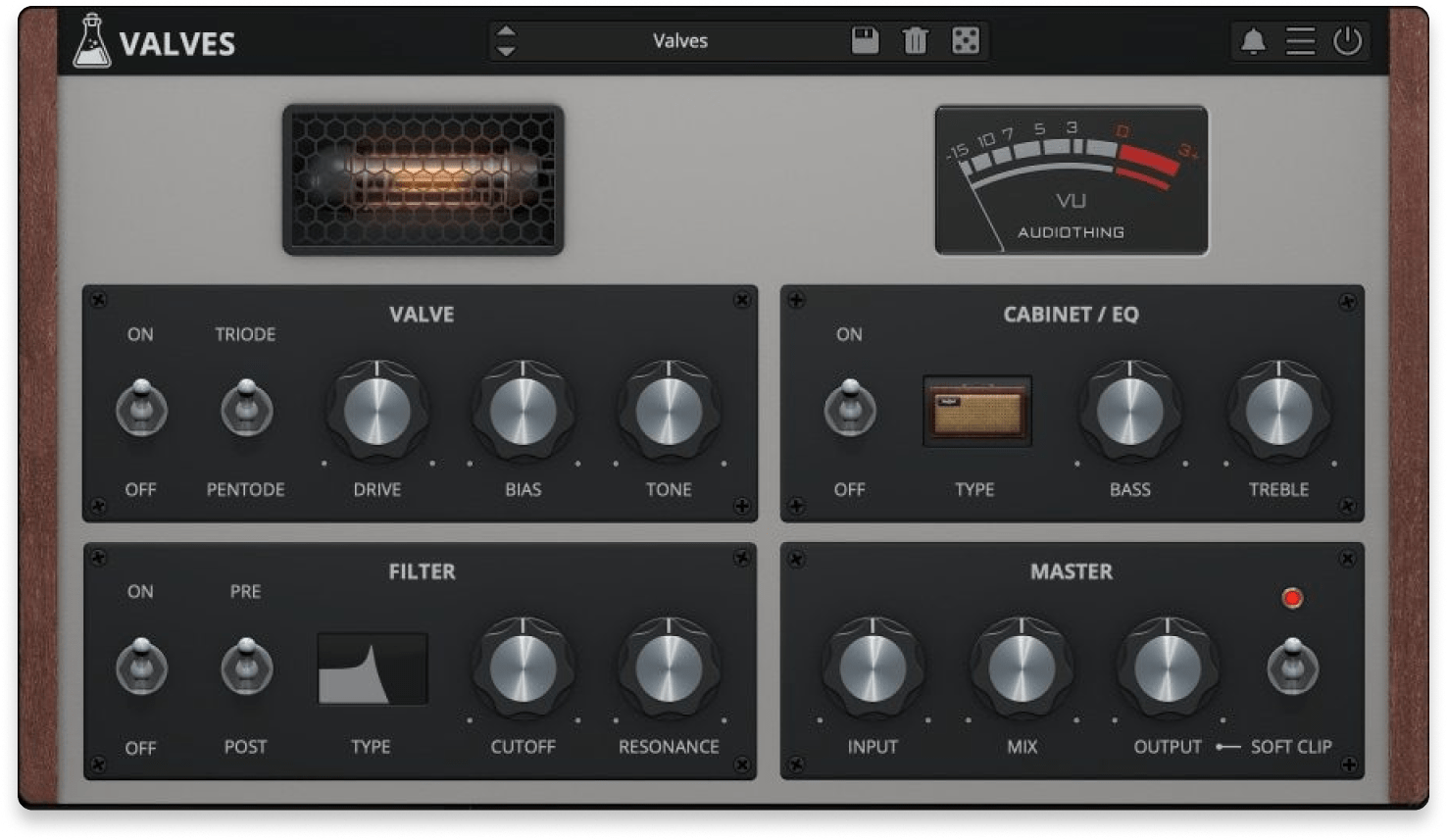
Valves is an excellent option with its meticulously engineered, professional sound that accurately recreates the warmth and character tube overdrive gives to guitar signals.
It includes a selection of 8 guitar cabinets, with tone controls and filter controls for added tone sculpting.
In our testing, we found that Valves was excellent for adding vintage sounding tube warmth on its on or as an added step to any guitar signal chain.
It’s a must-have, especially considering that it comes with LANDR Studio subscriptions.
Pros:
- Convincing tube distortion effect
- Added cabinet simulation offering extra guitar tones
- Filter knob section for added tone sculpting
- Included with LANDR Studio subscriptions
Cons:
- Lacking the tone controls and effects of a dedicated guitar amp plugin
7. Line 6 Helix Native (paid)
The best guitar VST for physical pedal integration.
Line 6 Helix Native Specifications
| Type: | Amp modeling plugin |
| Compatibility: | Mac, Windows |
| Features: | 112 amp models, 276 effects pedals, 86 speaker IR responses |
| Presets: | 1000+ |
| Price: | $399 USD |
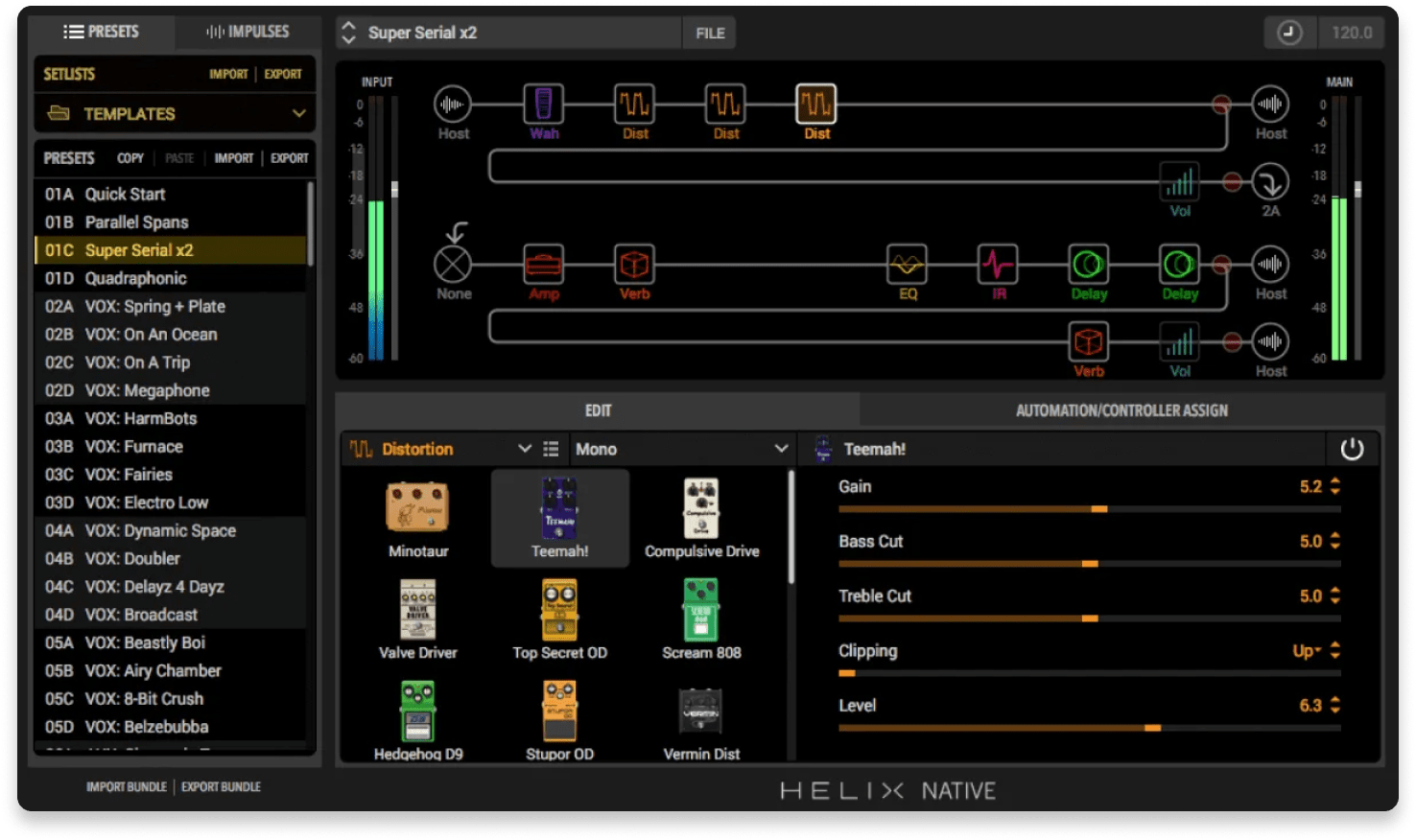
Helix comes in several form factors, but Helix Native is the software version of the tech that runs as a plugin.
The plugin comes packed with hundreds of convincingly well-made amp models, effects and impulse responses, giving producers the ability to build any guitar signal chain imaginable.
But more exciting is Helix Native’s integration with its Helix amp and effects processing pedals in Helix Floor and Helix LT.
This modern take on the multieffects pedal essentially puts the entire Helix Native plugin into a pedal that’s built for the demands of live performance and touring.
Even better, every signal chain and amp setting you build in the plugin can be instantly copied into the pedal, meaning you can carry around dozens of dialed-in presets for any of its custom amps wherever you go.
That’s why Line 6’s Helix hardware is one of the most respected options for guitar players who need instant access to thousands of different tones in their live rigs.
Pros:
- Huge library of amps, effects and IRs
- Every signal chain is 100% cross compatible with Helix pedals
Cons:
- Premium tier pricing
- Most effective when combined with Helix hardware
8. IK Multimedia MixBox SE (paid, subscription available)
The best guitar amp and effects collection on a budget.
MixBox SE Specifications
| Type: | Effects rack |
| Compatibility: | Mac, Windows |
| Features: | 4 amps, 20 effects modules |
| Presets: | 100+ |
| Price: | $79.99 USD, Included with LANDR Studio plans |
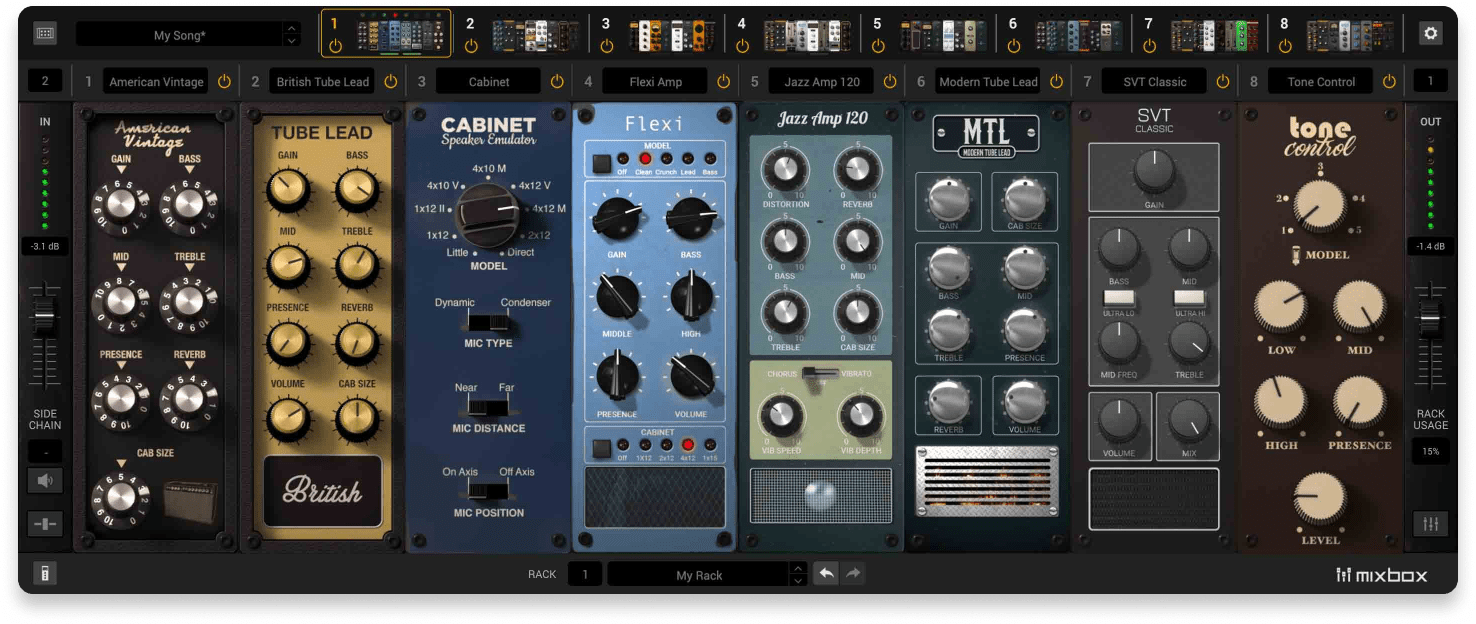
IK Multimedia’s MixBox SE plugin puts the already excellent amp simulations of AmpliTube into a fully-fledged effects rack.
The four amps included with MixBox SE sound great, especially when paired with MixBox’s collection of distortion, reverb, delay, EQ, compressor and saturation effects.
In particular, its lo-fi and delay effects module sounded particularly good in our testing.
It’s a great tool for building out a custom signal chain quickly in your DAW, especially considering the cost.
You can buy MixBox SE standalone, but considering that perpetual licenses for it come bundled in yearly LANDR Studio Pro subscriptions, you can’t go wrong picking this one up with all the other great guitar plugins it includes.
Pros:
- Good sounding amp simulations
- Great effects modules for added tone sculpting
- Perpetual license included with LANDR Studio subscriptions
Cons:
- Limited to a smaller selection of amps
- Less responsive compared to DSP algorithm-trained plugins
9. Your DAW’s built-in guitar plugins (free)
A free guitar plugin you might already own.
Specifications
| Type: | Amp modeling plugins |
| Compatibility: | Your DAW’s stock plugins |
| Features: | Depends on DAW |
| Presets: | Depends on DAW |
| Price: | Free |
Guitar VSTs used to be less common in music production. That meant there were only a handful of third-party developers releasing them.
Now with so many players turning to software to record guitar, many flagship DAWs ship with guitar plugins built-in.
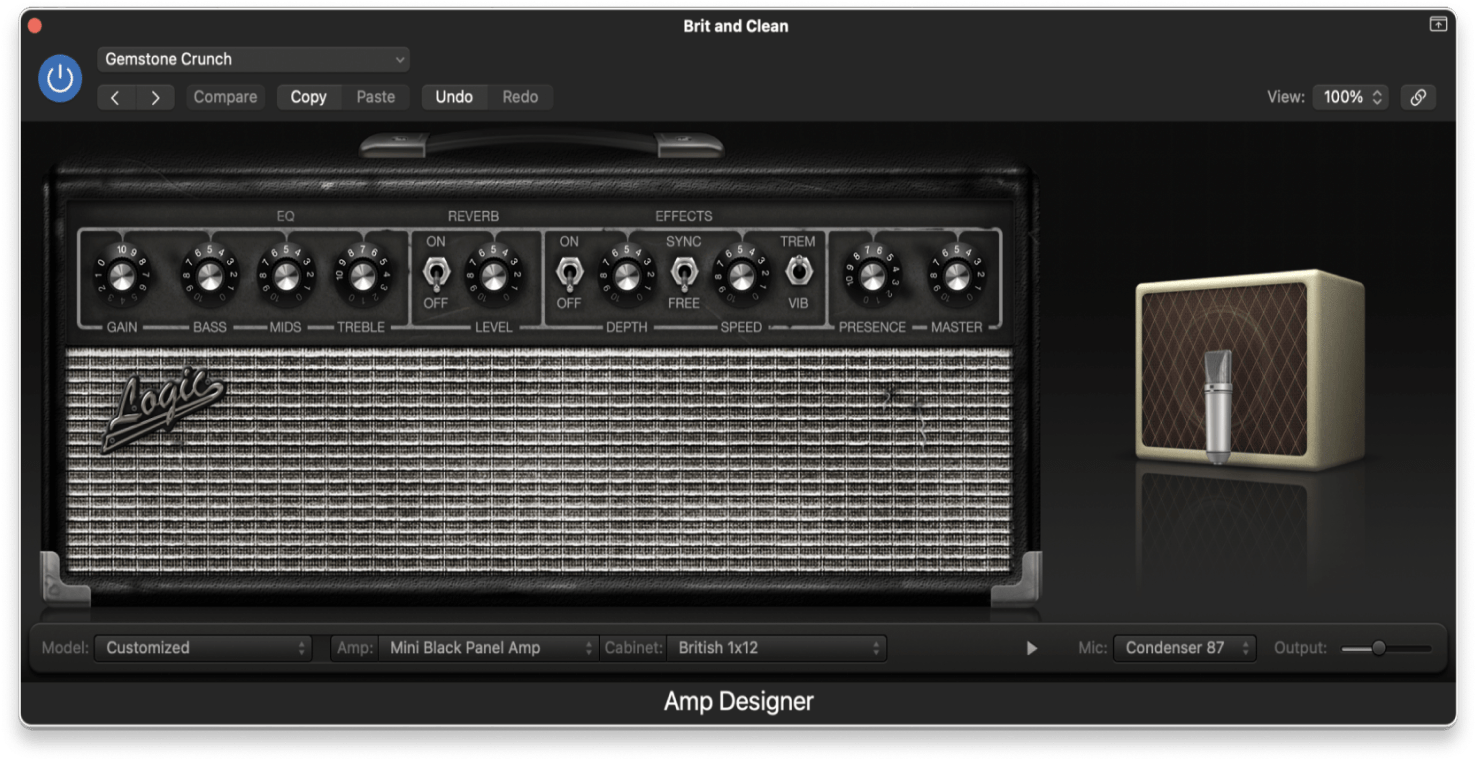
In particular, if you use DAWs like Logic Pro X or Ableton Live 11 you already have a handful of decent guitar amp simulators at your disposal.
In fact, we think Logic features some of the best guitar amp and stompbox emulations around.
The Amp Designer plugin has accurate re-creations of a range of vintage, modern and boutique classics, not to mention an impressive selection of cabs and speakers.
And Pedalboard gives you endless combinations of sought-after effects for every type of tone imaginable.
Since Live 8, Ableton has included the excellent Amp and Cab devices. In particular, Ableton Live’s Amp is powered by Softube’s respected emulation technology. It’s a simple but satisfying guitar VST that gets the job done.
Pros:
- Included with a DAW you may already own
- Decent quality sound out of the box
Cons:
- Less advanced than dedicated plugins
- Less responsive than DSP algorithm-trained plugins
10. UAD Tweed and Plexi (paid, trial available)
The best guitar VST for Universal Audio Apollo interface owners.
UAD Tweed and Plexi Specifications
| Type: | Amp modeling plugin |
| Compatibility: | Mac, Windows |
| Features: | UAD Apollo interface integration |
| Presets: | 20+ per amp |
| Price: | $149 USD for Tweed, $99 USD for Plex |
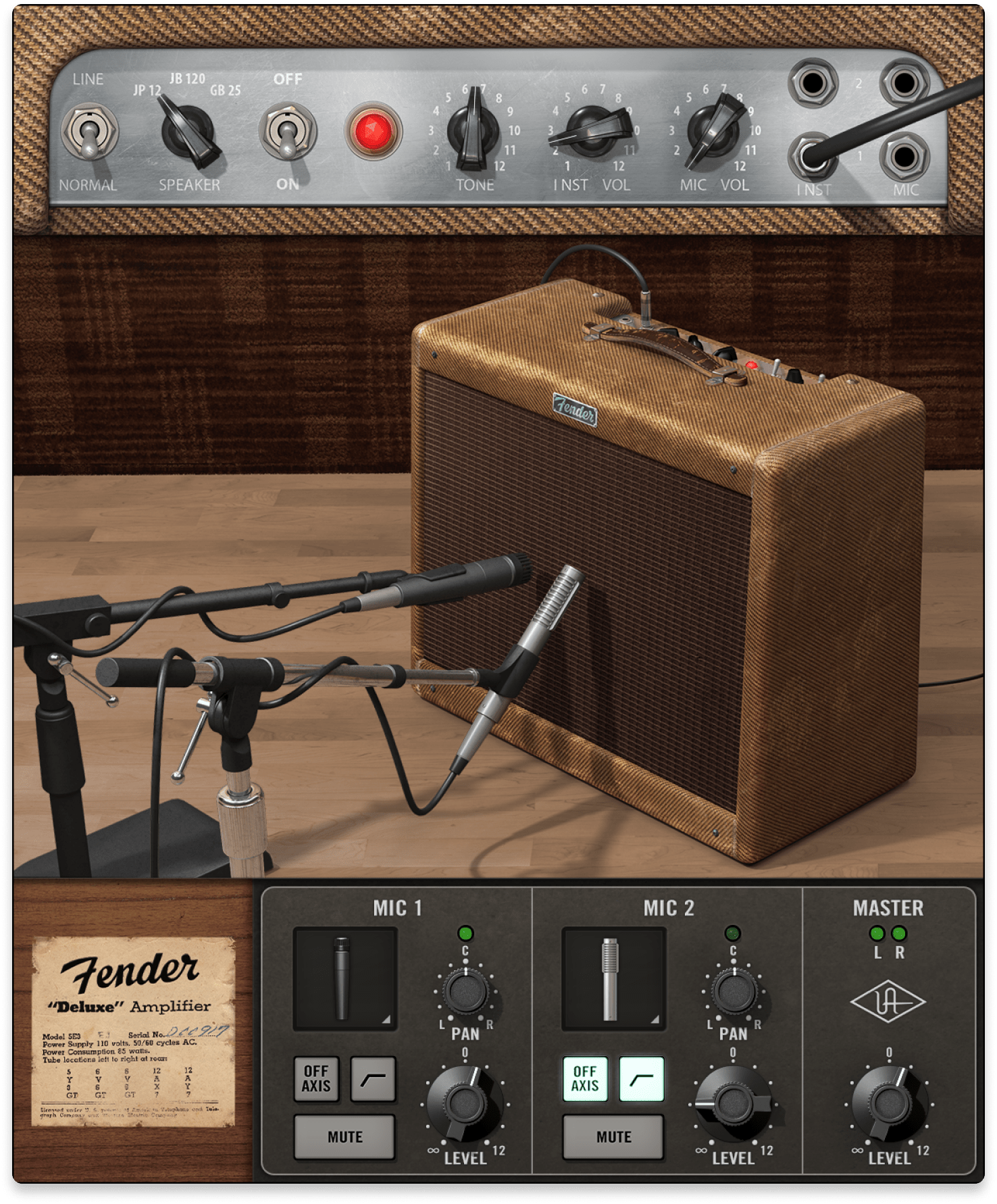
UAD is behind many impressive software emulations of ultra sought-after amps and effects, including the classic Marshall Super Lead Plexi 1959 stack and Fender ’55 Tweed Deluxe combo style amps.
The digital re-creations make sense, as the physical versions of these vintage classics are getting more expensive every day.
Fortunately, UAD has brought the same painstaking attention to detail to these amp sims as their vintage studio hardware emulations.
Its amp simulator plugins are built for its industry-leading Apollo interface, which produces an extremely lifelike representation of these rare original amps.
That’s because the interface is able to change its internal circuitry to match the exact gain staging, impedance and behavior of the original amplifiers, with no latency.
Essentially, when you plug your guitar into an Apollo interface with Tweed or Plexi, you’re essentially plugging your guitar into an exact replica of those amps.
In our testing, the interface and plugins paired together produced a highly responsive guitar tone that really sounds like the real thing.
If you’re on the UAD platform and you’re looking for quality vintage tones, these guitar plugins are must-buys.
Pros:
- Incredibly accurate re-creation of legendary Fender and Marshall amps
- Apollo integration produces zero latency, authentic gain staging and impedance
Cons:
- Requires an expensive UAD Apollo interface
11. LANDR Guitar (paid, subscription available)
The best creativity-focused guitar instrument VST.
LANDR Guitar Specifications
| Type: | Guitar instrument VST |
| Compatibility: | Mac, Windows |
| Features: | Loop-based interface with creative MIDI keyboard |
| Loop packs: | 8 unique loop collections |
| Price: | Included with all LANDR Studio plans |
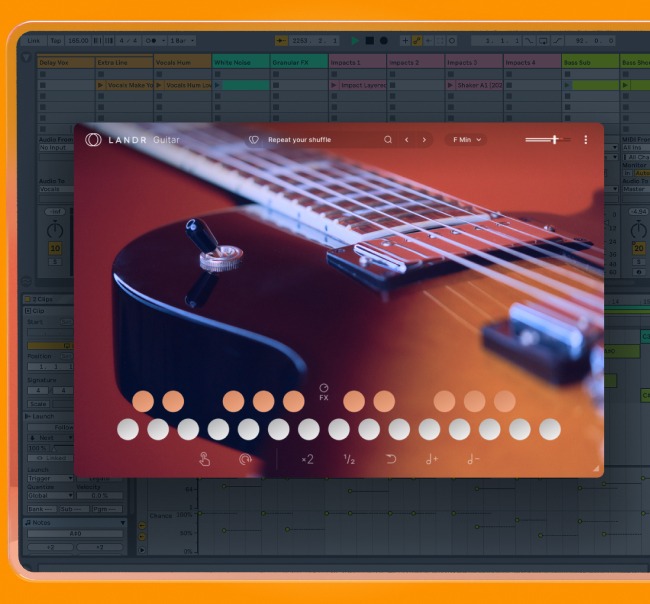
Out of all the guitar VST instruments out there, LANDR Guitar might be the most unique and it might be the easiest to start using right away.
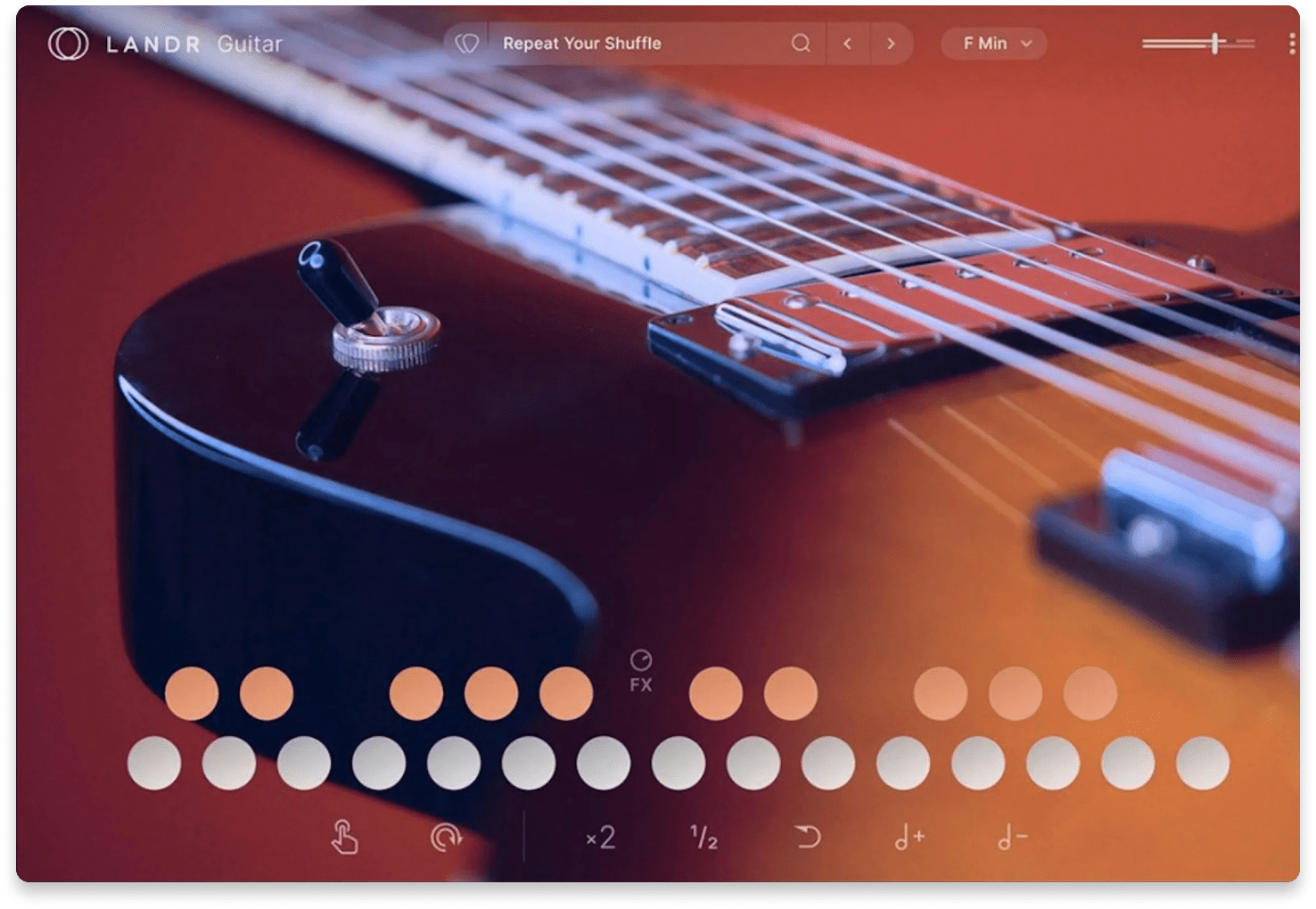
That’s because it relies on pre-made loop packs made in a professional studio by session guitar players, meaning anyone can grab the plugin and start looping, splicing and chopping up samples right away.
It’s a creative and inspiring tool when you start exploring all the different packs that come included with it.
Once you find a selection of loops you like, the plugin offers controls for looping, speeding up, slowing down and reversing the loops.
On top of all the loops, the plugin includes an effects chain, making it easy to add distortion, reverb, delay and modulation to any loop inside the plugin.
If you’re working in a specific key you can also transpose any loop pack into any key.
If you’re looking to add a guitar part to your track but you’re not ready to record guitar yourself, LANDR Guitar is a great option for adding interesting guitar ideas to your tracks.
Pros:
- Hundreds of professionally produced loops
- Good set of controls for modifying and effect loops
- Easy to learn and use right away
- Included with all LANDR Studio plans
Cons:
- Less advanced than other guitar instrument VSTs
- Limited to the included loop packs
12. Blue Cat’s Free Amp (free)
Another must-have free amp plugin.
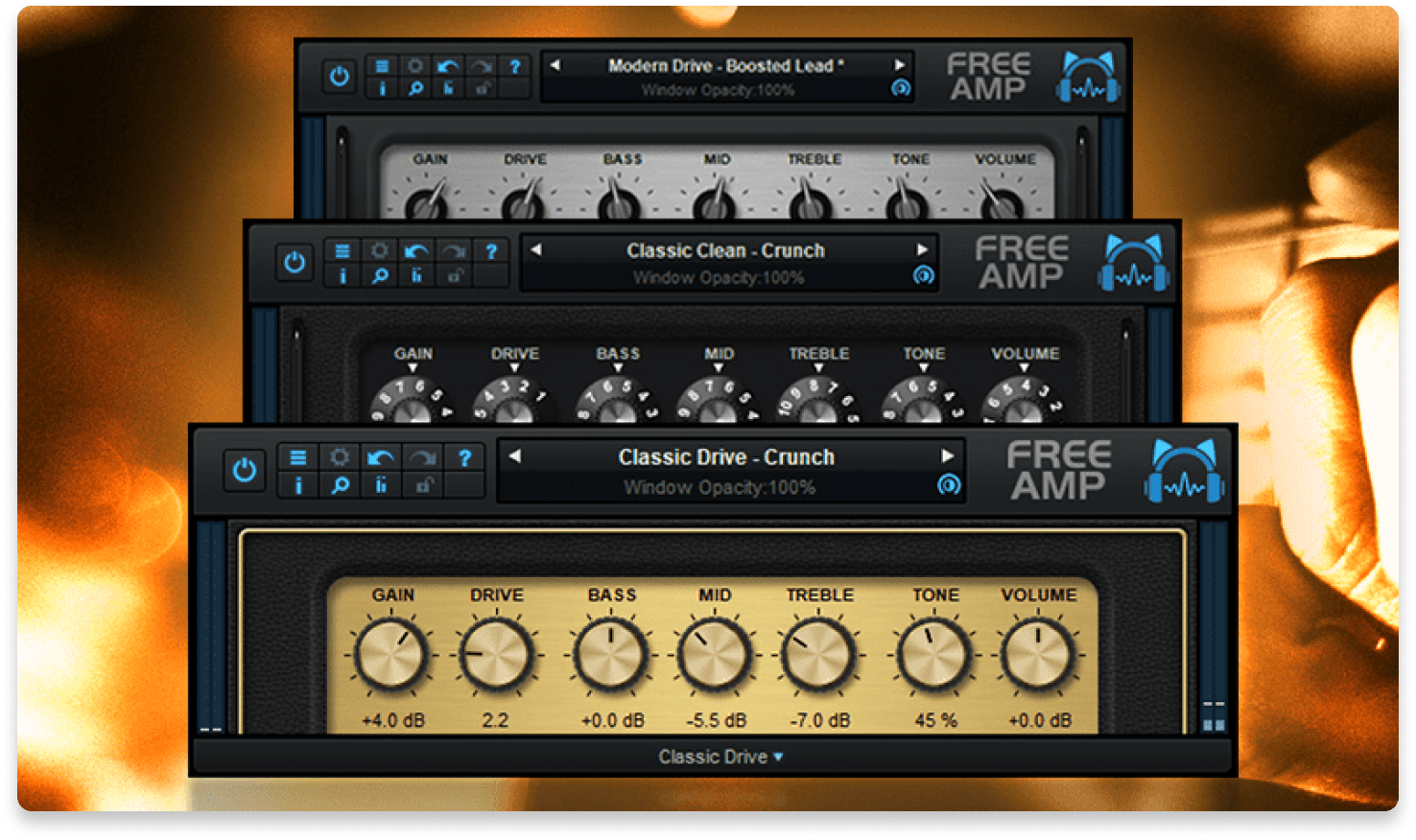
Blue Cat's Free Amp Specifications
| Type: | Amp modeling plugin |
| Compatibility: | Mac, Windows |
| Features: | 3 amp models, IR loader |
| Presets: | 20+ |
| Price: | Free |
Blue Cat’s Free Amp has long been a staple on free plugin round-ups, and for good reason, it’s a decent guitar amp simulator that produces useful guitar sounds.
With three distinct models, you get a few options for finding your desired tone alongside a handful of presets for each amp.
If your DAW doesn’t come with a free amp and you’re working on a budget, Blue Cat’s Free Amp is a no-brainer addition to your plugin folder.
Pros:
- Free
- Three amp selection gives enough tone variety
Cons:
- Very limited compared to paid plugins
- Uses traditional circuit modeling
13. Spitfire LABS Electric Guitars (free)
The best free guitar instrument VST
Spitfire LABS Electric Guitar Specifications
| Type: | Sample-based guitar instrument |
| Compatibility: | Mac, Windows |
| Features: | 2.1GB sample library, Spitfire LABS integrations |
| Presets: | 10 unique guitar tones with strumming and picking |
| Price: | $99 USD |
Spitfire Audio’s LABS series of excellent free sample-based was always going to add an electric guitar edition at some point, and Electric Guitars does not disappoint.
The sample-based guitar instrument plugin boasts 10 meticulously recorded guitar tones with strumming and picking patterns that are all playable via MIDI keyboard.
The guitar tones sound excellent and make for an inspiring option in any producer’s tool kit.
If you’re looking for a good guitar instrument without breaking the bank on something like Native Instrument’s Session Guitarist, this guitar instrument is a great choice.
Pros:
- Free
- Great recordings offering 10 unique guitar tones
Cons:
- Little to no customization options compared to paid plugins
- Limited to the included guitar tones
- Less MIDI keyboard expression options compared to paid plugins
Plugin play
Guitar plugins have a place in every producer’s workflow.
They’re especially helpful if you can’t make a lot of noise where you work on music.
And even if you can, recording the high voltage sound of a roaring stack isn’t always practical.
Guitar plugins can even help you broaden your palette of sounds and effects and create something new.
If you made it through this article, you’ll have a great start for how to choose a guitar VST plugin.

Alex Lavoie is a drummer, music producer, songwriter and marketing professional living in Montreal, Quebec. He works as a staff writer at LANDR by day and writes indie post-punk tunes in his band UTILS while moonlighting as drummer for folk-rock outfit The Painters. Connect with Alex Lavoie on LANDR Network!
@Alex LavoieGear guides, tips, tutorials, inspiration and more—delivered weekly.
Keep up with the LANDR Blog.