

How to Get on Spotify Playlists in 10 Steps
Getting on Spotify playlists is a major goal for countless musicians today.
So, how do you make it happen for yourself? We’ve put together a guide that will tell you everything you need to know.
We’re going to start with some background info and tips, but feel free to skip straight to the step-by-step guide below if you prefer.
Let’s get to it!
Why should I get my music on Spotify playlists?
Playlists are one of the biggest factors influencing how music is discovered and curated on Spotify.
In an algorithmic context, they help listeners have enjoyable and relevant listening experiences that balance the familiar with the new.
But they’re also about curation. Playlists allow music to be showcased in the right ways, whether that’s highlighting a genre, a regional scene, or a way of making music.
They also help listeners integrate music into specific activities or states of mind.
For artists, this means that playlists can:
- Connect your music with the people who will enjoy it the most
- Boost your overall exposure and visibility
- Teach you how people experience your music and what they like
- Teach you about the larger scene and community that you’re connected to
And, of course, this can ultimately add up to more streams, better royalty earnings, and more opportunities in your path as a musician.
Types of Spotify playlists
Learn how to get your music on Spotify and succeed after your tracks go live.
1. Personalized playlists
These playlists are algorithmically generated based on listener preferences and habits. Each personalized playlist is more or less unique to each listener.
While they usually depend on Spotify’s algorithmic understanding of listener experiences, some personalized playlists also involve input from Spotify’s editorial team.
Spotify’s team calls this hybrid approach “Algotorial.”
Some examples of personalized playlists are:
- Discover Weekly
- Release Radar
- Indie Mix
- On Repeat
Since these playlists are algorithmically generated, they can change often — songs are removed, added, or rearranged at various rates.
Listeners can drag songs from personalized playlists into their own listener playlists if they like what they hear.
In recent years, Spotify has rolled out Discovery Mode, which increases the chances of your music being heard in algorithmic contexts like personalized playlists.
2. Listener playlists
These playlists are created by listeners using Spotify, and it’s quite likely you’ve created one or more of them yourself.
Some listener playlists aren’t heard by many people beyond the person who created them (and probably their friends). Others are curated by independent curators and rack up tens of thousands of followers and countless streams.
It’s common now for artists to reach out to the creators of high-traffic playlists and send them music for consideration — more on that later.
3. Spotify editorial playlists
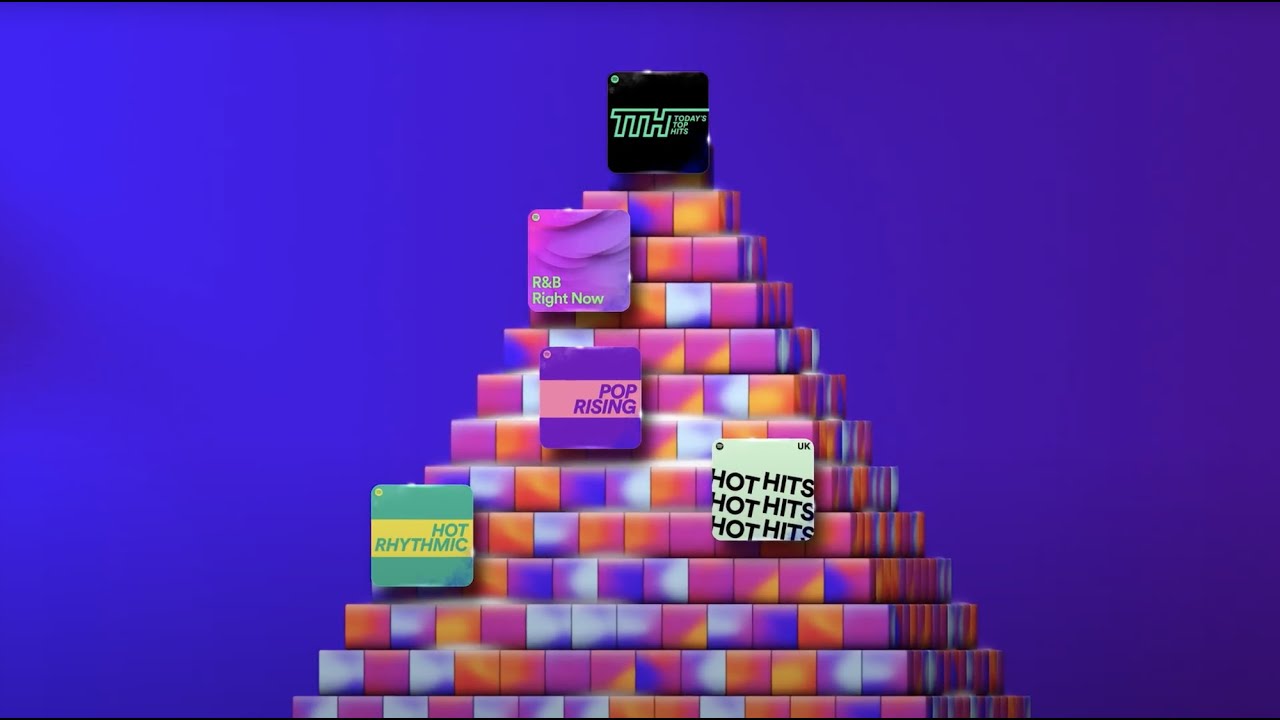
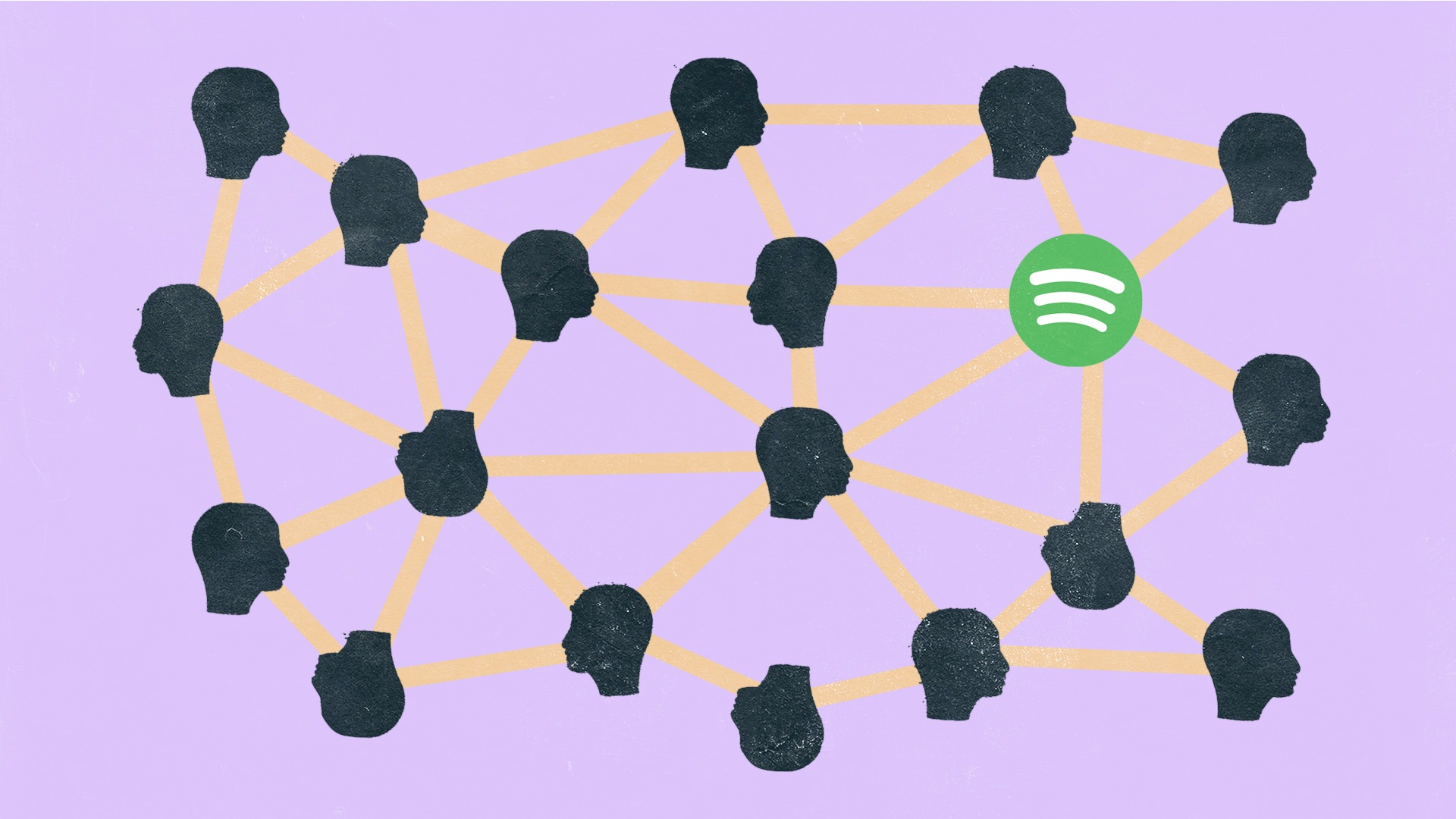
The Playlist Pyramid: How Music Moves Through Spotify's Playlist Ecosystem
These playlists are curated by Spotify’s global editorial team, they account for the highest portion of playlist streams on the platform and they’ve played a huge part in Spotify’s success as the leading streaming platform.
Spotify uses its editorial playlists to entice users to subscribe to their service and keep listeners coming back for all the great music they consistently recommend.
Some of it’s playlists have garnered a huge following and play a significant role in taste-making in just about every genre.
Today’s Top Hits, for example, has over 30 million followers and tens of billions of streams, making it the most prominent playlist on Spotify.
There are also thousands of other editorial playlists that cater to a wide range of genres and scenes, from pop music to underground niches and everything in between.
Artists can get their music on editorial playlists by submitting pitches to the editorial team, which we’ll also explain a bit later.
While many artists aspire to get their music on the most popular editorial playlist that they can, this isn’t necessarily the best approach.
🧠 Hot tip
Part of the value Spotify offers its listeners is the smart, interesting and cutting edge selections it makes for its playlists. For its smaller, more niche playlists, finding cool, up-and-coming artists that are going to be the next thing is a curatorial goal. That's why you always have a chance to get a playlist placement on Spotify, especially if you cater your pitches for smaller, more niche playlists in your genre.
How to get on Spotify playlists
1. Establish yourself on Spotify
If you haven’t already, your first step is to get your music on Spotify.
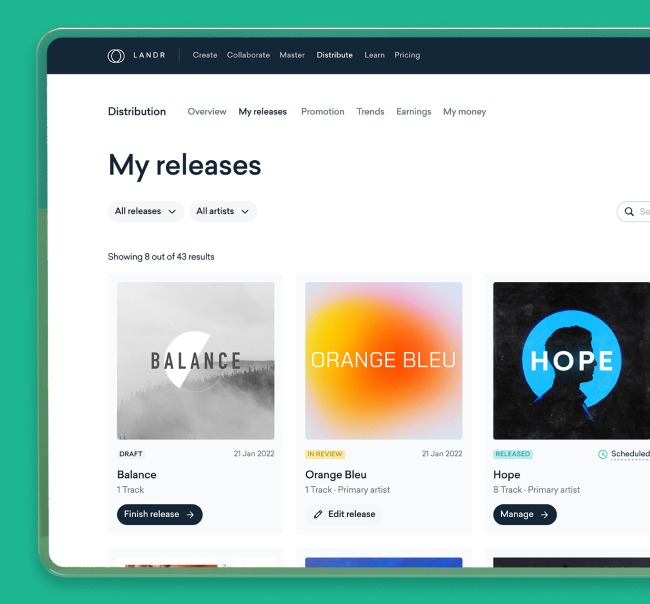
The best way to do this is to self-release your music through a distributor like LANDR, DistroKid, or CD Baby.
It’s important to note that when it comes to editorial playlists, you can only pitch music that hasn’t yet been released and you have to have at least one release live on the platform before you can start pitching music.
Because of this, it’s a good idea to establish yourself on Spotify with a minor single release before you work your way up to an editorial pitch.
2. Set up Spotify for Artists for success
Spotify for Artists is several different tools in one — it allows you to develop a visual identity for your music, better understand your audience, create Artist Pick playlists and more.
Setting up your Spotify for Artists profile is a HUGE part of finding success on Spotify for two reasons:
- It will help you pique interest, show your style and get repeat listens
- It makes the listening experience for Spotify’s users more engaging.
Remember, Spotify is in the business of selling it’s streaming service subscription and one of the ways it does this is by presenting artists who have engaging, visually appealing profiles.
Your Spotify profile is second place editorial playlist curators will look after reviewing your pitch, and an incomplete, out-of-date profile can easily kill a great song and a perfectly written pitch.
By setting up your profile, you’re sending an important signal that you care about presentation just as much as Spotify does.
So, put some concerted thought and effort into setting up artist profile and banner images that enhance the way you present yourself on the platform, use a well-written and up-to-date artist bio, and familiarize yourself with the analytics tools.
Curating your own Artist Pick playlist and adding visual elements like Spotify Canvas to your tracks won’t hurt either.
3. Develop your following outside of Spotify
One thing that many artists forget when it comes to getting playlisted is the importance of expanding your efforts beyond Spotify itself.
A well-developed social media following, a distinct and recognizable identity, and a strong presence in your scene and community all contribute to your overall visibility.
Having a feeling for the cultural pulse in your locale gives you advantage when pitching your music to Spotify editorial since it will help you understand where your music fits in genre and culture wise.
Plus, becoming a part of your local scene can trickle down over time to keep you at the forefront of people’s minds, increasing the chances that you’ll be added to local fan’s playlists and beyond.
It is, of course, essential to direct your social media followers to your Spotify for Artists profile through links in your bios.
You can also paste embed code for your profile on your website, if you have one.
4. Do your research
On one hand, the importance of honesty and authenticity in your craft as a musician can’t be overstated.
At the same time, it’s highly useful to get a sense of what traits a successfully playlisted song tends to have, and how this changes based on context.
Some types of playlists might tend towards including songs of a certain length, lyrical content, structure, genre, sound, aesthetic, locale, culture or level of energy.
Pay attention to characteristics like this and think about how they relate to the kinds of playlists you’re aiming for.
Considering the many thousands of playlists on Spotify (both editorial and user curated) it’s possible to integrate this knowledge into the way you make music without simply trying to sound like other popular artists and compromising the originality of your work.
5. Focus on listener playlists first
The pyramidal structure of editorial playlists isn’t unlike the wider listener playlist ecosystem.
Listener playlists are often the first playlists a new artist will find themselves. They’re made for a variety of reasons, like a friend grouping your tracks into a workout playlist, a local music fan putting artists from your scene into one playlist for easy access or by someone who’s a fan of your niche genre.
You can even create your own listener playlist from your personal Spotify profile and add your tracks to it.
As you build more visibility for your music in listener playlists over time, this can contribute to the “flagging” of your material that increases the chances of further playlist placements. Plus, you can mention more significant playlist adds in future editorial playlist pitches.
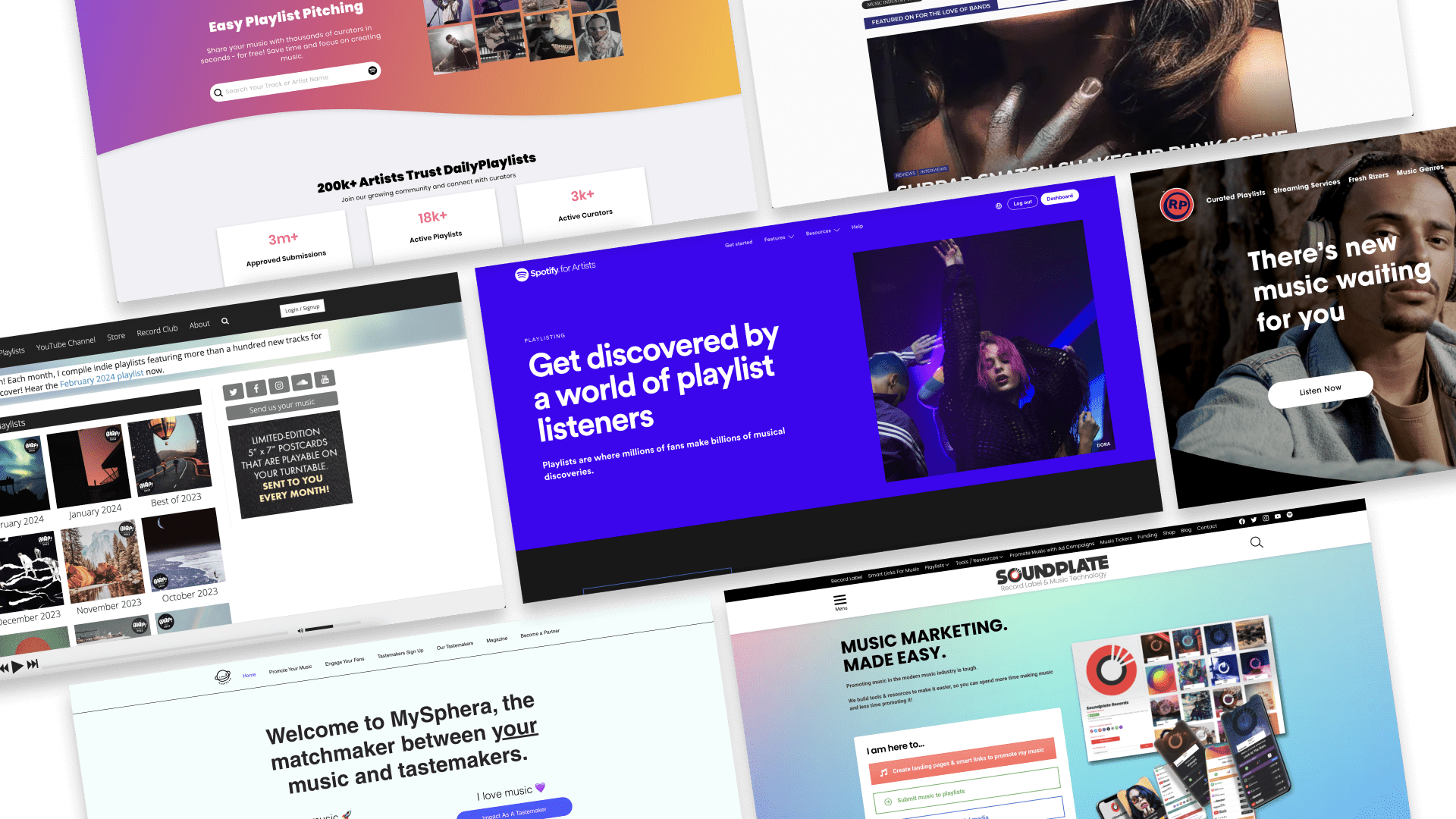
6. Connect with independent listener playlist curators
While we don’t recommend reaching out to Spotify’s official playlist curator’s directly, reaching out to independent playlist curators is never a bad plan.
It’s common for independent playlist creators to have social media profiles dedicated to their playlist curation.
If they do, you can find them by searching their Spotify profile name on social platforms. From there you can engage with them and reach out by DM.
It’s also possible to find the email addresses these creators use for their playlist creation, typically in their social bios.
We’d recommend building a rapport and showing your appreciation of their work before breaking into a pitch right away.
Find a handful of highly relevant listener playlists with decent follower counts and prioritize those before you start working toward editorial playlisting.
You can also share links to your tracks in the Music Exchange section of the Spotify Community forums.
It’s typically best to post your stuff in threads that are explicitly asking for songs to fill their playlists.
Again, be sure that the playlists are stylistically relevant to your music, and always be respectful. No one likes to be spammed!
7. Create your best song — but don’t release it yet
So let’s say that you’re building visibility for your music through listener playlists and promotion off of Spotify (and your music is trickling into personalized playlists via the algorithm).
Throughout this process, you should spend time working on a new release that represents the culmination of your skills as a musician so far.
An EP can be the best format for this. Creating three or four tracks will allow you to choose your best song from a few options, and it won’t take as much time to develop as an album.
Once this release is finished and you’ve selected the song that you feel is strongest, don’t release it yet — remember that you need at least 7 to 28 days in advance time from the moment submit your release for distribution to produce and submit your editorial pitch.
8. Prepare your release
When you’re uploading your release to your distributor, we recommend you set the release date for at least three to four weeks in advance.
This is for two reasons — Spotify’s editorial playlist team requires at least one week to consider your playlist pitch, and you’ll also need enough time to promote your release.
Remember to keep your Spotify for Artists profile strong and up-to-date as you promote your music. This means taking advantage of Canvas and other features.
Your artist profile will automatically display the listener playlists you’ve appeared on — but you should also highlight your best release so far with your Artist Pick.
The more developed and eye-catching your presence on the platform is, the better.
9. Craft the perfect pitch for Spotify editorial playlisting
When you pitch your music you are given a 500-character description box for the song you’re pitching. This is easily the most important part of your pitch so it’s important to put some careful thought into it.
In the pitch, offer details on accomplishments like big collaborations, shows, tours, press coverage and past playlist placements and mention how you’ll be promoting the release going forward.
However, don’t spend the whole character count solely on these topics.
Balance the self-hype with an authentic expression of what the song means that piques curiosity and will make the curator want to hear what your music sounds like.
This video from Musinformation offers some great tips on Spotify playlist pitching strategy.
Discuss the scene it emerged from, the feelings you hope it will provoke in listeners and don’t be afraid to name drop artists your music could be compared to or that you are mashing up in your sound.
Finding a way to co-sign the sound you’re pitching with another more established act is a powerful way to tell the curator what they’ll hear when they click play.
In the written section of your pitch to Spotify for Artists, suggest a handful of playlists where your single might be a good fit.
This will help the curator receiving your pitch understand where your sound fits in best and help do some of their research for them while increasing your chances of connecting your music to the right audience.
While it might be tempting to simply pitch playlists with high traffic, this approach can easily backfire. Mention local playlists that represent your scene or suggest playlists that represent a more niche genre, interest or specialty.
In all likelihood, there may be a number of playlists where you music would make a good fit, so taking your time to do the research as suggested about is key for helping Spotify’s independent and official curators find your fit.
Here’s an example of pitch that applies these concepts in less than 500 characters:
Spotify Editorial Playlist Pitch Example
(Song name) sounds like if Alex G and Pink Pantheress met aliens & made music with them. (Project Name) is an emerging act from the (City)-based DIY rave scene that sets itself apart with a unique electro-folk take that veers into experimental & dance. For (song name), we worked with Diplo and Rick Rubin, recording at Electric Ladyland studios. Our single fits best on playlists like Open Air and metropolis. To support (song name), we've planned a US tour, a video release & IG collabs.
Of course, this just an example but it shows a few ways you can create opportunities and look to your previous work to quickly and clearly show that your music is interesting, has a following and is worth playlisting.
10. Submit your pitch to Spotify for Artists
Once you’ve submitted your release to your distributor and the date is set, it’s time to fill Spotify’s pitch form and enter your pitch.
Remember — Spotify’s editorial team requires one week to consider your pitch, and this should be seen as a minimum. It’s not uncommon for artists to submit their pitches two or three weeks ahead.
You can submit your editorial playlist pitch through an online form in Spotify for Artists.
In the Music section of your Spotify for Artists account, your upcoming releases will appear under the Upcoming tab.
It may take several days for an upcoming release to show up here, depending on your distributor.
The release will show an option for pitching a song to Spotify’s editorial team.
When you click on Pitch a song and select the song you want to pitch, you’ll be taken to the pitch form.
It’s important to be detailed and accurate about the information you enter.
Make sure you match your choices to your music, from the genre and style tags to the instrumentation and mood.
Once you submit your pitch, continue to promote the release and keep your listeners and followers engaged!
Tips from a playlisted artist
The LANDR team is full of musicians, and several of them have ended up on Spotify playlists.
To get some practical real-world tips, we talked to our colleagues Charles Rainville and JP Lefrancois, who comprise the synthpunk act distraction4ever.
After building a following and appearing on various non-editorial playlists, they successfully pitched one of their then-unreleased songs to Spotify’s editorial team.
Fast-forward to today and they’ve appeared on several Spotify editorial playlists including Fresh Finds Canada, Radar Canada, ALT_QC, DARKWAVE, Indie Post-Punk, and more.
When we asked about the pitch they submitted, they said that they highlighted the cultural context of their music as well as their production style.

“We made that music in a building in Montreal where big Canadian musicians have recorded in the past, like Grimes … and since we also talked about how our studio was pretty DIY, that made it match up with playlists like Lofi Indie.”
They also emphasized how important it is to work your way up to editorial playlists by building a strong foundation of listeners and engagement.
“When people have been listening to your stuff a lot, and adding it to their liked songs and playlists, eventually you’re kind of ‘flagged’ as a known artist in the system. The algorithm is paying more attention to you.”
Since this kind of awareness can take time to accumulate, it’s wise not to expect a major editorial playlist overnight.
Finally, Charles and JP were sure to point out that getting on a Spotify editorial playlist isn’t an end goal in and of itself, and that your position as an artist will always shift and evolve.
“You might only be on an editorial playlist for like two weeks, or you’ll move to different spots. It’s less about the streams you get from the playlist and more about who adds your stuff to their own playlists and their liked songs from there.”
This gave us an important takeaway — the most valuable aspect of Spotify’s playlist ecosystem is that it can bring your music to the people who will become long-term fans.
Those highly relevant discoveries — which lead to sustained, dedicated listening — are the main goal, with playlists being the tools to make them happen.
Now that you’ve learnt about what it takes to get on Spotify playlist, we wish you the best of luck with your next release!

Various contributors from the LANDR team of music mentors.
@LANDRGear guides, tips, tutorials, inspiration and more—delivered weekly.
Keep up with the LANDR Blog.
Latest Posts