
The 15 Best Saturation Plugins in 2026 (Free and Paid)
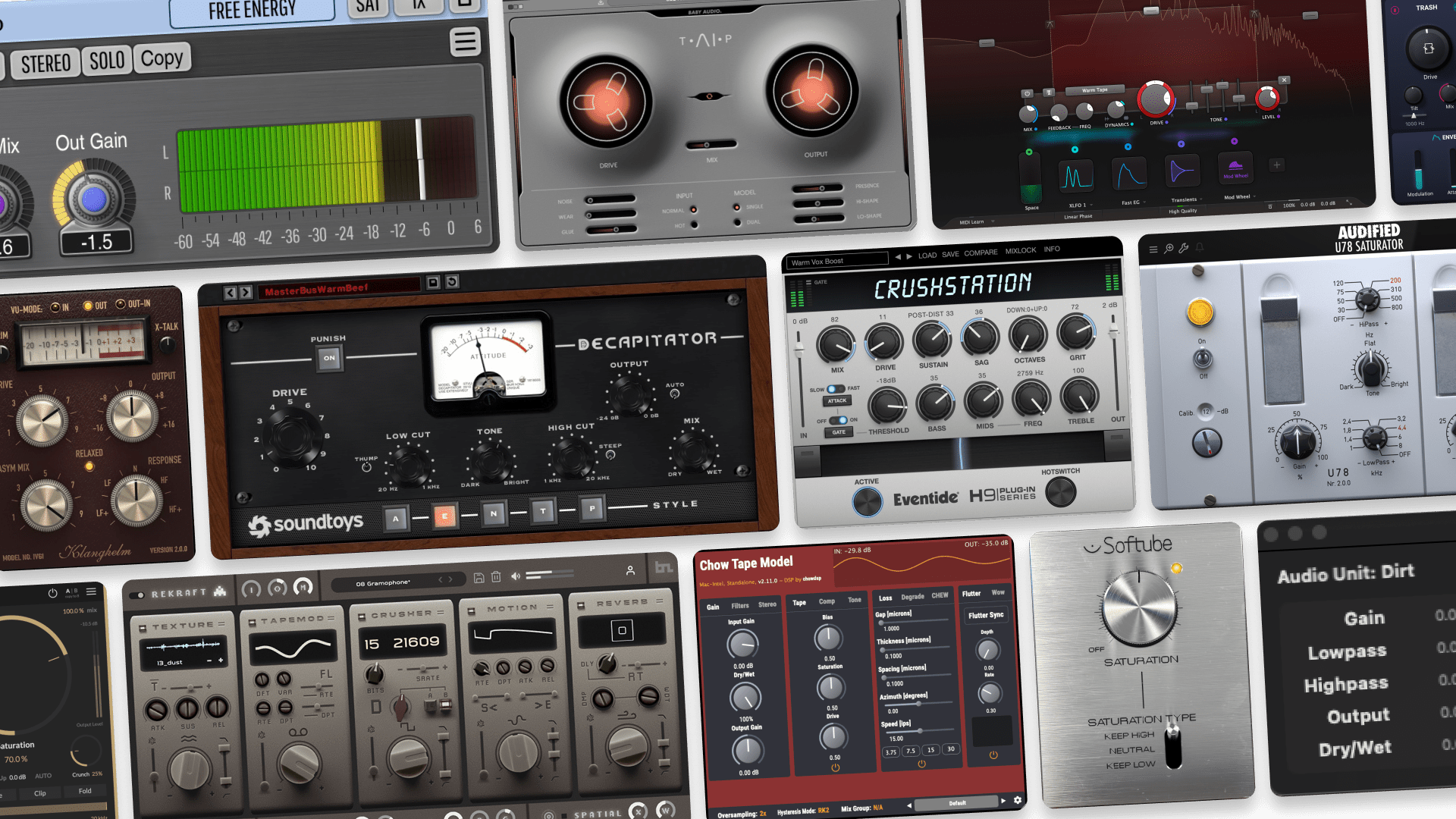
Saturation plugins are among the most powerful and versatile tools for music production.
It’s also one of the biggest plugin categories, with tons of options available for adding color, character, and grit to your tracks.
So, we’ve gathered the 15 saturation plugins that we feel are most worth getting. We’re including both free and paid options so that you can find the right balance between power and value.
Let’s heat things up and dive in.
TL;DR – Our top picks
Best Saturation Plugins
| Best all-round saturation plugin: | Soundtoys Decapitator |
| Best multiband saturation plugin: | FabFilter Saturn |
| Best saturation chain plugin: | BeatSkillz Rekraft |
| Best modern tape saturation plugin: | Baby Audio TAIP |
⭐ Best all-round saturation plugin: Soundtoys Decapitator
Decapitator earns its reputation by being endlessly usable across styles and sources. In our testing sessions, it was great for adding subtle warmth, aggressive drive, or full-on distortion while still feeling controlled and musical. If you want one paid saturation plugin that can handle almost anything, this is the safest bet.
⭐ Best multiband saturation plugin: FabFilter Saturn
Saturn is the choice when you want precision as well as character. In our experience, the multiband workflow makes it easy to keep low-end clean while driving mids and highs, or to build parallel-style saturation that stays punchy and clear.
⭐ Best saturation chain plugin: BeatSkillz Rekraft
Rekraft is for producers who want saturation as a vibe tool, not just subtle mix polish. In our testing, its chain-based workflow made it easy to combine drive, texture, and degradation into one cohesive sound. This is especially true for drums, loops, and character-heavy synths.
⭐ Best modern tape saturation plugin: Baby Audio TAIP
TAIP nails a modern tape feel with soft compression, harmonic richness, and the kind of glue that makes tracks feel more finished. In our testing sessions, it was quick to dial in on buses and mixes: subtle when you need polish, bold when you want audible tape-style drive.
1. Soundtoys Decapitator (Paid)
Best all-purpose saturation and distortion plugin.
Overview of Soundtoys Decapitator
| Type: | Analog-style saturation & distortion |
| Operating System: | macOS, Windows |
| Format: | VST, AU, AAX |
| Price: | $199 (Trial available) |
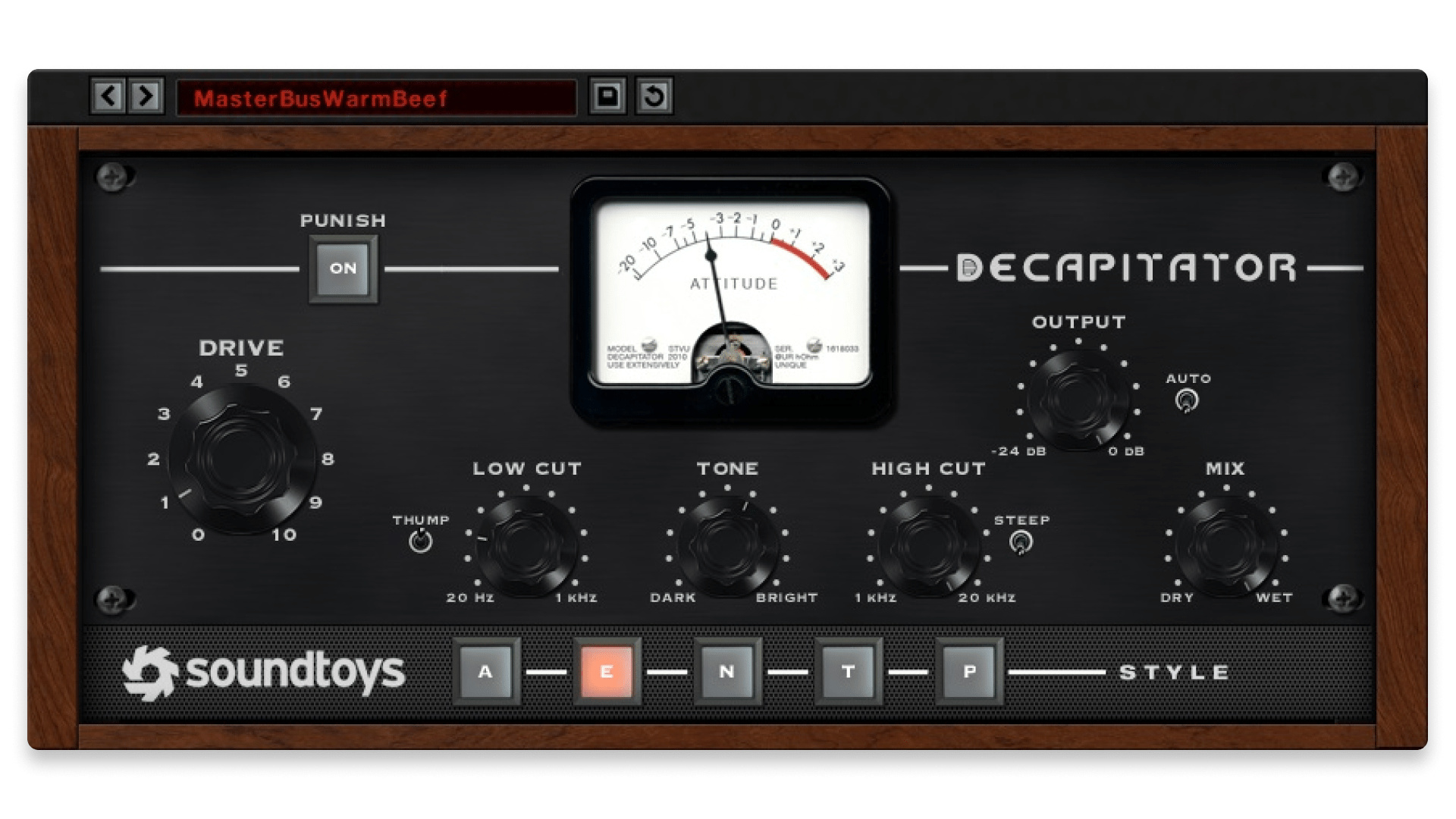
Decapitator is one of the most widely beloved saturation plugins of all time.
Modeled after a few different pieces of analog gear (and in some cases simply inspired by them), it offers five different modes that each provide different harmonic character and breakup behavior.
In our experience with it, it’s the kind of tool you can use lightly for harmonic thickening or push hard for attitude without the tone getting brittle. It works especially well on drums, vocals, bass, and synths when you want saturation that still feels controlled and “record-ready.”
Pros:
- Extremely versatile across many sources and genres
- Distinct tonal modes that make it easy to find the right character
- Simple controls that stay musical even when pushed
Cons
- No multiband processing for more surgical saturation
- Easy to overdo if you rely on it too heavily
Back to top ⬆️
2. Softube Saturation Knob (Free)
Best free option for quick analog-style warmth.
Overview of Softube Saturation Knob
| Type: | Analog-style saturation |
| Operating System: | macOS, Windows |
| Format: | VST, AU, AAX |
| Price: | Free |
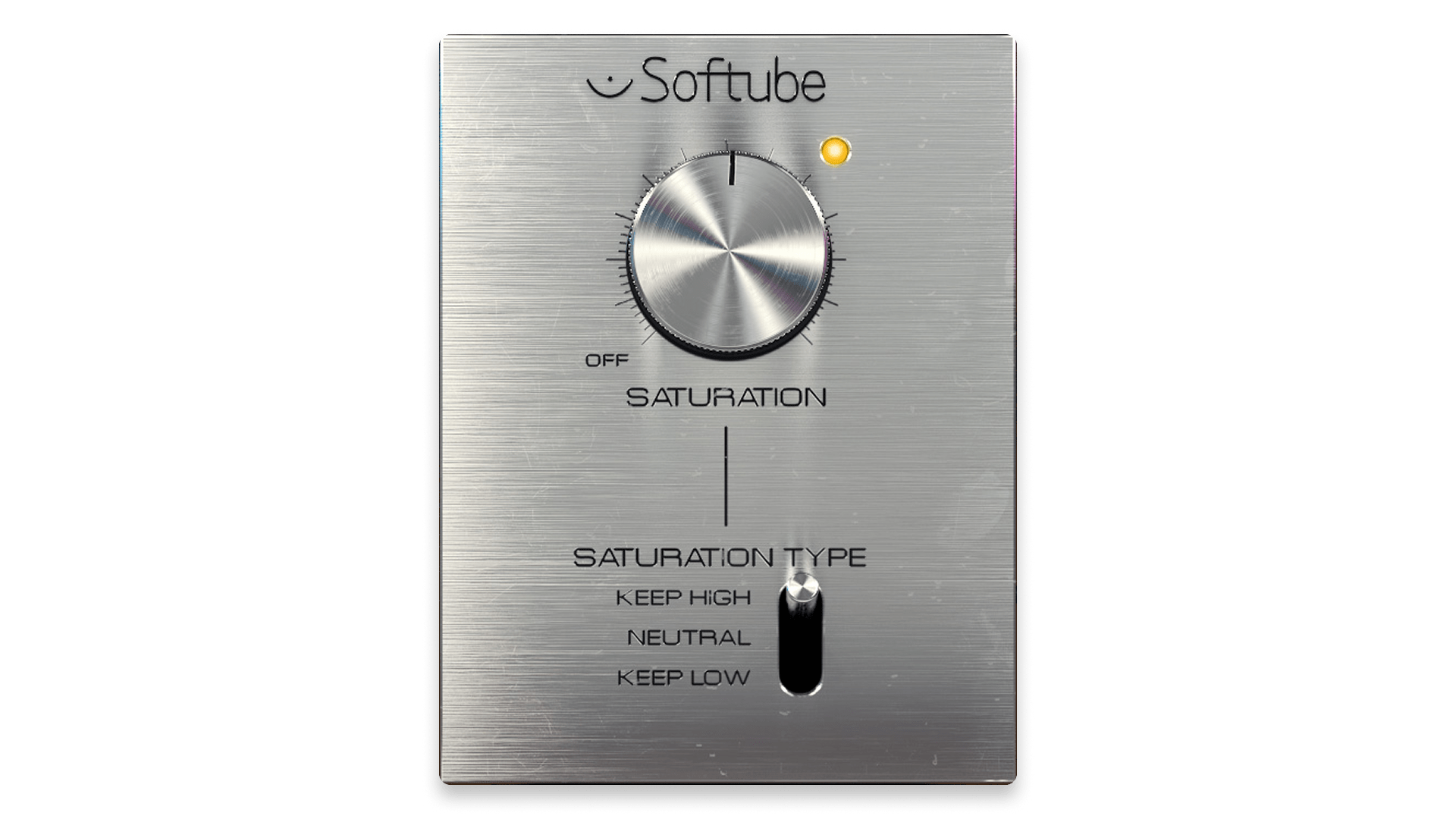
Saturation Knob is a no-fuss, great-sounding saturator that’s perfect when you want quick color without getting lost in options.
In our testing, it was especially handy for adding a touch of thickness to vocals, bass, and drums, with three simple modes that shift the tone from smoother to more aggressive.
It’s not meant to be a deep sound design tool, but as a fast utility saturator it gets the job done. If you want a free plugin you can throw on almost anything and get a musical result quickly, this one is an easy pick.
Pros:
- Extremely quick workflow with a simple interface
- Musical saturation that works well on many sources
- Great free choice for subtle thickening and vibe
Cons
- Limited control compared to more advanced saturators
- No multiband, oversampling controls, or creative routing options
Back to top ⬆️
3. Audified U78 Saturator (Included in LANDR Studio)
Best tube-style saturation included in LANDR Studio.
Overview of Audified U78 Saturator
| Type: | Tube-style saturation |
| Operating System: | macOS, Windows |
| Format: | VST, AU, AAX |
| Price: | $69 outside LANDR Studio |
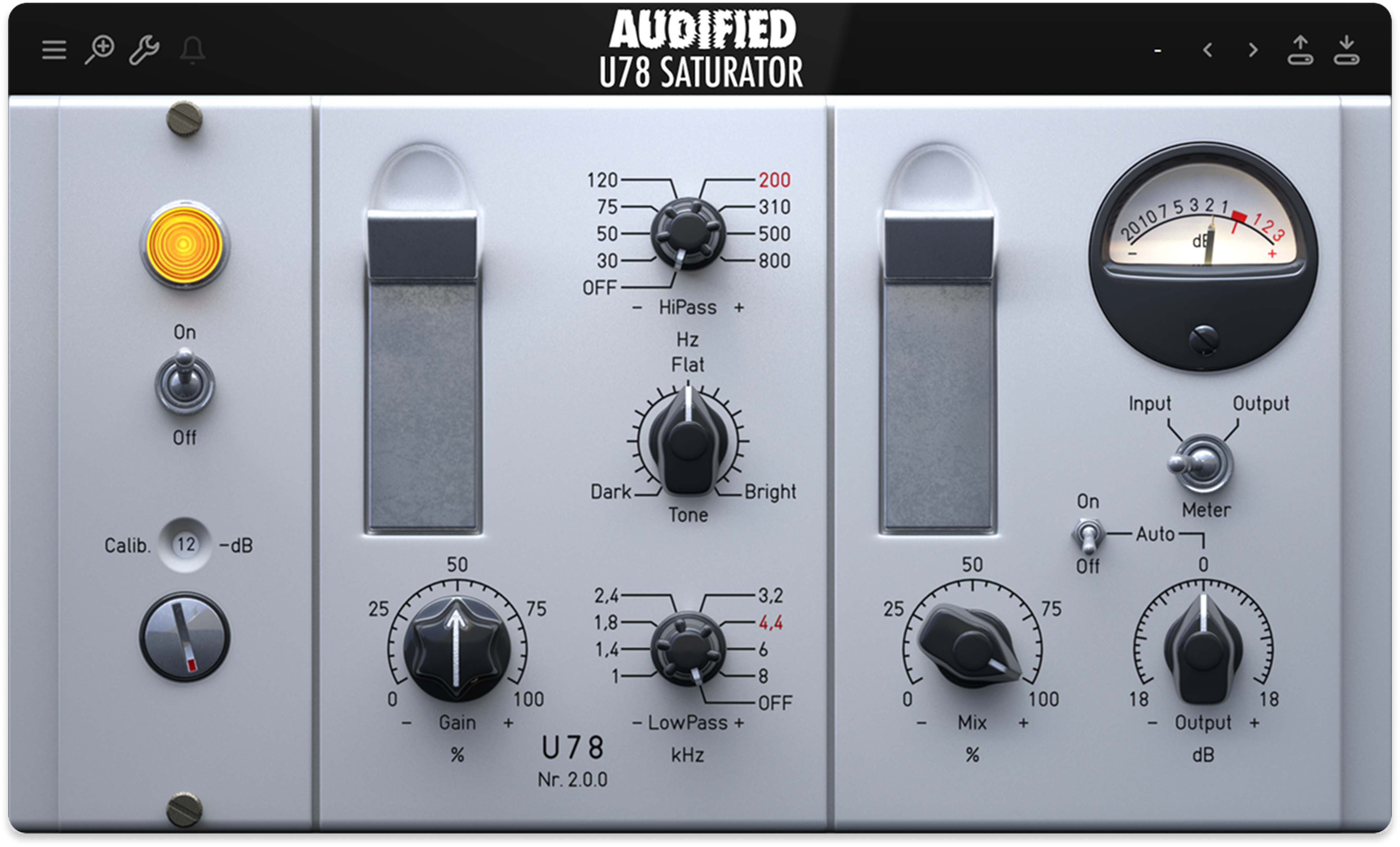
U78 Saturator is a tube-style saturator inspired by vintage broadcast gear, giving you thick harmonics and a satisfying sense of weight.
In our testing sessions, it did subtle warmth and glue beautifully, but it also holds together when pushed into obvious breakup for grit and attitude.
It’s a strong choice on vocals, bass, drum rooms, and synth buses when you want saturation that feels bold without getting fizzy. It’s also a practical, mix-friendly option since it’s included in LANDR Studio.
Pros:
- Warm tube tone that adds weight and density quickly
- Works well for subtle glue or more obvious drive
- Included in LANDR Studio
Cons
- Not designed for highly surgical or multiband saturation
- Less suited to extreme digital mangling
Back to top ⬆️
4. FabFilter Saturn (Paid)
Best multiband saturation plugin for detailed tone shaping.
Overview of FabFilter Saturn
| Type: | Multiband saturation & distortion |
| Operating System: | macOS, Windows |
| Format: | VST, AU, AAX, CLAP |
| Price: | $149 (Trial available) |
Saturn is another legendary plugin with a famously broad palette.
Tube, tape, transformer, and guitar amp-style saturation models are all on tap here, with a wide range of styles to choose from.
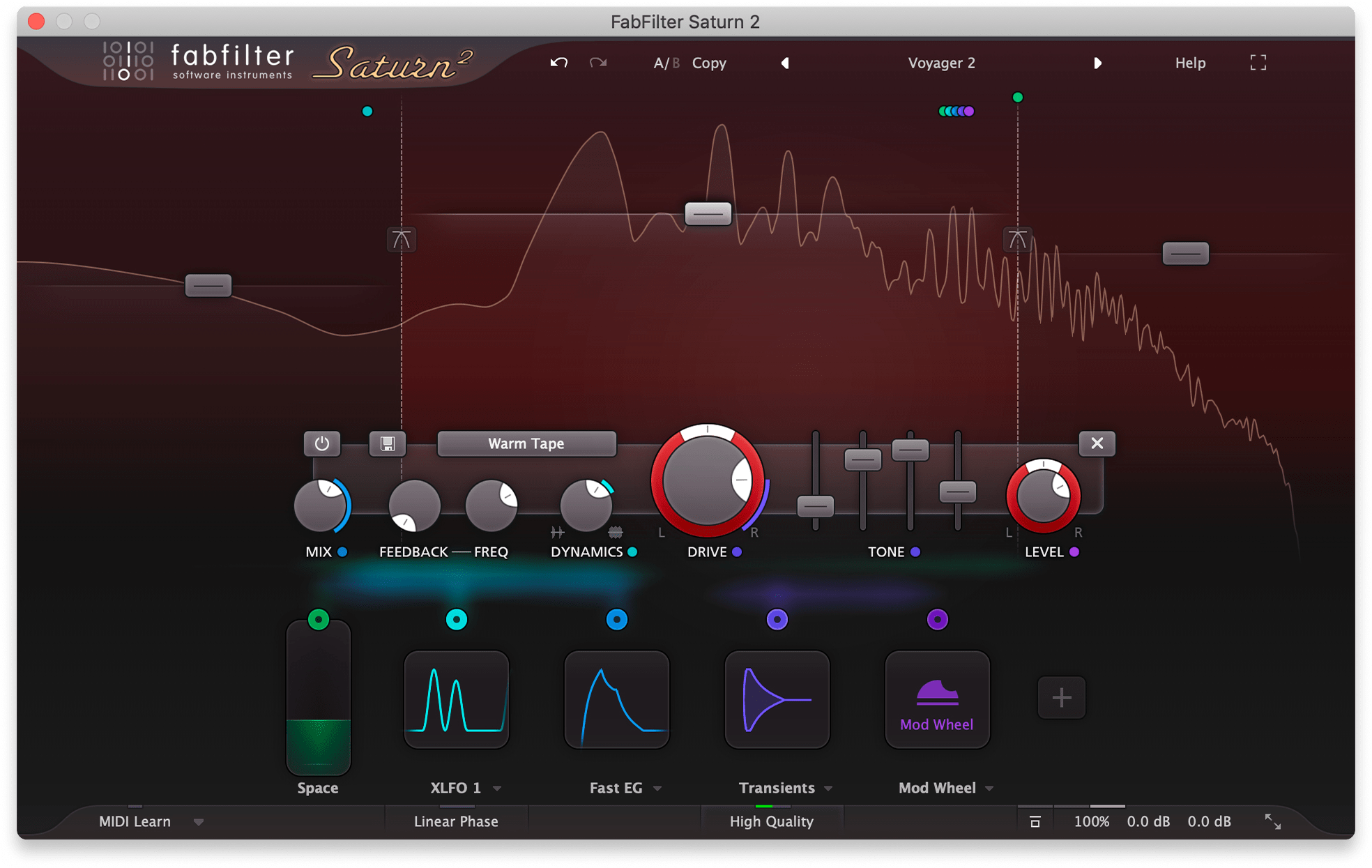
In our experience, the real magic is the combination of multiband control and modulation. You can keep the lows clean and weighty while adding bite, presence, or grit up top, and without losing clarity.
Pros:
- Multiband control makes it easy to saturate without muddying a mix
- Wide range of distortion styles and modulation options
- Excellent interface and visual feedback
Cons
- Can feel like a lot of plugin if you only need quick warmth
- Heavier CPU use when running multiple bands and modulation
Back to top ⬆️
5. Klanghelm IVGI (Free)
Best free saturation plugin for smooth, mix-friendly warmth.
Overview of Klanghelm IVGI
| Type: | Analog-style saturation |
| Operating System: | macOS, Windows |
| Format: | VST, AU |
| Price: | Free |
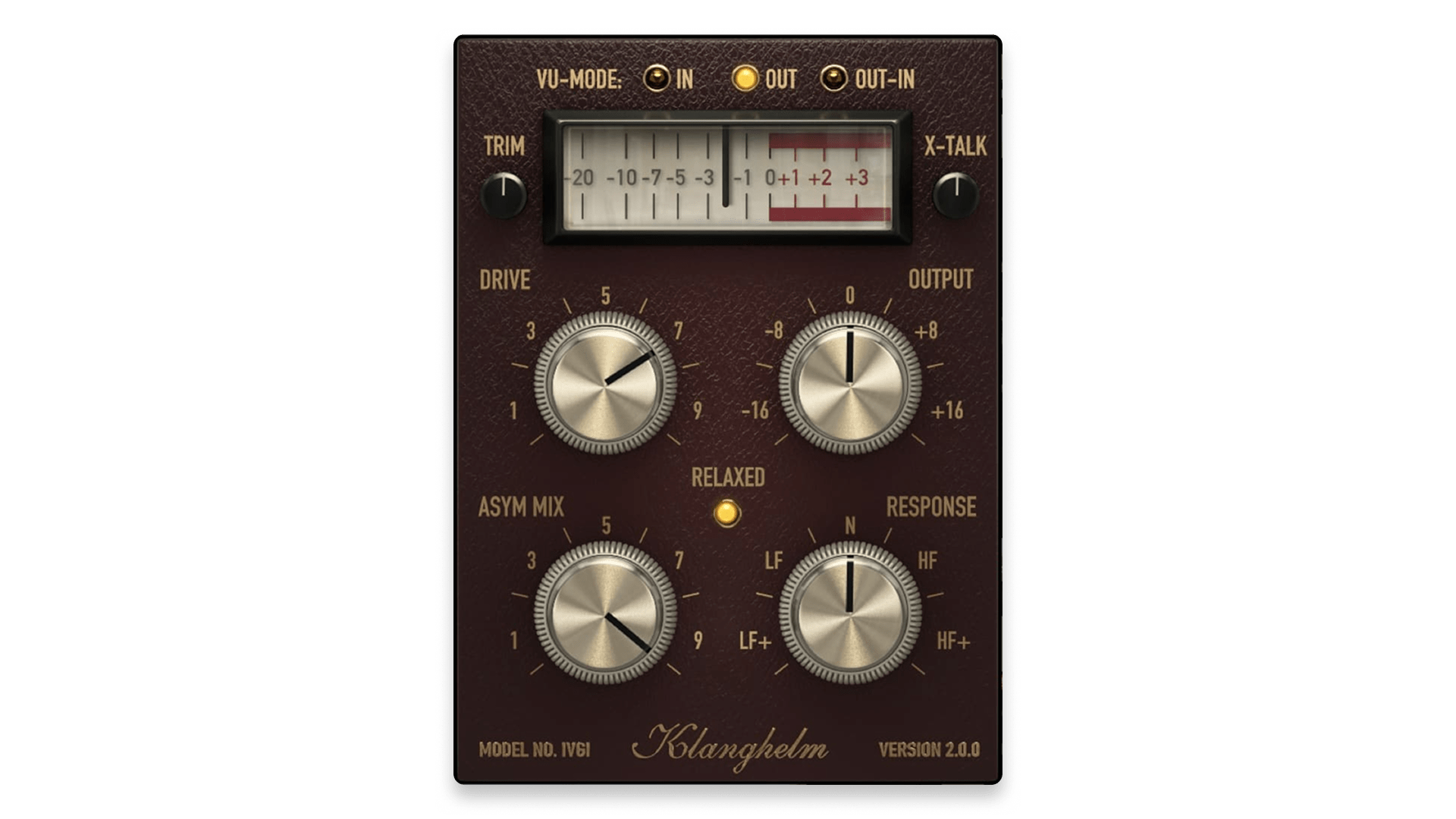
IVGI is one of those rare free plugins that feels like it belongs in a paid bundle.
In our testing sessions, we found it to be smooth, musical, and great for adding subtle harmonic density to anything from drums and bass to full mixes.
What makes it especially useful is how controlled it stays. You can add warmth and edge without crossing into harsh distortion, which makes it a great everyday option for mixing and tone shaping.
Pros:
- Musical saturation that stays smooth and controlled
- Easy to use and light on CPU
- Excellent free option for buses and full mixes
Cons
- Not designed for extreme distortion or lo-fi destruction
- Limited tone shaping compared to more feature-rich tools
Back to top ⬆️
6. BeatSkillz Rekraft (Included in LANDR Studio)
Best saturation plugin for lo-fi texture and character.
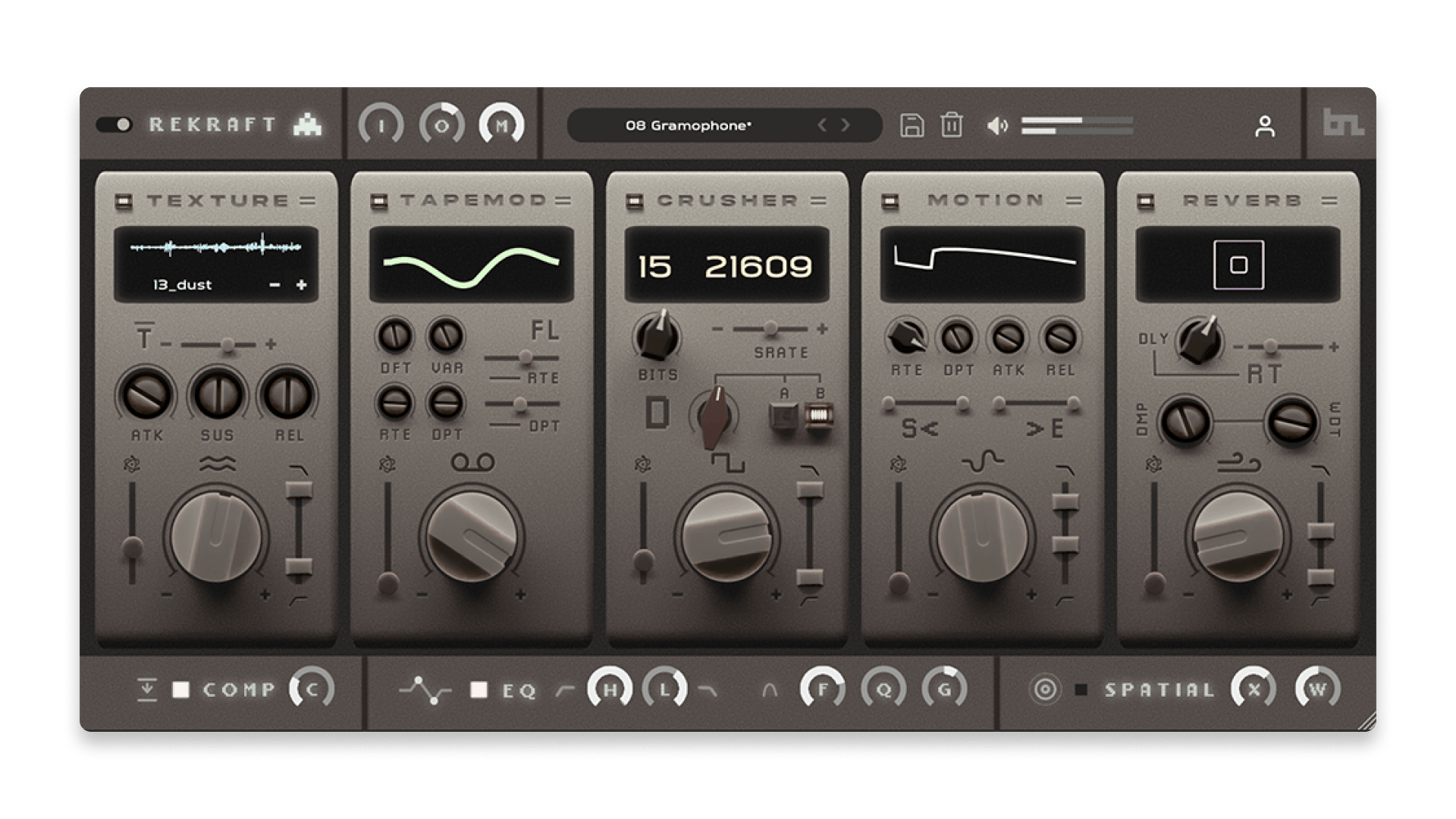
Overview of BeatSkillz Rekraft
| Type: | Analog-style saturator & transient shaper |
| Operating System: | macOS, Windows |
| Format: | VST, AU, AAX |
| Price: | $119 outside LANDR Studio |
BeatSkills has created some of our favorite plugins, and we’ve even added several of them to LANDR Studio. Rekraft is one of them.
The beauty of this one is that it doesn’t limit itself to saturation alone. It combines saturation with other lo-fi and degradation effects in a customizable signal chain that oozes with character and versatility.
In our testing sessions, we found it best for when you want saturation to be part of the sound design rather than just a subtle mix tool. It shines on drums, melodic loops, synths, and full sections when you want vibe, grit, and movement.
Pros:
- Texture-focused workflow with lots of character options
- Great for drums and samples that need grit and attitude
- Included in LANDR Studio
Cons
- Less suited to transparent saturation for clean mixes
- Can get heavy-handed if you are not intentional
Back to top ⬆️
7. Techivation T-Saturator (Free)
Best free option for controlled harmonic enhancement.
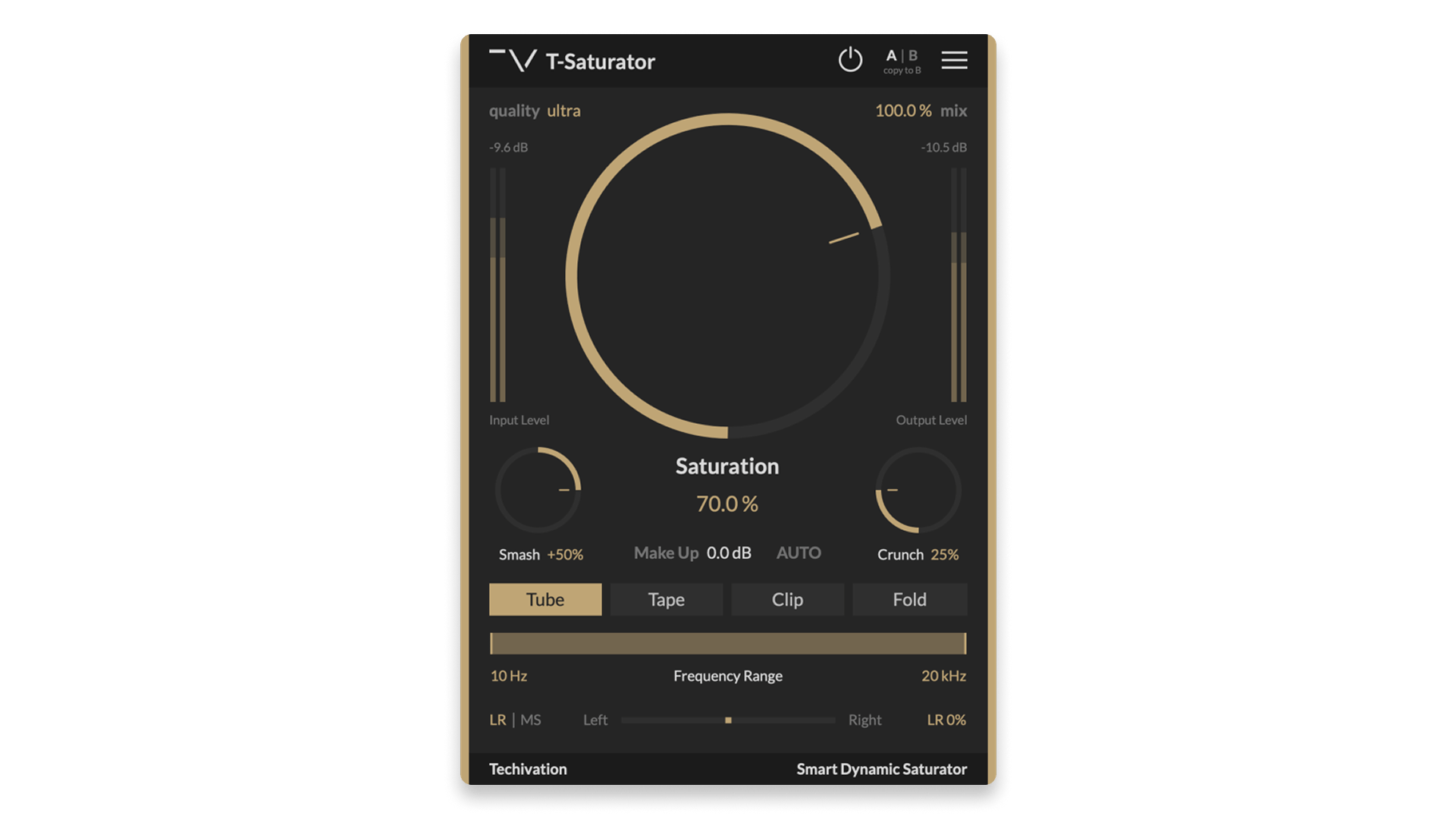
Overview of Techivation T-Saturator
| Type: | Saturation and harmonic enhancement |
| Operating System: | macOS, Windows |
| Format: | VST, AU, AAX |
| Price: | Free |
T-Saturator is a modern, mix-friendly saturator that can add harmonics without smearing your transients.
We feel it’s especially useful when you want a bit more presence and density while keeping things controlled, thanks to its clean overall sound and practical controls.
In our sessions, it proved to be a strong choice for vocals, acoustic instruments, and buses when you want saturation that feels polished rather than gritty. If you’re building a reliable free toolkit for everyday mixing, this one deserves a spot.
Pros:
- Clean, controlled harmonic enhancement that stays mix-friendly
- Useful on vocals and detailed sources where you want clarity
- Great free option for subtle presence and density
Cons
- Not the tool for heavy distortion or lo-fi destruction
- Less characterful than vintage-inspired saturators
Back to top ⬆️
8. iZotope Trash (Paid)
Best distortion and saturation suite for sound design.
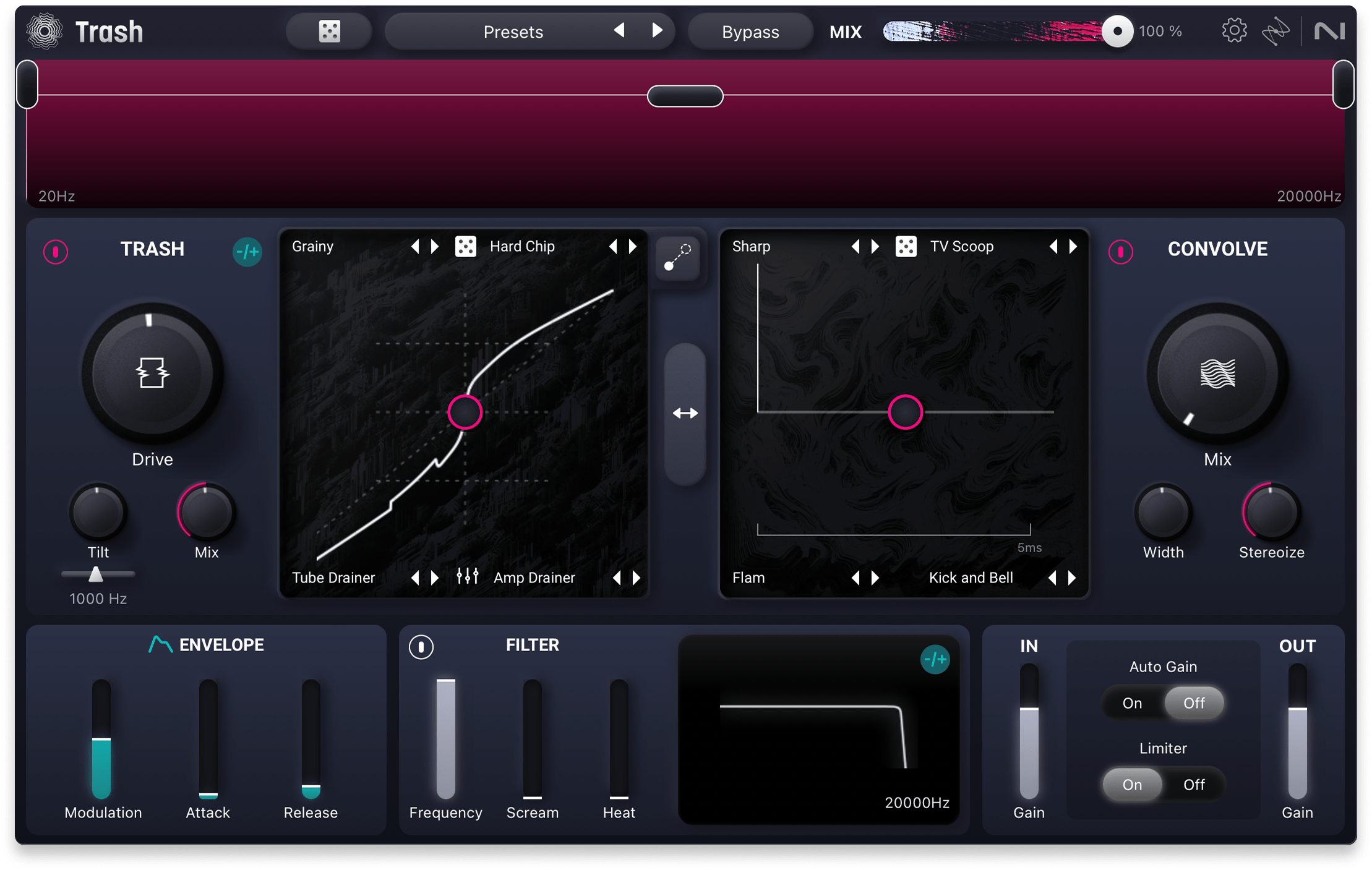
Overview of iZotope Trash
| Type: | Modular distortion & saturation suite |
| Operating System: | macOS, Windows, Linux, iOS |
| Format: | VST, AU, AAX, AUv3 |
| Price: | $139 |
While some saturation plugins aim for emulation of analog gear, others lean proudly into the digital domain for more range and extreme results. Trash belongs in the latter category.
It’s made up of a chain of modules that each specialize in different forms of audio mangling.
In our testing, one of the standout pieces was its convolution-driven tone and texture potential, which can shift a sound from “distorted” to truly transformed.
In practice, it’s a playground for distortion and texture. It can do subtle saturation, but it really shines when you want edge, movement, and transformation on drums, synths, vocals, and effects.
Pros:
- Extremely flexible modular approach for creative distortion
- Convolution-style tone and texture options for unique character
- Great for sound design on drums, vocals, and synths
Cons
- Can be overkill if you only need simple warmth
- Workflow takes time to learn if you want to go deep
Back to top ⬆️
9. Voxengo Tube Amp (Free)
Best free tube-style saturator for simple analog warmth.
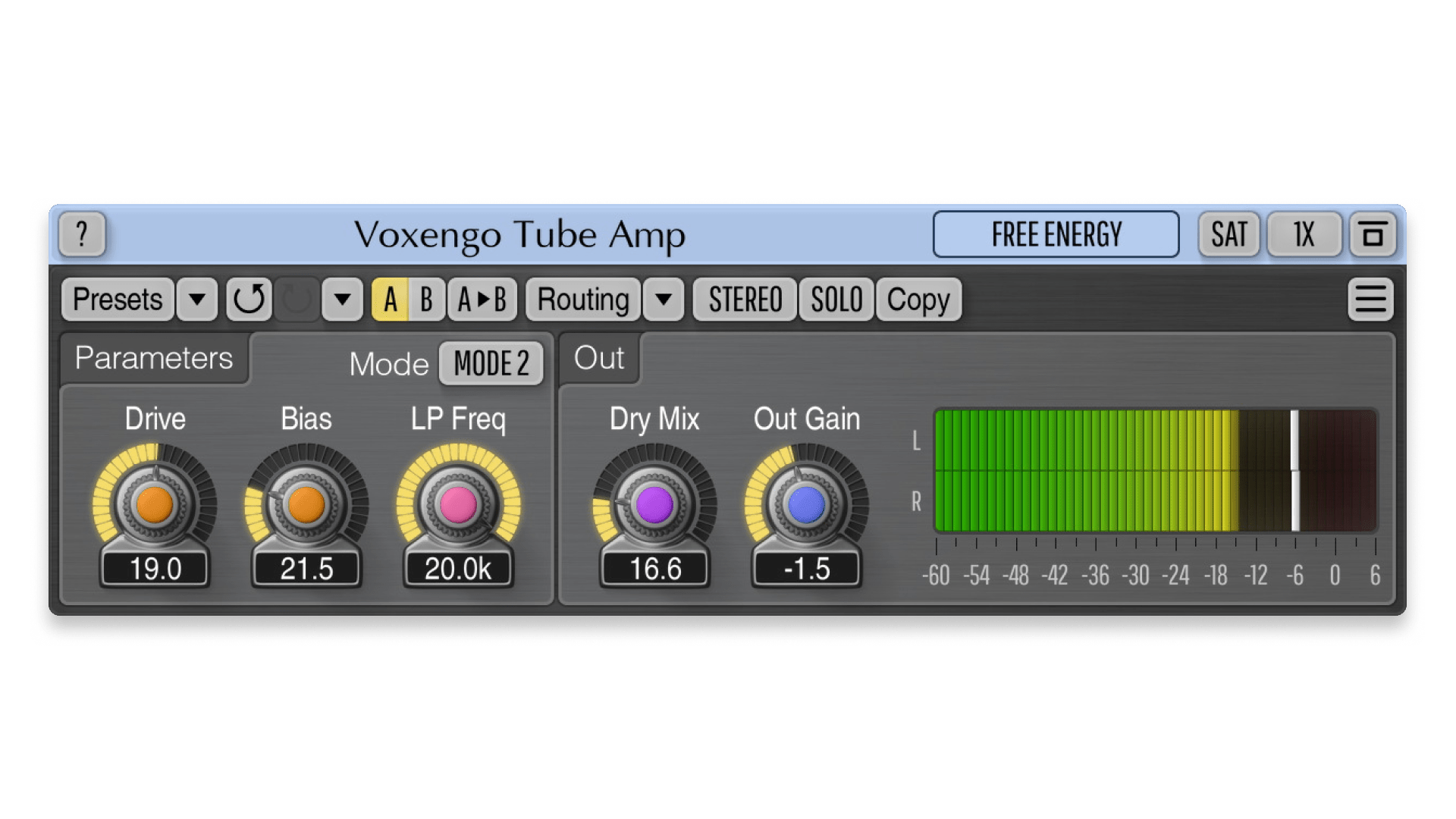
Overview of Voxengo Tube Amp
| Type: | Tube-style saturation |
| Operating System: | macOS, Windows |
| Format: | VST, AU, AAX |
| Price: | Free |
Tube Amp has been around for ages, and there’s a good reason it’s still in so many plugin folders today.
When working with it, we loved that it was lightweight, quick to set, and genuinely effective at giving sounds a touch of tube-like harmonic life. You can dial in subtle warmth or push it into crunchier territory if that’s your thing.
While its interface is simple and its features are minimal, it excels at doing one thing very well: delivering smooth, musical tube-style saturation without taxing your CPU.
In practice, it’s ideal when you want a quick, no-drama saturator that adds life to vocals, bass, keys, and drum buses. It’s a classic choice that still holds up.
Pros:
- Simple, effective tube-style warmth with minimal CPU load
- Easy to dial in on many sources
- Great free choice for subtle drive and thickness
Cons
- No modern features like oversampling or multiband control
- Interface is basic and workflow is minimal
Back to top ⬆️
10. Eventide CrushStation (Paid)
Best creative distortion for bold, mix-ready results.
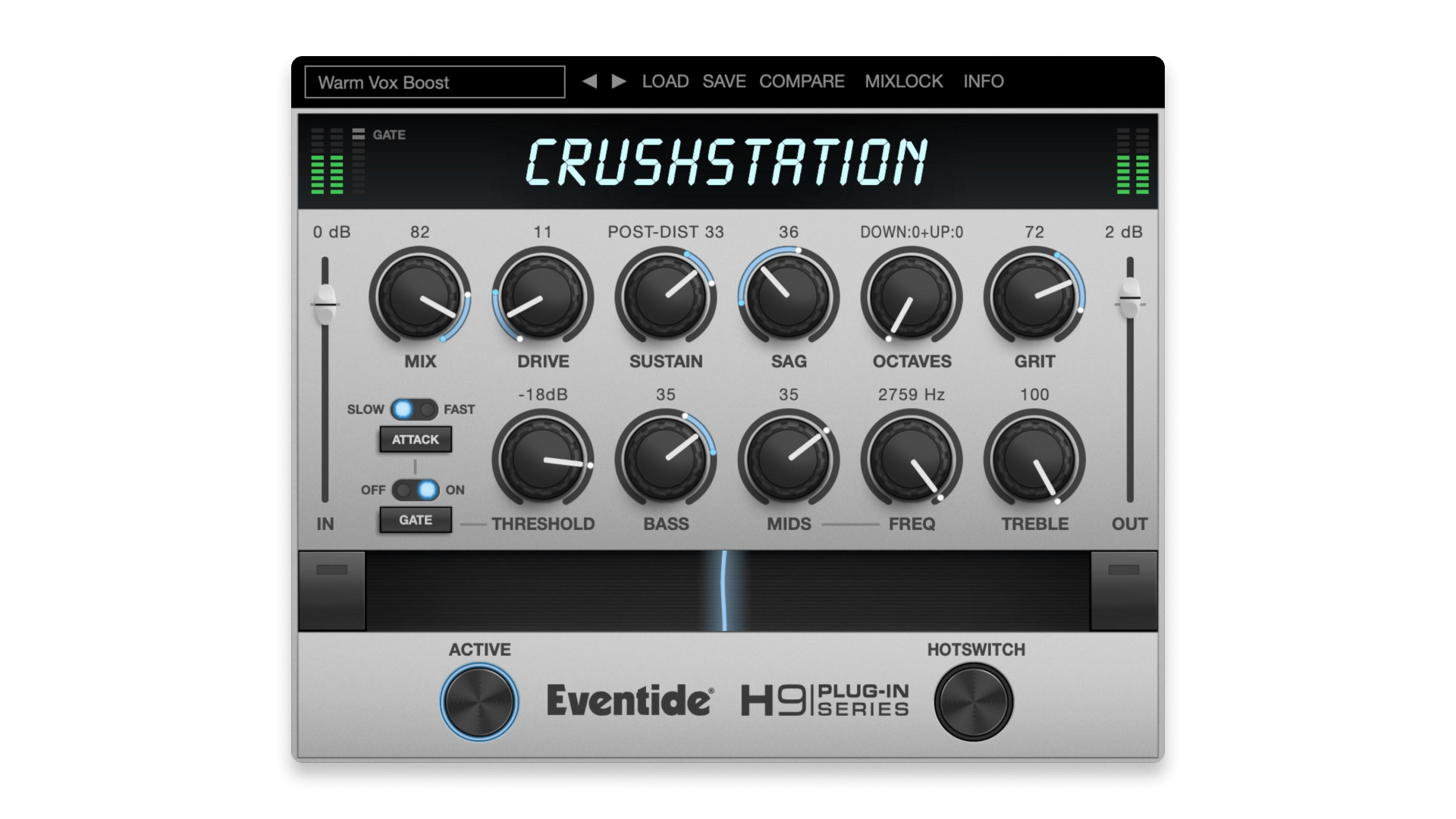
Overview of Eventide CrushStation
| Type: | Distortion, compression & saturation |
| Operating System: | macOS, Windows, iOS |
| Format: | VST, AU, AAX, AUv3 |
| Price: | $99 (Trial available) |
A longtime favorite among guitarists in particular, CrushStation combines saturation with a three-band EQ, compression, and noise gate.
On top of this, you get octave mixing for more dense and intense textures. This works beautifully on guitar, but can also deliver unique results on other signals like vocals and percussion.
For us, the Sag control is the secret weapon: it mimics power-supply “give” and adds a convincing, dynamic breakup that feels more amp-like than purely digital distortion.
In practice, it’s great when you want distortion that already feels produced. Between the dynamics and tone shaping, it’s easy to land on sounds that feel ready for a mix rather than raw and unruly.
Pros:
- Built-in dynamics and EQ make it easy to get mix-ready distortion
- Octave and sag features can create unique textures
- Works well on guitar, drums, and aggressive synth sounds
Cons
- Less suited to transparent saturation
- Can feel intense if you only want subtle color
Back to top ⬆️
11. TBProAudio GSatPlus (Free)
Best free soft clipper for adding density and loudness.
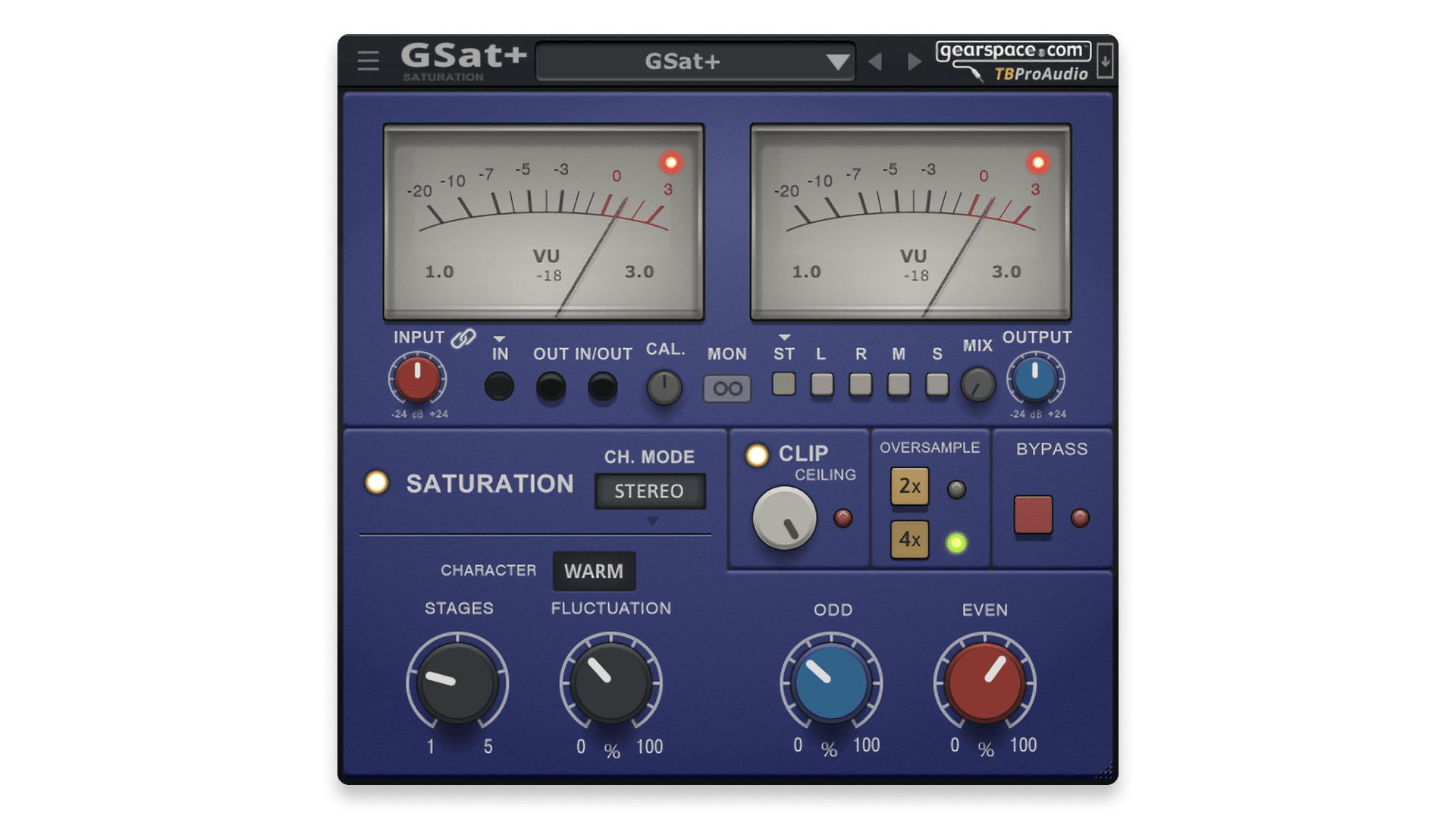
Overview of TBProAudio GSatPlus
| Type: | Saturation and soft clipping |
| Operating System: | macOS, Windows |
| Format: | VST, AU, AAX |
| Price: | Free |
GSatPlus is a simple, effective saturator that works well for adding a bit of thickness and level without making things sound distorted.
In our testing sessions, it’s especially useful on drums and buses when you want a touch of harmonics and soft clipping to increase perceived loudness without needing a full distortion suite.
We find it particularly handy as a fast loudness enhancer. Use it lightly for density, or push it harder for more obvious clipping that still stays fairly controlled for a free tool.
Pros:
- Easy way to add perceived loudness and density
- Works well on drums and mix buses in moderation
- Free and simple to use
Cons
- Not a deep saturation tool with multiple characters
- Can flatten transients if pushed too hard
Back to top ⬆️
12. U-he Satin (Paid)
Best tape emulation for glue, warmth, and cohesive mixes.
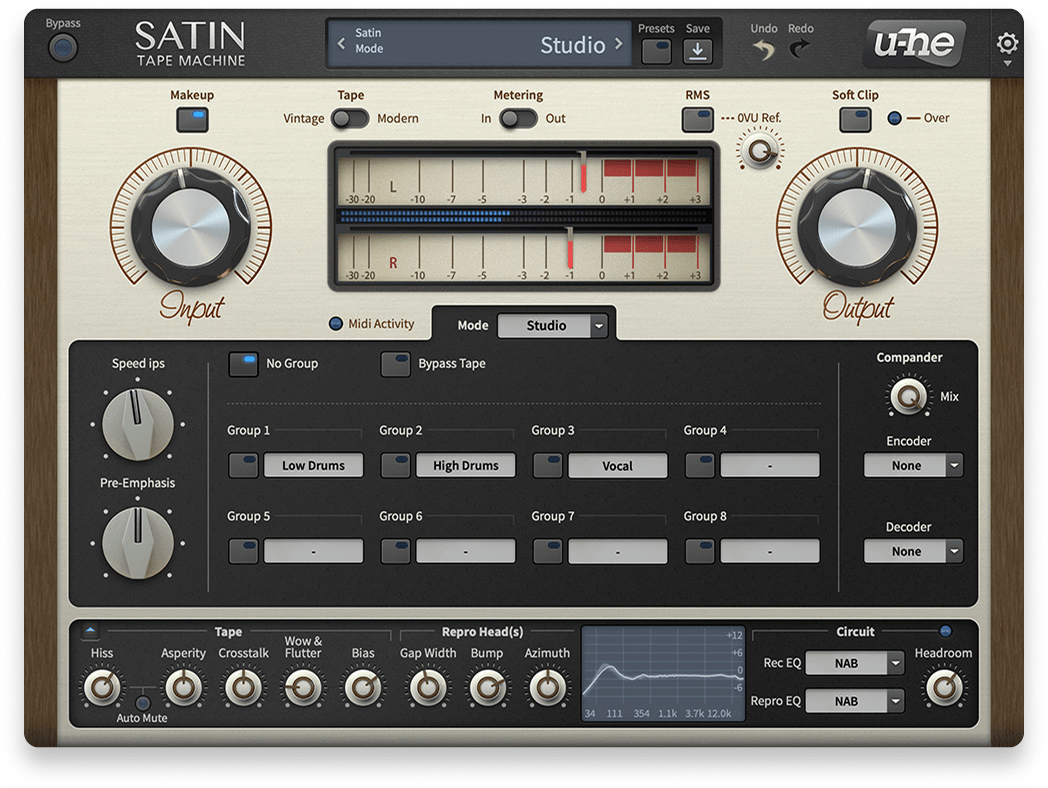
Overview of U-he Satin
| Type: | Tape saturation & delay emulation |
| Operating System: | macOS, Windows, Linux |
| Format: | VST, AU, AAX, CLAP |
| Price: | $129 (Trial available) |
Satin is U-he’s take on tape emulation, and as you might expect from them, it’s meticulous and deeply customizable.
It models the entire tape machine signal path, from bias to head gap, giving you a level of control that few tape plugins match. Beyond that, it doubles as a tape delay and flanger, both of which sound stellar.
In our use, it excelled on full mixes and buses where you want cohesion and warmth without losing clarity. It can be transparent, subtle, or distinctly vintage depending on how you set it, which makes it one of the most flexible tape-style saturators out there.
Pros:
- Deep tape controls for precise tone and glue
- Excellent on buses and full mixes
- Includes tape delay and flanger modes
Cons
- More complex than simpler tape plugins
- Can be CPU-heavy with detailed settings
Back to top ⬆️
13. Airwindows Preamp Emulations (Free)
Best free collection for console-style color and character.
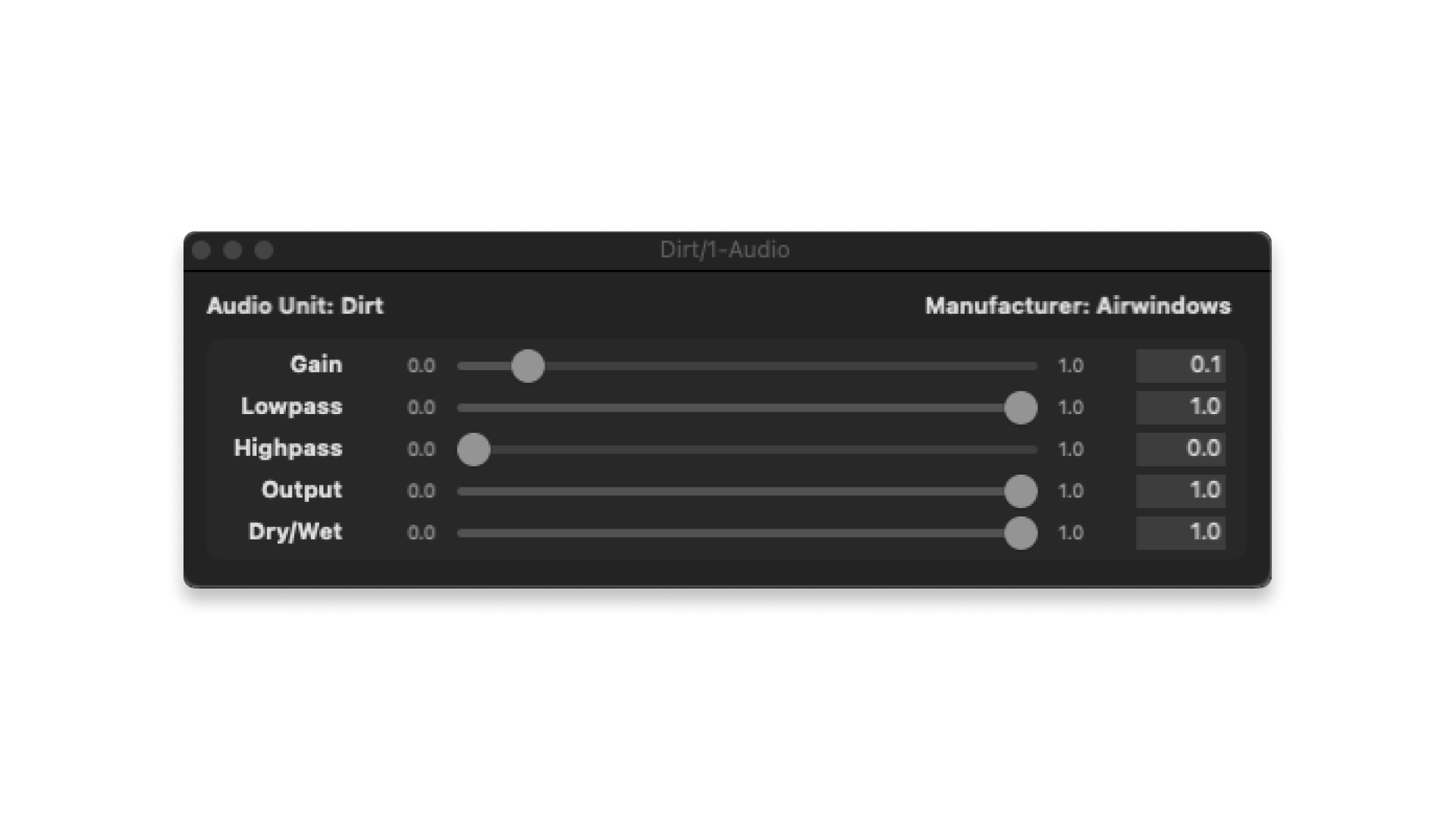
Overview of Airwindows Preamp Emulations
| Type: | Console/tape-style preamp coloration |
| Operating System: | macOS, Windows, Linux |
| Format: | VST, AU |
| Price: | Free |
Airwindows is known for its enormous library of free effects plugins, ranging from console and preamp simulations to compressors, reverbs, and more.
For us, the “preamp” options are where a lot of the hidden gems live: subtle tone, console-like drive, and quick character that you can stack across many channels.
Some of our personal favorites include Dirt, Edge, and Mackity, the last of which is a faithful emulation of the iconic Mackie mixer overdrive that defined countless underground records.
In practice, this is less like one plugin and more like a toolbox. If you like experimenting with subtle color and console-style drive, you can find several options in the Airwindows ecosystem that hit different flavors.
Pros:
- Huge range of free saturation and preamp-style options
- Great for subtle color and console-like drive
- Lightweight plugins that work well on many tracks
Cons
- Workflow is less streamlined than modern commercial plugins
- Requires some exploration to find your favorite tools
Back to top ⬆️
14. Baby Audio TAIP (Included in LANDR Studio)
Best modern tape saturation plugin included in LANDR Studio.
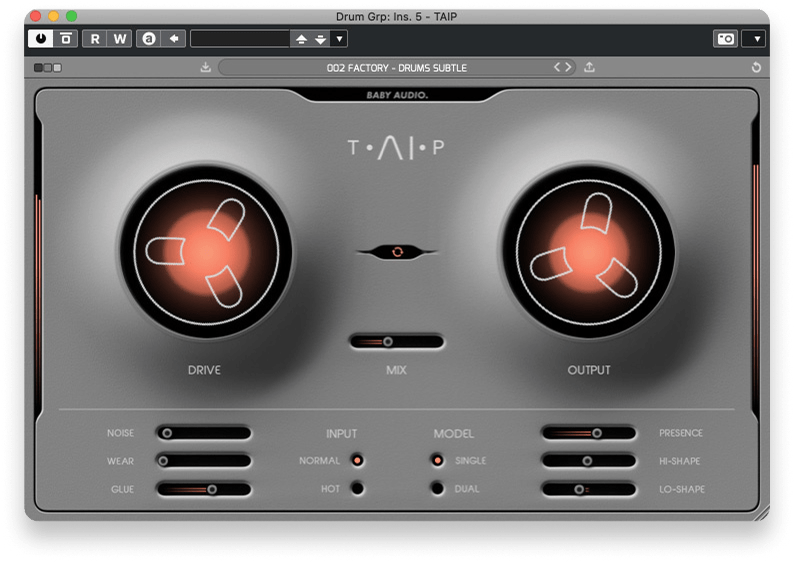
Overview of Baby Audio TAIP
| Type: | AI-powered tape saturation |
| Operating System: | macOS, Windows |
| Format: | VST, AU, AAX |
| Price: | $99 outside LANDR Studio |
TAIP uses machine learning to capture the nonlinearities and subtle imperfections that make tape sound alive.
Crucially, it has a sleek interface that encourages experimentation without overcomplicating things. You can push it hard for noticeable compression and drive, or keep it gentle for subtle analog tone.
In our sessions, TAIP has always been especially useful as a glue tool. It can make drums feel more cohesive, help vocals sit in a mix, and add a satisfying density to synths and buses without sounding harsh.
If you want a tape-style saturator that feels modern, fast, and consistently musical, this is an essential. We love it so much that we even added it to LANDR Studio.
Pros:
- Convincing tape-style compression and harmonic glue
- Fast workflow with a modern interface
- Included in LANDR Studio
Cons
- Less suited to extreme distortion compared to modular suites
- Not as deep as some fully featured tape machines emulations
Back to top ⬆️
15. Chow Tape Model (Free)
Best free tape emulation for detailed control and character.
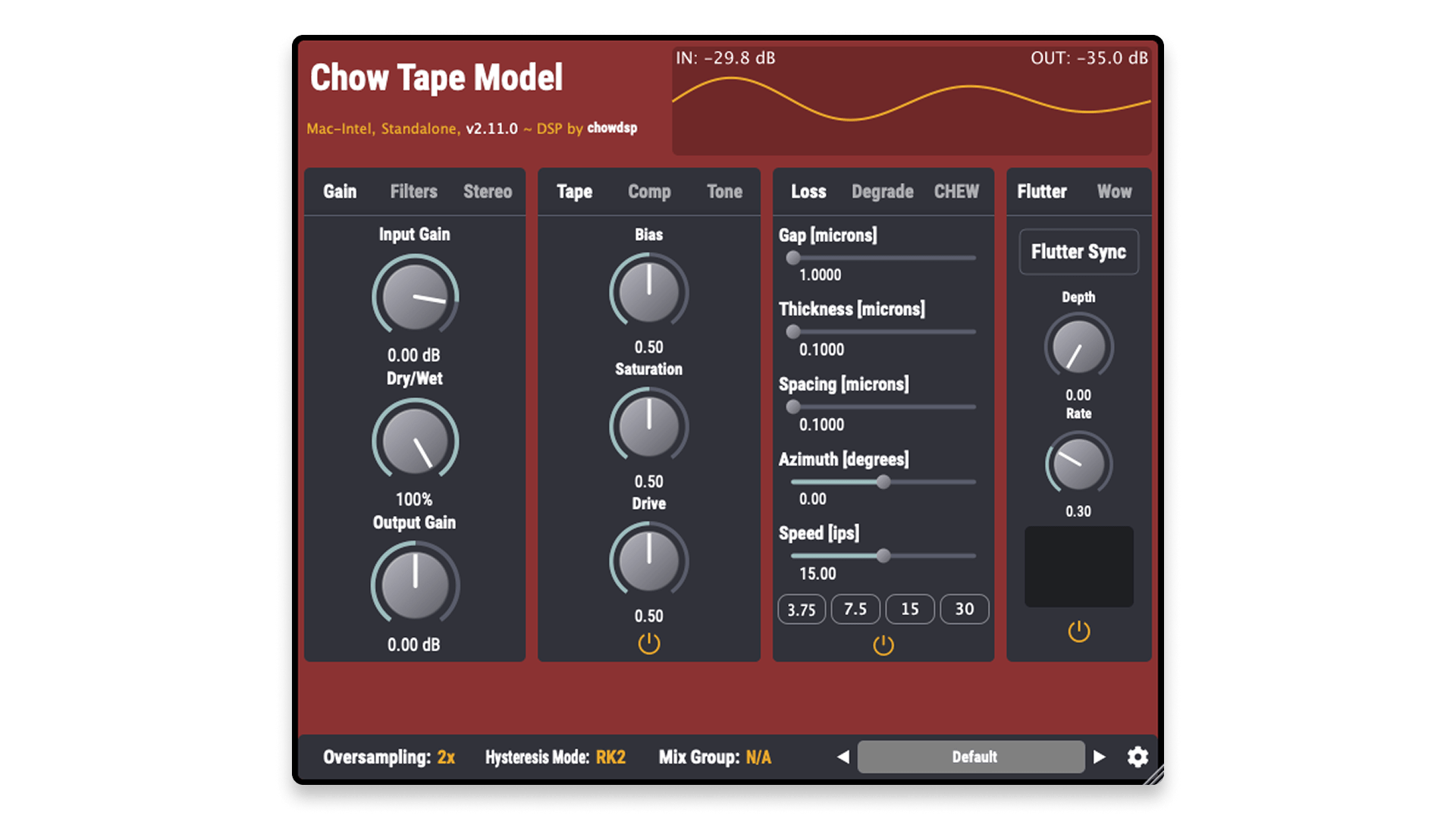
Overview of Chow Tape Model
| Type: | Tape emulation and saturation |
| Operating System: | macOS, Windows, Linux |
| Format: | VST, AU, AAX |
| Price: | Free |
Chow Tape Model is an impressively deep free tape plugin that captures the nonlinear behavior that makes tape feel alive.
We find that it can add subtle glue and soft compression, or it can be pushed for obvious saturation and grit depending on how you set it.
Over all, it’s one of the best free tape-style options when you want more than basic coloration. If you enjoy tweaking tape bias, response, and behavior to match a track, this plugin gives you far more control than most free alternatives.
Pros:
- Deep tape-style controls for a free plugin
- Can do subtle glue or more obvious saturation
- Runs on all major desktop platforms
Cons
- More complex than simpler tape saturators
- Takes time to learn if you want to use its depth fully
Back to top ⬆️
Buyer’s guide: What to look for in a saturation plugin
What is a saturation plugin?
A saturation plugin adds harmonic distortion to audio in a controlled, musical way. It often emulates the behavior of analog equipment like tape machines, tubes, transformers, consoles, and overdriven circuits.
Unlike hard clipping or aggressive distortion, saturation is usually used to add warmth, thickness, perceived loudness, and character while keeping the original sound intact. Depending on the plugin and settings, it can range from subtle enhancement to obvious grit.
What makes a good saturation plugin?
Finding the right saturation plugin is not about hunting for the longest feature list. It is about choosing tools that sound good, feel reliable, and make your workflow easier.
Sound quality and tone are crucial. The plugin should add harmonics in a way that feels musical, whether that means smooth warmth, tape-style compression, tube grit, or digital edge.
Control and workflow matter. Some producers want simple one-knob saturation for quick results, while others prefer multiband processing, modulation, oversampling, and detailed tone shaping. The best choice depends on how you like to work.
Character versus transparency is a key decision. If you mostly want subtle glue and thickness, a tape or console-style plugin may be best. If you want aggressive distortion and sound design, a modular distortion suite will get you farther.
Practical performance also counts. CPU use, latency, and stability all matter if you plan to use saturation across many tracks and buses. A great saturator is one you can rely on in real sessions without friction.
Saturation is one of the most powerful tools for making mixes feel more alive. Once you find the plugins that match your taste, you will start hearing opportunities for it everywhere. Just don’t go too crazy with it (unless that’s just part of the music you make, of course!).

Various contributors from the LANDR team of music mentors.
@LANDRGear guides, tips, tutorials, inspiration and more—delivered weekly.
Keep up with the LANDR Blog.